First we ruled the world, we lived life. We were probably the oldest people there, but it was good, it was fast and rocking at the speed of sound, the clocks stood still for a while and Chris and the boys gave as life in technicolor for one evening; it was paradise.
It was a long and warm September evening, the venue was Rhein Energy stadium in Köln and it was full, so full. From the stands we were watching and they, the band, did not freeze. They rocked. They jumped and danced. They sang.
Each and every person in the stadium had an armband like this which was controlled by radio frequency and integrated with the digital choreography; stunning effect
The stadium was full of energy and the technicolor armbands handed out at the entrance were all responding in syncronisation on the radio frequency orders transmitted to them by the show engineers. Flashing, multicolored armbands strapped to each person’s wrist became part of the choreography and was responsible for a spectacle of note.
The previous rock show of this magnitude I saw was U2’s 360° tour in Soccer City, South Africa and its understandable that the likes of these giants such as Coldplay and U2 can put together spectacular productions which include the full Monty of digital effects and no limits on volume control. We were on the stand a full soccer pitch away from the main action, and still the youngsters in front of us attended a rock show with earplugs deeply squeezed into there ears. Sissies!
As can be expected from German organisers, I was mightily impressed by logistical ease of getting to and from the stadium, with plenty of extra trams scheduled, the easy entrance into the stadium and the many food- and drink stalls serving the thirsty rockers. However, what I cannot understand living in the so-called first world is how far behind they are to South Africa on a health and consideration-for-other-people issue such as no-smoking rules in public areas and in presence of children. This is one really important area of community enhancement where most of Europe are still years behind South Africa.
‘The maestro says its Mozart, but it sounds like bubblegum ….’
And then, two days later, we were probably the youngest groupies at Hockeypark, Mönchengladbach for another brilliant show, but this time at completely different pace, to nostalgically get carried away by that master Leonard Cohen. Leonard was born 78 years ago in 1934 but he still gives a performance (including a singing voice of unmatched caliber), which is remarkable, and adding the timelessness of his music, it made for a perfect nostalgic outing for Heleen and me.
I’ve always been a huge fan of Leonard and believe that the poetry in his lyrics is already worth raving about, and then he adds his voice. This was proved to be correct at this show too. Many of the people around us were not English speakers at all, but from the singing and pure joy it was evident that they all new every word of every song Leonard performed. I was taken back to Heleen and my visit to Budapest way back in 1994. We stayed in the real local suburbs after we brokered an accommodation deal with Kati at the Budapest train station after arriving early morning from Vienna. The added advantage of this accommodation was that it meant we could go to the suburbia local restaurants, far away from the known tourist areas. That night in that restaurant it was not Leonard Cohen, but Chris Rea’s ‘The road to Hell’ playing over and over again, with the waiters singing along in perfect English. However, when we ordered, it was clear that they did not understand one word of English; not even ‘one’ and ‘yes’ was understood. The result of the evening was a stunning outing with good music and excess excellent food. I ordered a whisky, Heleen and Lizette ordered wine, I ordered goulash soup and Heleen ordered salad for starters, we received three of each! After our amused giggles the waiter and us learned and we all ordered the same main dish, schnitzel, and we only received three dishes for three people. They were humungous, but delicious. Talking about that night, I wonder what eventually happened to our R10 note, which we donated to their collection of international currency behind the bar, counter.
‘I’m not looking for another as I wander in my time,
walk me to the corner, our steps will always rhyme
you know my love goes with you as your love stays with me,
……………
Hey, that’s no way to say goodbye’
But this time it was Leonard and the Germans and Dutch singing happily along in very good English, especially when ‘we take Berlin’.
That well-known, and more than once used by me, saying ‘traveling broadens the mind’ is just so true that I cannot but use it over and over again. I love it so much when paradigms are shifted, and so much more when it’s my own. What I thought will be a two-week visit to Spain turned out to become a two-week visit to a few of the ‘Spains’, consisting of Aragôn, the Basque country, Navarra and La Rioja, Cantabria, Asturias and Catalonia and no Spain at all! Thus, I will somewhere in the future have to spend time in Spain. One simply cannot fit so much to see, so much history, conflict, culture, restaurants, roads, art, architecture, photographic potential, beaches and people into two weeks.
However, let me start at the proper beginning. To do a road-trip, one has to be equipped well, and I have learnt on this trip that the most essential piece of travel equipment to ensure a successful road-trip is an integrated iPod system, though if you allow the wrong family members to influence the playlists too much, you will end-up ‘clubbing’ down the highways in the early hours of the morning in tune with the Pitbulls, Iglesias’ and alike. With roughly 4000 songs just a finger-click away its easy to let ‘die kilometers vlieg verby, with a wicked wicked back-beat’; that is if the traffic conditions allow you. I have also learnt that one of the best reference books on Europe, its history, cultural differences and happenings must be Goschiny and Uderzo’s Asterix and Obelix series.
Traffic is still the same, after all these years
Each and every car owner north of the Pyrenees is heading down south to the beaches of southern France and Spain, as was the case when Asterix and Obelix went to help Huevos y Baçon and Pepe against that rip-off maestro Julius (why does this now have a South African ring to it?)and a 350km drive took us in excess of 6 hours with many occasions the highway coming to a complete standstill. At Bordeaux I decided enough is enough; I have a GPS and ventured onto those scenic small little roads closer to the coast. I don’t know whether its actually faster, but at least we moved and we saw some pretty awesome scenery.
Some-one’s not telling the truth
Spain is not at all a single country. The different regions all have their own and very strong identities and this adds to some serious confusion when visiting them. I mutht thtill figure out when to uthe ‘th’ for the etheth ath in Barthelona, Than Thebathtian, Thergio Ramoth and whether to thank thome-one with a grathias or gracias. Furthermore, I have learnt that ‘ll’ is pronounced ‘jj’ as in David Villa is actually Dahveed Veejja and Seville is pronounced Sêwiejja (take note Chris de Burgh, you’re not saying it right). ‘Actually’ is always pronounced actually and never ever actuajjy, though.
But I’m dwejjing, I mean dwelling, so let me get back to our first destination, a rural retreat in the mountains of the Basque area, where Basque is spoken and not Spanish, and foreigners apparently not often seen, as the shepherd remarked when we had to wait for him on a tiny little mountain back-road to herd his flock of sheep past us, ‘we don’t often see English people around here’, in pretty OK English, I must admit. We were so in awe with the scenery that we completely forgot to take a picture of us being surrounded by sheep. Hotel Rural Mañe proved to be a stunning little Basque country hotel where part of the farmhouse is converted into a beautiful little inn, complete with home cooking and La Rioja wine for dinner. And to cake it all, from the premises they also run a commercial bakery, which means breakfasts too are a delight with various pastries, salamis and jamons for the taking. Furthermore, the friendly and easygoing manager Naiara with their one-year old daughter on the hip and her husband Miguel running in assistance complements the true homely atmosphere and we thoroughly enjoyed our two-day stay.
Hotel Rural Mane
Basque is said to be the oldest language in Europe, not from Latin origin and thus totally different from anything else spoken in Spain. This was very evident even on the road-signs where plenty of ‘x’s’ occurs in the place names, which sometimes even provided some Xhosa feel to the names, though ‘only in my mind.’ The Basque country is an autonomous community within Spain and many towns are indicated by their Basque names on the information signs. The city San Sebastian for example is known as Donostia, which is important to know if you thought you were searching for San Sebastian on the roadside directions. Neighboring the Basque country are the kingdoms of Aragón, Navarre and La Rioja, and in all my travels this was the most pristine example of the medieval kingdoms I have yet seen. Driving through the countryside and observing the castles, houses, monasteries and towns, I could imagine that the movie ‘Ladyhawk’ was taken straight from this scenery. Visiting the exceptional medieval town Olite (pronounced Olite) and its castle with the view across open land towards Ujue (pronounced Ogoeje) in the north, it’s very easy to lose yourself back into the days of King Carlos III aka ‘The Noble’ in the early 15th century who went for broke and built the magnificent castle, with its hanging garden, exotic trees, elegant galleries, and towers. Incidentally, Navarre, Aragón and Basque are the only parts of Spain that was never ruled by the Moors from North Africa. Here they did not ‘just swallow their pride but they fought back’ and retained their own land.
They say you should not live in the past, and thus, just to keep the balance we also stopped by at Durban and enjoyed a calamari lunch. Durban is the restaurant of Javi Martínez, the Spanish international footballer now playing for Bayern Munich (formerly from Athletic Club Bilbao) in the town Ayegui (I don’t know how to pronounce it) who opened the restaurant after the 2010 Soccer World cup and named it ‘Durban’ in honor of his ‘pleasant experience’ there. Durban (KZN) is a nice town if I may say so, I grew up in Durbs, plus this is where Spain beat Germany 1:0 in the semi-final through a Puyol header in the 73rd minute in 2010. I suppose Durban makes more sense in Navarre than Moses Mabhida.
And then you stumble onto and into these gems of destinations that are probably deliberately kept secret for the exclusive use by the locals, such as Donostia (San Sebastian) and its festival. Our idea was to stop, look around, have a light lunch and venture further down the coast towards the west.
Traveling can be extremely thirsty work
One look at the down-town old part of the city made us look for accommodation immediately, and I saw that if you stand back and leave some things to your kids, their natural initiative simply comes to the fore. Stean saw the little inn, and with Cara’s Spanish skills the two of them secured a four bed single room in the middle of the old-town hub of San Sebastian. I was initially worried that we will not be able to change our minds in the room, so small was it, but eventually we managed.
We unintentionally stumbled straight into the heart of the town and it was the week when they have the town festival, probably the best week in the year to be in San Sebastian. That afternoon, as part of the town festival, it was the annual float race in the harbor and bay of the town. The young people of the town build their own floats with crates, planks, blown-up pillow type thingies and similar megafters, then enter the water and try to stay afloat while drinking, rowing and trying to tip the vessel next to you; one mega big town jol!
One big jol …… and even Paul was thereDonostia main beach and bay
Back to our accommodation! They say ‘location, location, location’ are the key indicators when considering accommodation, and this we did. However, we did get a little more than we bargained for. We were the proverbial 5 minutes’ walk from everything important when on vacation; the beaches, the restaurants, the shops, the Spanish ROCK SHOW, (which continued until 01:30), the street parties (that never stopped) as well as the municipal city cleaning services and deliveries who start their days just after 04:00 in the mornings. ‘Location, location, location’ clearly does not have anything in common with ‘sleep, sleep, sleep’! And that was not the end of our surprise for the day. When we went to get the car from the parkade, there was this little note at the ‘casse’ stating that ‘due to the festival and a cycle race, the parkade was closed until 19:00! We were locked in and (un)fortunately had to spend another day in the festive streets of Donostia! More time utilized on sun, beach, sea-kayaking, whale hunting museum and a typical Basque lunch with ‘sardinas’, paella, fish and wine.
We unpacked our tents, inflated the mattresses and went camping!
Pitching accommodation
Such is the beauty of this part of the world, that if you don’t force yourself to stay in the car and drive, you will not progress more than, say 43km per day. We did stop over in Bilbao to fit a Bilbao Athletic stadium tour into our schedule (its clear how football has become part of our travel criteria). Did you know that to this day the Bilbao club is Athletic (English, since it was the English dock yard workers who established the football club in 1898 and which became Athletic Bilbao in 1903) and not Atletico as is the other similarly name clubs and that Athletic Bilbao still holds the record of beating Barcelona 12:1 (1931). Athletic Club Bilbao still maintains the rule of only playing Basques in their team.
What fascinates me is how this part of Spain is not Spanish at all and when reading and digging deeper, the most interesting political tales comes to the fore. It was noticeable that it was not the Spanish flag flying outside buildings, except for official government institutions, but the Basque ‘national’ flag. Even to this day the separate identities continue to strive and one should not make the mistake to think a Basque or Catalan is a Spaniard. One of the most despicable acts of modern warfare was the bombing of Gernika in the Basque country. On 26 April 1937 German and Italian fighter planes bombed the town of Gernika in a three-hour raid on the town. According to our travel handbook, the Footprint Travel Guide on Northern Spain, it was the market day, which means so many extra people from the surrounding countryside were in the town. And not only were the bombs dropped, but for maximum effect, the fleeing people were machine gunned down. To put this into perspective, remember that this was 1937; it was the Spanish civil war and not yet World War II. General Franco, the leader of the Nationalist forces denied that the bombing ever occurred and claimed that the damage was caused by Basque propagandists. The Basques resisted the advance of Franco’s nationalist forces and Franco offered the Luftwaffe the proving ground of their troops for the war that was to come. Herman Göring, at the Nurmburg Trials had this to say, “I urged him [Adolf Hitler] to give support [to Franco] under all circumstances, firstly, in order to prevent the further spread of communism in that theater and, secondly, to test my young Luftwaffe at this opportunity in this or that technical respect.” Though Germany did officially apologise in 1999 (yes, that’s 62 years after the event), Spain has not said another word about the incident. Pablo Picasso produced a painting by the name Gernika after the incident to commemorate it.
Venturing further west through Cantabria and into Asturias brings even more stunning and rugged coastline with plenty of old-pretty-fishing-town after old-pretty-fishing-town scattering the coastline. The flexibility of two three-man tents and inflatable mattresses we now used for accommodation enabled us to change plans and venues on short notice and it proved to be the perfect travel solution for scenic destinations such as Northern Spain. You see a town, you like a town and you find the camping spot, as easy as that. We ended up for a two night stay in Comilla and then two nights in a ‘nature’s valley’ like Playa de España some 10km out of Gijon resulting in four days of a blissful summer, sun, beach type holiday, reminding of my summer holidays at Scottburgh on the Natal South Coast in years gone by. Both me and my teenage son will obviously profoundly protest and deny any hint whatsoever that we particularly enjoyed the beach holiday that little bit extra due to the very tasteful beach attire of the Spanish girls. It was purely because we are so starved of proper sun and surf after two consecutive winters and 11 months living in northern Europe and not the Spanish beachwear (or lack there-of).
The difference of camping in Europe is that there’s not a braai in progress in front of each caravan at night,
Delicious
but rather pedestrians roaming the streets scanning little restaurants, their Asturian paella and stews (which for some bizarre reason I missed out on), jamon iberica, sardines and other seafood delicacies. The looks on the kids’ faces were not always that impressed when a huge pan with crab and other seawater kreepy crawlies landed on our table amongst the huge quantities of rice to complete the paella.
Not just for show, there’s method in this madness
Interestingly in the Asturias is that the main drink is cidre and not beer or wine. It has its own ceremony when ordered. Asturian cidre is ordered by the bottle and then decantered in a very specific semi show-off way, to the uninformed onlooker, that is. The waiter lifts the green bottle as high as possible with the one hand and then pours into the glass held as low as possible in the other hand, without looking at the glass. They do spill, and you have to mind your feet not to get them covered in cidre, but that’s just part of the ritual. The idea is that the height of the drop must create bubbles, which are an essential part of the drinking process. The drinker has a short little window of opportunity where the bubbles remain in the glass, and it must be drunk within this period.
As Chris de Burgh so eloquently describes in The Storyman when he sings ‘take me back to the places I’ve never seen’I can also plea to be taken back to northern Spain as I have missed so much in Cantabria, Asturas, Navarre, Aragon, La Rioja and Basque. A week is far too short. We did, for example drive through the Cantabrian Picos (picos de Europa), but it is one of those destinations where you should have the time to venture off-road, up the mountains and into the valleys. Though its in the middle if modern day Spain, there are still Cantabrian brown bears and wolves roaming the remote peaks. The Picos de Europa is a magnificent mountain range roughly 20km inland and apparently derives its name from the fact that it was the first sight of Europe for those early day sailors returning from their pleasure cruises in the Caribbean or around Africa.
The stunning Picos de Europa
Once through the Picos, we headed east to Zaragosa as a sleepover before hitting the sights, sounds, sun and soccer of Barcelona. But that’s another story.
Could it be as clichéd as ‘to a fancy apartment, in the Boulevard St Michel?’
The Boulevard Saint Michel
Yes, for sure, that’s exactly what Heleen organized for us as a celebratory weekend away after we returned from a three-week visit to South Africa. How cool is that? to go away to celebrate that you’ve just returned!
‘Tell me the thoughts that surround you’
I’m still in awe that, for the same effort and distance that we used to apply back in South Africa to enjoy a weekend away to say, Bloemfontein (for something special, I must admit such as the England vs Germany 2010 Worldcup soccer game) I can now see Paris, Berlin, Prague, Munich or Amsterdam.
Heleen found us a ‘fancy apartment on the Boulevard St Michel’, as well as pre-booked entry to the Eiffel Tower and tickets for the pre-season game between Paris Saint Germain and Barcelona at the Parc des Princess. Just the return to Parc des Princes after our previous visit in 1994 was a lovely sentimental experience, though that day it was 5 Nations rugby and the Irish being hammered.
Parc des Princes, line-up before kick-off
This time around it was soccer, summer and most of the great names of Barça graced the pitch, as well PSG’s newly signed Zlatan Ibrahimovic. Attending sports events in Europe poses great new insights into how perceptions may often skew reality. The Parisians showed great ‘gees’ (South Africanism meaning ‘spirit’) with plenty of interactive singing and chanting between the two stands at opposite ends of the pitch, as well as great supporting song. However, I can proudly state that Europe is still miles behind South Africa as far as no-smoking rules and non-smoking courtesy goes and though these guys often have reason to ‘look down’ on Africa, this is definitely one instance where they can learn a lot from Africa.
‘When you go on your summer vacation’
Paris in high summer is bustling and queues at the major tourist venues are obviously intimidating. With a little bit of homework and the Internet, one can pre-book entry to the Eiffel Tower for a specific timeslot and this we did. Amongst the irritated looks from the people standing in the standard queues taking the shortcut entry initially poised a slight feeling of moving ‘in high places’ until the ‘high places’ struck me straight in the guts.
Looking up isn’t half as scary as looking down
I’m afraid of heights! I had to bail out on level 2, 115m into the air while the brave three of my family headed all the way up to level 3, 274m from the ground level. I think I’ll attempt Level 3 in the winter, as the tower shrinks 15 cm in winter! I used the opportunity to take my eyes off the height by focusing them through the camera lens with satisfactory results, as well as into a strong Café au Lait to sooth the nerves.
Did you know that there are 2,500,000 rivets in the Eiffel Tower, its 320m high, weighs 7,000 tons and has 1710 steps. It was designed by Gustave Eiffel (1832-1923), a French engineer and was completed in 1889 for the Paris world exhibition. It was built in two years by 132 workers and 50 engineers and was sold twice for scrap by a con-artist in 1925. When it was completed in 1889, it was the tallest building in the world.
The view from Level 2 towards the TrocaderoAnd the view to the other side
The other notorious Paris queue is that of the Louvre, but for the informed there are short cuts as well. While most people flock to the famous and controversial glass pyramid main entrance, there are no-queue-at-all side entries as well. I know, not being an art fundi, that the idea of visiting an art museum can seem to be a waste of people-watching-while-having-a-glass-of-wine-time, especially if it means crowds of other people will compete for space. However, I have found that there is great personal satisfaction in wondering the corridors of renowned museums such as the Louvre, staring down the works of greats such as Raphael, da Vinci and many others and simply lose yourself in the paint brush strokes or perfect chiseled sculptures which are obviously in abundance.
One should never become blasé about traveling and should tick those mainstream tourist destinations when they’re on your doorstep. It should be just as an important item on your bucket list as those exotic, adventurous, far-away-from-mainstream items we all seem to pursue
A view from the Louvre towards Eiffel
‘with your carefully designed topless swimsuit’
Europeans love the sun.
Beach scene on the Rover Seine
The banks of the Seine in summer is a very popular venue for leisurely sitting around and enjoying the sun, to such an extreme extent that they have actually established a beach, complete with sand, deck chairs and a beach bar, on the concrete river bank. Having grown up in Durban, with its many sandy beaches, these man-made beaches in Europe at first seemed very sad and pathetic to me, but having experienced the weather and city living in Europe for nearly 10 months, I start to understand the method in the madness.
Enjoying the sun in Jardin de Luxembourg
‘I want to look inside your head, yes I do’
Knight Ulrich von Becks, our wirehaired dachshund is rapidly becoming a very well traveled dog with cities such as Amsterdam, Berlin, Munich and Firenze already behind his name.
Becks at the Notre Dame des Paris
He accompanied us to Paris this weekend and though Quasimodo was not at home when we visited the Notre Dame, Becks did enjoy many of the other sites and eateries. Traveling with dogs is fairly common in Europe and restaurants have no problem at all to allow dogs; most even have permanent water bowls for the four-legged customers. Where South Africa is one up on Europe as far as non-smoking goes, this certainly is an area where Europe is miles ahead. I must admit that I have on more than one occasion wished that I could read Becks’ mind while we drag him along on a river cruise, cathedral or into another street café.
‘and you sip your Napoleon brandy’
I have often referred to eating as part of the travel experience. I remember ‘where we came from’ when we were younger and travel was just much less affordable than now, 20 years down the line.
Fondue Bourguignonne and Fondaue Savoyarde
In those days we use to live mostly on picnic dining in parks with baguettes and take away beer, while saving up for that one treat of sitting down for a ‘plat de jour’. We are not really into the Napoleon brandy style when traveling, as café dining and local wine in my mind makes up a large portion of the explore component of travel. I do enjoy the ‘plat de jour’ (menu of the day) concept as these mostly include home cooked style dishes such as stews of which I am a huge fan. On Friday evening we found a stunning little French restaurant specializing in fondues in Rue Gregoire de Tours where we shared the Fondue Bourguignonne (meat) and Fondue Savoyarde (cheese) while Heleen preferred the lamb ‘côtelettes’ in the company of the delightful Greek lady restaurateur who shared her lovely and hugely amusing animated views on topics from European politics and economy to German impersonation with us.
‘and remember just who you are’
And then its Sunday, the weekend is rushing to its end and we need to start thinking of returning home. It will be a week at home before our summer vacation arrives. A summer vacation of two weeks driving down to Spain’s northern areas with focus on inviting names such as Cantabria, The Asturias, La Rioja, Basque Country, Navarre, Cataluña and Aragon. We need the week to fresh out for the next travel leg of the kids’ summer extended break.
Cricket is not big in Germany, well; even that is probably an overstatement. To say the truth, I expect there are actually plenty of Germans around who have never heard of the game. And if they have, they probably have no understanding or interest in understanding the game. Come to think of it, I often wonder what I see in the game when a match labours on and on with little chance of an outcome and why do I want Stean to continue playing it. But then you get the opportunity to sit and watch and soak up the sun in anticipation for that next wicket or boundary; then I again remember the total relaxation this splendid game provides, and so much more when it is in such an unlikely venue as Bonn, Köln or Hamburg.
‘I don’t like cricket, I love it’
I do like the game and now living in Köln I found a nice cricketing fraternity where I can enjoy and relax next to the cricket oval.
It is mostly at the international schools in the area where a few enthusiasts have taken the responsibility to educate the kids on the finer points of the game and these dedicated guys are doing a sterling job at it too. So it happened that Stean was invited a few weeks ago to partake in a cricket tournament at the Bonn International School. He represented his school’s team (St George’s International School, Köln) at the trials and the eventual purpose was to represent his province at an upcoming tournament.
Beautiful setting with the river Rhine in the background
Cricket is a summer sport and I’m used to the entire sunhat, sunscreen and cooling down water-spray rigmarole when attending cricket matches. The sun has burnt me worse next to some cricket ovals then at Durban’s beaches! But my first two matches I attended in Germany, both next to the Rhine in Bonn, was much more like attending those mid-winter primary school rugby matches in the Natal Midlands, where you play in the freezing cold early mornings with frost icicles still clinging to the kikuyu leaves, stinging your every tackle and fall while the mist is so thick you cannot see the poles on the other side of the field. Here, even the occasional drizzle of rain was simply tolerated and the matches continued, for it was such a marvellous occasion to have three nearly full cricket teams willing to combat the elements and opponents on the stunning setting next to the Rhine with the hope of making it into the North Rhine Westfalia provincial team.
Magnificent Rhine river boat in the background
And then the team is announced and my son’s name is read! It was worth the getting wet in the rain, freezing your toes in the cold but surviving on garage-shop coffee and he needs to travel to Hamburg the next weekend for the northern Germany play-offs.
‘Yes, another good reason for a bit of road-trip!’
Hamburg is just over 400km from Köln and a stunning harbor city, though it’s not located next to the sea. An amazing 45km cruise from the North Sea down the river Elbe navigates those incredibly large container- and other vessels to Hamburg. We arrived late Friday evening, by car, not by container ship that is, and Heleen and I ventured into the Portuguese restaurant area of Hamburg for a late dinner in a lovely little café, enjoying the real Portuguese tapa style platters and cerveza.
Not the mass support I’m used to, but enjoying the lovely weather in Hamburg
That clichéd hobby of people watching and observing behavior from a distance is really a favorite of mine, and so much more when it’s the youth with their ‘love life’ attitudes being watched. This cricket tournament consisted of three under 18 teams, one from North Rhine Westfalia, one from Hamburg and one all the way from Dresden, which included Berlin (how is that for regionalism? Dresden and Berlin is 200km apart but make up one team for the sake of getting 11 boys together for a game of cricket). The boys arrived, all dressed up as if going to a hip teenage party, and then got dressed in their cricketing whites and played some magnificent cricket in what can be described as South African summer weather. This time around it was true cricketing weather. It was a long day of cricket and the sun was beating down to bless us with bright red knees and arms the next day, but it was good! After the long day in the sun, and the last match of the day, the cricketing whites disappear and voila, those hip teenagers are back, all cool and suave with not a hint that they’ve been running, bowling and sweating the entire day long. Gotta luvit!
In my previous blog, The road to Gdansk, I did mention that sport and music makes the world turn. This time, it was cricket, which brought together diversity in Germany, which is worth mentioning. At this great occasion of cricket in Hamburg there were players from South Africa, Australia, Germany, England, Sri Lanka, India, Pakistan and Afghanistan of which I am certain. Furthermore, we were served a true traditional curry and rice for lunch, which did remind me of my early days growing up in Durban, South Africa, where similar spicy, and full of flavor curries were in the order of the day. And such was the enthusiasm that my personal take-out from that day is that we have now become part of a unique little cricket fraternity in the middle of the non-cricketing Germany that will in future present us with many happy hours next to the cricket oval; an exciting prospect.
Mark Boucher, allow me this opportunity to convey my sympathy with your injury that ended your career prematurely, even though it already did span more than a magnificent 15 years. Your name will remain in the annals of cricket forever and you personally provided me many happy cricketing moments for many years. May you recover soon.
For someone who grew up in the southern parts of Africa in those dark global political days of the sixties, seventies and eighties, places such as Gdansk, Poznan, Donestk and Warschau were so far out of reach that I never thought that I may one day visit them, let alone see some brilliant soccer (football to the uneducated rest of the world) in one of them.
‘The road is long with many a winding turn’
Furthermore, who would have thought that it will be to watch soccer that I will travel many many kilometres to watch as I grew up in South Africa where real men played rugby. We did not dive onto the grass pitch in agony if someone came within half a meter of you, clutching your ankle while looking to see if the referee actually believed your near Oscar winning performance!
And then you have kids and your whole world changes forever. We attended two Confed cup games in South Africa in 2008 as the pre-run for the Soccer World Cup 2010 and were hooked on this soccer thing. Both kids simply embraced the soccer and started to become real enthusiastic supporters and followers. In 2010 we watched 11 games in total and by this time the family was clearly divided between Spain and Germany, with me fighting for my rightful place in the rugby seats every now and then. Obviously we were Bafana supporters too, but they were sort of in the B-league. I mean, its due to the treatment Bafana received from officials and Suarez that still has me completely put off from this brilliant Uruguayan striker. Against the calibre of i.e. Torres, Piqué, Puyol, Xavi, Müller, Podolski, Schweinsteiger, Heuer (to name a few) even the likes of Matfield, Habana, Steyn (Frans), Bismarck and Hoeha (Hougaard according the Stuart Barnes on Sky) seemed to fade away.
So now Euro 2012 arrived and Cara obtained two tickets for Spain versus Ireland to be played in Gdansk.
Two tickets, great experience
The GPS is a wonderful little device and it’s hard to think back to those old days of travel, where I was driving and Heleen instructing from a Road Atlas. I can boast that I have driven the streets of Paris before the days of GPS and survived to boast about it!
With the GPS, you never get lost, though you still don’t always know where you are!
With our Gdansk trip, it was a little bit of that. We entered Poland and suddenly we were on this magnificent brand new piece of highway (tolled at 31 zloti for the 200km odd to Poznan – 3.4 zlotis buys you 1 euro) with a speed limit of 140km/h. ‘Easy peazy’ I thought, we’ll be in Gdansk soon. However, when the highway ends, you are thrown onto anyone of a few small roads where you have to do the next 200 plus kilometres at 50km/h, then 70km/h and sometimes the luxury of 90km/h but hardly ever for more than 8 to 10 km stretches though. It was late at night by then, I already had the better part of eight hours’ driving under the belt and this was not fun anymore. We did fortunately twice see foxes on these small stretches and seeing wildlife is always a huge delight to me, thus looking back; it was still an enjoyable drive.
It was 00:30 when we reached our campsite at Sopot and lights out an hour later after pitching the tent and relaxing with a hot shower.
Gdansk is a lovely port city on the shore of the southern Baltic Sea with the little spa beach resort town Sopot bordering its western flank.
Free city of Danzig
When Poland regained its independence after World War 1, Poland hoped that Gdansk would again be a mayor port harbour for them. However, according to the stipulation of the Treaty of Versailles, and since the majority of the Gdansk population were actually German natives, Gdansk did not fall back to Poland, but instead became a sort of quasi state called ‘The Free city of Danzig’ with its own constitution, anthem and even postal service, which, though the Poles had free use of the port, it caused tension between the neighbours.
My good old buddy, Henk back in the eighties and its share of political turmoil often used the phrase that its sport and music that makes the world turn!
‘Boere Spanjaarde’
And this proved so true in Gdansk last week. With all political tension of the past simply forgotten and all attention festively focused on singing, drumming, probably small amounts of beer and soccer the ‘Dlugi Targ’ (Long Market) were filled with fans enjoying themselves and the diversity amongst the crowd.
The local brew
Spaniards and Irish with plenty of Poles and three South Africans (we did notice one other Saffa trying his best to blend in with the Irish supporters wearing his similarly-than-the-Irish-attire green coloured Proteas cricket shirt) in-between them, simply absorbing the atmosphere in great anticipation of what lies ahead in the PGE Gdansk Arena later that evening.
Irish support in Long Market
And then it was stadium time!
Cara at the PGE Gdansk Arena
Before I say anything more I need to say to all those out there who is so quick to criticise the Spanish players for not singing along with their national anthem, ‘their national anthem has no words! You can’t sing along to the Spanish anthem, you can at best hum!’
There were probably three times more Irish supporters than the Spanish and nothing ever silences them! Not even a first goal in less than 4 minutes for Torres, who at long last again had an excellent game. Though he personally only had ball possession for 38 seconds during the match, he had 5 shots at goal of which 2 were successful. Welcome back El Nino!
No uncertainty who is supported
The Irish were brave and though the score-line was hugely in favour of Spain at 4:0 in the end, it was a great game of football with the Irish always competitive and threatening when they obtained possession. And on the stands they were the ones never stopping to sing and chant their support to their ‘men in green’. However, the sheer class of ‘la Roja’ was too much and in the end it was an emphatic win for the current Europe and World ‘campeón’.
The atmosphere with the traditional drumming of the Spanish support and singing of the Irish made me realise just how much that droning of vuvuzelas took away from the great traditional supporting singing and drumming at the World Cup in South Africa 2 years ago. In hindsight, they should definitely have been banned from the stadiums.
Sopot camp site
The alarm clocks were set for 07:00 the next morning to start the 1300km journey back home, but due to the very short nights in this part of the world in summer, the cold sleeping in our little two-man tent and the continuous stream of singing and shouting Irish supporters returning from their ‘nights on the town’ we were up at just after 04:00 and started to pack-up.
‘The road was long
With many a winding turn
That leads us who knows where, …’
It was a short and intensely packed visit to Gdansk, driving through stunning Poland rural areas with grain fields and forests as far the eyes could see. We had just one day to look around and see the Sopot beaches and the stunning old part of the city of Gdansk, which included a magnificently preserved medieval port crane. I did however see enough to realise this is a stunning destination to spend more time in if the opportunity arises again. It will make for great summer vacation. Though there is simply no way you can understand any Polish with just English or Afrikaans as background, there seems to be more young people able to speak English, even than in Germany?
The Sopot beach, where the daily catch is sold and where you can leisure in the sun, with plenty cafes and bars at hand
And one should never underestimate the good for a country, especially the not so wealthy countries, which comes with hosting events such as a World Cup or the UEFA EURO 2012. It’s evident in infrastructure and hospitability of people all around you. And if managed correctly after the event is gone and dusted, it can lift a country to that needed next level to sustain and grow on what was achieved due to the event. I sincerely hope both Poland and the Ukraine will experience that.
‘Never lose your childish enthusiasm and things will come your way’ Een van my fav quotes uit die movie. Julle leef nou “in many directions’ – Laurette on ‘Under the Tuscan Sun
The kids had a mid-term break last week and we decided to head south, all the way south to the stunning idyllic and warm Tuscany in central Italy. Due to some work commitments, we had to drive via Munich, which added kilometers to the already packed itinerary, but to the bright side also added to the places to see. To get to Italy from Germany driving you have to go over/through and many kilometers under the Alps, with it’s majestic ‘chocolate box’ picturesque scenery of mountains, lakes, farmhouses and villages spread on the mountain slopes. Though the Austria scenery is well known to most people it’s well worth to note that the dolomites of the Italian side are in a certain sense more ‘stunning’. It’s rougher, more rugged by nature and scattered with vertical cliffs and rock face, as opposed to the green green grass slopes of the north face.
Since there was a long weekend in the week that we planned, I did book us accommodation for three nights, which meant we had options open for Tuesday, to find a suitable stopover. I’m never sure whether we are really lucky in stumbling upon these gems of destinations, or whether we are still just in awe with the variety and beauty of Europe, but once again I found a gem, the stunning little Riva del Garda on Lago di Garda (lake Garda for the language ‘slow’ readers). Riva is on the northern shore of the lake and reminded me very much of the Margate or Mosselbay type setup back home. Large caravan parks packed to the brim with campers, caravans or motorhomes while the rest of the town is scattered with holiday apartments, small hotels and trattorias, bars and coffeeshops.
A trattoria is less formal than a ristorante, but more formal than an osteria.
We popped in to the nearest trattoria enjoying the perfect weather under the clear skies (with daylight well after 21:00), as well as the very funny continuous conversation of an elderly Italian gentleman at the table next to ours, babbling along in Italian. He’s obviously been sitting there for a while, appreciating the ‘vino blanco’ and large heap of prawns, but hungry for conversation. It was a pity that we speak no Italian whatsoever, and he no English, nor Afrikaans. However, we chatted away and he made sure that the waitress looked after us. So beautiful was the evening that we strolled along the shore of the lake after dinner, had another glass of wine outside at another establishment as well as more coffee.
Coffee! Its probably worthwhile to spend a minute on the topic of coffee. In Europe coffee is generally good and you’ll never be disappointed with a brew. However, you need to know what you want when you order and where as most Saffas will frown when you order a coffee in Italy and you get half an espresso you will never be disappointed with the flavor.
The look of a great Italian brewThe tower provides all kinds of creative poses
While you’re in the vicinity of something great, you must use the opportunity and see it. This is why I decided to take a stunning scenic long road traversing the Apennine mountain range between Parma (yes, of the ham fame) and La Spezia on the Mediterranean and then tilt south to stop and lean over for a few photos and late lunch at the Tower of Pisa. Some things and places are just so well known that it’s difficult to say creative things about them, and that’s why I normally try not to state the obvious. However, some of these clichéd tourist destinations are so magnificent in grandeur and laced with history, that it would be a sin to brush them aside.Take the (obviously leaning) Tower of Pisa, for instance. Construction started on 8 August 1173! That’s 839 years ago! The tower was built in three stages over 177 years, and already began to sink and thus tilt during phase one of construction in 1178. This was due to a foundation of only three meters deep and soft soil underneath. I know a couple of civil engineers, and I hope you guys take note of this flaw; as the Bible also tells us, build on rock, not on sand! Fortunately war broke out, and the construction was stopped for nearly 100 years, which gave the soil time to settle before construction was continued. The slant today is 3.97° or 3.9 meters from the vertical. That is huge and clearly visible, and that exact fact is why, if you are in the vicinity, you simply have to tick this destination from your ‘to do’ list.
The tower to the Cathedral
The accommodation in Tuscany I found was through the Italian farm accommodation system ( www.agriturismo.net) in a restored farmhouse a few kilometers outside the small town of Panzano in Chianti called Agritur San Clemente.
Agritur San Clemente, our accommodation near Panzano for three nights
It’s a stunning huge house and we had it to ourselves! Arriving there after 22:00 proved a bit of a problem though, as the owner had our arrival for a month later, and thus the place was locked up and dead quite. I found his mobile number (cellphone for the guys back home) but this old Italian ‘omie’, though very nice and extremely helpful, does not speak one word of English (again nor Afrikaans!). I took comfort from his ‘pronto, pronto’ though and waited. He was there in an Italian efficient ‘pronto’ (not everything happens quickly in Italy, but when they drive, it does happen in a flash) and we could get into our accommodation. Communication from thereon was via his computer and Google translate though I did understand his question of ‘café?’ in the mornings.
Tuscany is not just beautiful yellow grain or purple lavender fields and stone farmhouses. Tuscany actually has stunning large areas of naturel forest and small mountain roads crisscrossing the entire province. The farmhouses are all architectural masterpieces in their own right and mostly built of rock. (Marita, you must come here and enjoy their inspiration, and we’ll join you!) The result of the forest being so well preserved is that there is also abundant wildlife left in Tuscany and driving at night is just as dangerous as in the bushveld of South Africa with especially wild boar (those wild boar Obelix are so fond of) being a major threat. After midnight, we heard a crash and looking out of the window saw that a car actually struck and killed a boar outside our house. The car sounded in pretty bad shape when the guy drove off and the dead boar was left next to the road. Not 15 minutes later three small cars pulled in and with the girls giggling after a night of partying they loaded the ‘road kill’ and drove off, some 130 kg of fresh ‘cinghiale’ for all those lovely Italian dishes.
The next day we explored some stunning little towns, including Volterra, which has a well preserved, walled old town and which is an important location in Stephenie Meyer‘s Twilight series. In the books, Volterra is home to the Volturi, a coven of powerful and ancient vampires. Fortunately we didn’t come across any of the Volturi! Maybe now I must try to watch one of these Twilight stories.
Strolling the streets of VolterraVolterra street
We ventured all the way to the coast at Bibbona where my family even had a swim in the Mediterranean while I leisured on the beach.
And then there was Firenze. Firenze (Florence sounds so English for such a magnificent Italian city) is where the Duomo (third largest cathedral in the world) and the Ponte Vecchio (bridge) are the largest attractions, but the city in its entirety is something special. Due to its artistic and architectural heritage, it has been ranked as one of the most beautiful cities in the world and the city is noted for its history, culture, Renaissance art, architecture and monuments. The Palazzo Vecchio (or city hall) overlooks the Piazza della Signora and it’s in the entrance of the Palazza Vecchio where Michelangelo’s David stood from its completion in 1504 to 1873, when it was moved to the Accademia Gallery. We unfortunately we missed out to enter the Accademia Gallery due to the long queues. Some things I should definitely plan better in the future.
Ponte Vecchio, the old bridge arching over the Arno river in Firenze. Great pic Heleen
We did not miss out on the stunning views of Firenze from the Piazzale Michelangiolo on a small hill just outside the city though.
The Duomo in Firenze.‘Dance me to the end of love’ While a few couples dance the night away, we enjoyed the stunning view of Firenze and Heleen really did good work with the photography
Heleen and I have been in Firenze together in 1994 and experienced one of those magical ‘wow’ winter Sunday afternoons then. After long hours of train travel in 1994, we headed out to this hill to just catch our breath. It was winter, cold and we have been backpacking through a very cold Europe for a few weeks already when we sat down on the steps, just enjoying the sunset over the stunning Firenze skyline with the Duomo standing out majestically from the rest of the city when a young guy started fiddling on his guitar and lazily singing along. Ever since that Sunday afternoon, Firenze has been a special memory for Heleen and me and I was a bit hesitant to spoil that with our visit now, in summer, with a family and driving up there in a car. It seemed so different. But the view was the same, the steps are the same and there were two guys producing acoustic music suited to the occasion as well. The steps filled up with people sitting around, sipping wine and listening, and my kids appreciated and enjoyed the moment just as much as we did, thus completing another memorable visit to Firenze.
Music on the steps
It was time to start heading home, but not before we enjoyed the tiny little town square (rather town corner) of our host town Panzano
Tuscan scenery of Panzano
and a stroll through the markets of Greve in Chianti. Chianti is the main wine producing area of Italy and though the general drinking wine in the day to day drinking price range from Italy is, in my taste, inferior to the Cape wines, when you fork out a few euros more, you do get the good stuff. I suppose it’s to be expected that they will have quality too, as they have hundreds of years more history and experience in this time consuming art of wine making. One of the other delicacies and products is the olives and it’s oils, and judging from the many many olive orchards on the hills, you can really tuck into into these, as they will not run out of stock any time soon.
A Panzano farmhouse
It was a long drive home and we broke it with a last treat of a sleepover in the little town Beckenreid on the Lake of Luzerne in Switzerland, which provide further stunning views of the Swiss lake and Alps amongst greenery and rain clouds.
It was a 3020 km trip safely completed in a five days. Just to put it in perspective, it’s the same distance as travelling to Cape Town and back from Pretoria. This, however, is through four different countries and enabled us to see highlights such as the Alps on the Swiss/Austrian side as well as the dolomite side of Italy, the stunning Lago di Garda, crossing the Apennines, venturing through much of Tuscany including Pisa, Firenze and smaller towns as well as the rural splendor of Tuscany and driving through many tunnels of which the longest was the 19.9km Gotthard tunnel.
We came to Europe to travel and see things. This was a great few days.
Leonard Cohen, that poet songwriter and singer is to the road trip what sweet green figs are to a good Roquefort, and don’t discard the Ratafia Haute Cabrière to finish it all off.
I’ve often thought of these words of Leonard Cohen when I think back and sometimes they really feel true, but now my emphasise is definitely on the ‘then we take Berlin’ phrase. A two-day break-away just became a week trip and no-one minded as the six people, a dachshund and plenty to see and talk about (plus that magnificent little Apple iPod with amongst 3749 other songs some great Leonard Cohen as well)had us all in pretty good spirit to build the anticipation for that magnificent world city, stooped in history which would be our base for the next four days.
Over the Afsluitdijk to Berlin
Berlin was the Headquarters of the Nazi ruling party in World War 2 and the scene of many World War atrocities. My interest is however more on the Cold War period after World War 2, that period of communist’s ideology and how life was for the everyday citizen during those dark years. Furthermore the fact that these things happened in our lifetime! I’m not talking dark ages, I’m talking recent times, our parents have been born, and that, my dear friends makes it so much more incredible to ponder, and to wander the streets where the Berlin Wall once stood. Its not all doom and gloom though, as the good part of this story is that we did come to our senses, freedom in the end did win, both in Germany and in many more places across the globe including our own wonderful country. The challenge remains to maintain this newfound freedom in a sustainable way.
From our flower trip in Lisse, crossing under a part of the Ijsselmeer at Amsterdam and the over the Afsluitdijk at Den Oever we ventured through the province of Groningen, the city Groningen and stopped for bratwurst and beer (I’m sticking to the ‘alkoholfrei’ when driving – some brews actually have a version they call ‘drive’) in Hamburg before arriving in Berlin. It is notable to see that the countryside in this northern part of Germany, which was previously in Eastern Germany, is less built-up and seem to still have a larger part that is unspoilt. Larger parts are still natural forest and the farms houses are more remote than in the southern and western parts. I will have to come and venture on the ‘little’ roads of this area soon.
To really appreciate Berlin, one needs to know a little bit about the history of the city and Germany in the past 60 to 70 years. Therefor, focus for the next few minutes and grasp my layman’s and very shortened history lesson, as it really is fascinating stuff.
When the war was over in 1945, the allied powers, consisting of France, the USA, Britain and Russia, divided Germany into four administrative regions that were then governed by administrators or High Commissions from each of the allied countries. Since Berlin was the capital, it was divided into four regions as well, even though the city fell slap bang into the Russian sector of the country.
Berlin was locked-in by Eastern Germany. West Berlin was part of the West, though
This is an important concept to understand. Shortly after this dispensation was put in place the proverbial pawpaw started to enter the fan. Josef Stalin started to impose the socialist ideology on his eastern sector and Eastern Germany and the east block was borne. As a deliberate political stance the other three of the allied union stood strong and never gave up on the western philosophy, even though the pressure was huge. Remember that Berlin was now a landlocked city surrounded by the GDR (imagine that, Eastern socialist Germany was called the German Democratic Republic). I can still remember how I sat fascinated in front of Riaan Cruywagen reading the news (the real news, not as Haas Das!) in the seventies and eighties and talking about stuff such as the Airbridge. At that time I didn’t fully comprehend what that was and what that meant! The United States Air Force and the United Kingdom Air Force flew more than 200 000 flights in one year into Tempelhof Airport, West Berlin with supplies. That translates into 548 flights per day or 22 per hour around the clock to deliver up to 4700 tons per day of necessities! Some Supply Chain lessons to be learned there!
During the fifties, close to three million refugees emigrated from East Germany to West Germany, most of them through the relative easy loophole created in Berlin, where the West was so near! Life under the commies wasn’t that lekker and people wanted better lives and futures. This caused a huge embarrassment to the Soviets and their socialist ideology. On 15 June 1961 the Chairman of the GDR still proclaimed in an international press conference, “Niemand hat die Absicht, eine Mauer zu errichten!”‘ (No-one is thinking of erecting a wall’). Nevertheless, in the early hours of Sunday 13 August 1961, temporary fortifications were erected at the western sector borders! West Berlin was now seriously fenced in and families and relatives were in many occasions split up. This armed blockade lead to many attempts to escape and many people lost their lives – 192 to 239 is the number of deaths on The Wall I could find.
GDR border soldier Conrad Schumann flees to the West on the corner of Bernauer Street and Ruppiner Street on 15 August 1961. (post card scanned)
Walking in streets such as Friedrichstraße where that famous Checkpoint Charlie (and still is though now as a commercialised tourist attraction), and Café Adler was leaves one both cold and awed with thoughts of what transpired here in the decades before the evening of 9 November 1989 when the crossing points were opened and The Wall in effect came tumbling down! In a weird sense its nearly romantic with visions of Michael Caine or Sean Connery or even Tom Cruise sipping something fancy in Café Adler and ‘spying on the east’. I’m sure I saw Dolf Lundgren ‘spying back’ from across the street!
Checkpoint Charlie in Friedrichstraße (postcard scanned)
On my previous visit to Berlin in June 2007, Café Adler still existed, though as a newer coffee-shop type café. We were seriously disappointed this time round to see that it disappeared with all that history and was replaced by a Cafe Einstein.
Just a block away from Checkpoint Charlie, on the corners of Wilhelmstraße and Niederkirchenstraße a 90 odd meter of The Wall was kept intact and serves as a museum/monument of the monster! Elsewhere in the streets, the path of The Wall is visible in the tarmac and pavement where it was paved in.
Paved markings indicate where the wall was
There are however, two other pieces of The Wall, which is still in tact. The one is known as the Eastside Gallery as it is used as an art mural nowadays.
Madiba features in the East Side Gallery
Just a block away from Brandenburg Gate, a memorial for the holocaust victims was built. It consists of various grave-like structures of different sizes and heights with paths like a maze between them. Though it’s a real sombre and devoted place, it was amusing to see the majority of tourists just couldn’t stop themselves from using the play
Playful at the holocast memorial
opportunities the architecture provided, to the great frustration of the German caretaker trying his best to stop people from jumping and running on the monument.
Learn from the bad but focus on the good is always good advice, and this applies in Berlin as well. Since The Wall came down and the city united into one is a mere 23 years, but in those 20 years the city has become a world class modern city with the once barren Potsdammer Platz changed into a magnificent modern shopping area, the Berlin Hauptbahnhoff an ultra modern glass and steel structure which serves both as a five level train station and shopping centre.
Brandenburg Gate, thenBrandenburg Gate, now
Oupa Cas and Stean in particular lost themselves in the Deutsches Technik Museum where several floors of aeroplanes, boats, trains, computers and many other industrial megafters are on display, while Ouma Koekoe and Cara enjoyed the enormous Berlin Zoo. Heleen and I headed for the DDR (Deutsches Democratisches Republik) museum, where life in Eastern Germany is excellently displayed.
An interesting claim by this DDR museum is that the German preference for nude swimming actually stems from the era of socialism as a way of proclaiming individuality amongst the people. I think I’ll stick to jeans and t-shirts.
Leaving Berlin on the Bundesautobahn 115, we passed a strange sight. Next to the highway is an old stand, as if we were driving on a racing track of some sorts. Curiosity killed the cat, they say, but it also solves many questions, and after a quick iPad search while driving Heleen confirmed that indeed we were on the ‘Automobile-Verkehrs- und Übungstraße’. It was indeed a public road, also used for motor racing, though its not been in use for that purpose since 1936. The 1927 Berlin Grand Prix was actually held on this piece of road. Amazing, the spectator stands are still there, right next to the current highway.
There’s been a chain email doing the rounds of the Magdeburg waterway with the ships crossing it and though some people denied it being true, I can now personally say its real. We stopped there en route back to Köln to take the pictures. Standing under the incredible piece of civil engineering of one waterway crossing another in mid-air I couldn’t help thinking bemused how I struggled to waterproof my 2×1 meter fish pond, while these guys have a huge canal ‘hanging’ in the air, and not dripping!
So, our planned two-day flower trip to Keukenhof turned into a great seven-day 2000km circular trip that included too many sights to report on here. Something I have learned is that one should never try to compare sights, as each one is magnificent in its own right. Traveling is about seeing things, visiting places and experiences people, culture and foods. The two main attractions, Keukenhof and Berlin that we visited are both highly recommendable, though for me personally a visit to Berlin for the sake of the learning this city provides is a bucket list must!
Thanx Oupa Cas and Ouma Koekoe for your visit, we already miss you.
Well, not exactly Amsterdam, but rather Keukenhof at Lisse, just outside of Amsterdam.
‘Its spring again’ and with Oupa and Ouma visiting from SA what better destination to head off to see some tulips in Amsterdam!
Due to car-space being limited with six people and a dog on the road trip, the plan was to do a weekend trip to Holland, then return to Köln, stretch our legs and plan the next destination. Neither Oupa Cas nor Ouma Koekoe has been to Berlin, and we thought we should fit that in while they’re with us in Köln. However, mission one was ‘blomme kyk’, (flower watching) alla Namaqualand as this was the season and it’s ‘just around the corner’ from us.
Köln to Keukenhof and then a bit of sight seeing towards the Afsluitdijk
Thus, with not much more than 2 days’ clothes and baggage we hit the road.
I have done some proper Namaqualand flower watching in South Africa and because its more wild and spread, its something really special. And being biased I will always say I prefer wild, expanse and untamed.
Namaqualand in South Africa's West Coast provides flowers of a wilder kind
However, when you live in Europe, or travel Europe for that matter, its important to understand that this is old world; its been inhabited and tamed for centuries and thus non-built-up space is extremely rare. And that mere fact is something wonderful to keep in mind when visiting nature in Europe. Its not wild, with lions and ellies visiting camp sites but its purposefully preserved nature within an environment where pressure on new and modern is always increasing.
With this understanding in mind, and just one week after opening for the new spring season we stopped at Keukenhof with that cold north-sea wind I mentioned in Hup-Hup Holland chilling through our bones. It seems that the change in season memo and the fact that the sun sets much later nowadays didn’t reach that cold wind!
Spectacular
Keukenhof is a garden in Lisse, southeast of Amsterdam, which is annually prepared as a spring spectacle and has become a major tourist destination. The garden was established in 1949 by the then-mayor of Lisse. The idea was to present a flower exhibit where growers from all over the Netherlands and Europe could show off their hybrids – and help the Dutch export industry (the Netherlands is the world’s largest exporter of flowers). From the beginning of autumn the team at Keukenhof plant no fewer than 7 million bulbs! Every time I see that statistic, I can’t help but wonder how old Willem and I would have faired with our wheelbarrow and ‘gardena’ little garden forks preparing for spring. Though we generalise by thinking only tulips when we think Holland’s flowers, they are by far the most impressive in beauty and variety for my untrained eye. There obviously are many more varieties in Keukenhof though. However, all the effort is worth their while as comes springtime, a spectacle of note springs to bloom, pun intended! And anyone who knows Oupa Cas and Ouma Koekoe will really understand that these two lovers of plants and gardening were out of their skins with delight with the spectacle. Oh and the ‘Belgians waffles’ were quite something too!
The sultans of the Ottoman Empire wore a tulip on their turban as a symbol. The name tulip comes from the Persian word for turban, tulipan.
As per Heleen and my travel philosophy we again did not book accommodation beforehand and this time it nearly backfired on us. After a few calls I did find a bed and breakfast outside Ter Aar but we were not impressed when first walking into the facility. It seemed to be quite rundown and not very clean, but it was already late and we did not have much of a choice but to take it. At least it wasn’t expensive and it did make for some nice photography the next morning. We had a good rest and a very good breakfast, typical Dutch style with various different kinds of bread, boiled eggs, cold meats and cheeses. And coffee, there must be coffee and there was. The important issue though, was that we were getting into the relaxing mode of travelling through Europe by road and we decided there and then that we’re not going back to Köln first, but we’ll hit the road through to Berlin.
But before Berlin, we had to take Katwijk aan Zee for a beer, Die Hoek van Holland for some great ‘fish and chips’ and a quick stop in Amsterdam to just ‘feel’ it for a future visit.
I don’t believe in straight driving and first had to traverse the Afsluijtdijk. Its something I remember from my Yellowwood Park primary school days when we did some lessons on the ‘dijk’s’ and ‘polders’ in the Netherlands. Ever since those days this magnificent piece of civil engineering amazed me and it was one of these ‘bucket list’ items that one lists for one-self without officially stating it as such. I now had the perfect opportunity.
The Asluijtdijk was constructed from 1927 to 1933; and remember, there were no Atlas, Bobcat, Demag or large earth moving equipment dozers available in those days! This dijk is 32km long, is 90 meters wide at its base and rises 7 meters above sea level. It was built to contain the Suiderzee and provide a causeway across the sea. By splitting the Suiderzee, it meant the end of the sea, and the creation of the Ijselmeer and Waddensea. It’s a spectacular sight and we were fortunate to also experience great photographic day.
Over the dijk I drove through the little town of Oosthuizen of which surname I also have a few friends and then I hit the long haul to Berlin! A two-day break-away just became a week trip and no-one minded as the six people, a dachshund and plenty to see and talk about had us all in pretty good spirit to build the anticipation for that magnificent world city, stooped in history which would be our base for the next four days.
However, since we attended two Confed Cup games in 2009 and 11 World Cup 2010 games back in South Africa, the family are all huge soccer (I know its football elsewhere) fans. And with three Barcelona and one Leverkusen supporter in the family, the Champions League draw earlier this year played so well into our hands when the draw resulted in Barça versus Leverkusen. For the not informed, this means an away and a home game between these two teams. Leverkusen is to Köln what Centurion is to Pretoria, thus sort of our local team.
Entrance ensured
In February Barça won their away leg in Leverkusen 3:1.
After an evening of rock and general ‘being proudly South African’ in the performing company of Prime Circle (and a guy wearing a Cheetah rugby jersey) in the Blue Shell, Köln, we joined three planes full of Leverkusen supporters on Wednesday morning 07:15 en route to Barcelona for a day trip. Arriving at lunchtime, it was fortunate that we could spend the afternoon strolling the streets and La Rambla.
In my book, a big part, and obviously hugely enjoyable part of traveling is the local cuisine and customs. We had only the afternoon to explore Barcelona (fortunately Heleen and I have been there on a previous visit) but probably being blasé we all agreed that its better to do fewer things and do them well than to squeeze too many things in and not doing anything properly. Thus sitting down in a café for tapas and wine
Spanish cuisine
was the logical choice. With a view over the harbour, the sun in our eyes and many foreign languages around us we sucked in the lunch feeling of one of Europe’s (and the world) great cities. Summer in Europe is drawing nearer and getting the feel in the few-degrees-warmer-than-Köln Barcelona enthused us to look forward to the evening’s Camp Nou experience.
After strolling the downtown streets and before departing for Camp Nou we had to sit down in La Rambla for a ‘quick’ beer. Be warned, when you order a beer you should specify the size required!
A beer in La Rambla is not for the feint hearted
And then we headed towards Camp Nou; the iconic Camp Nou which is the home of greats such as Messi, Xavi, Pique, Puyol, Fabregas, Iniesta, Alves, Guardiola to name just a few. Remember that we bought our tickets and transfers through the Leverkusen (the opponents for the day) travel agency and were thus transported as Leverkusen supporters. In Europe in soccer, this has certain implications, which we thought about but who’s significance we did not understand. It can even become dangerous to be a supporter of the other team if you’re in the wrong place. Fortunately no conflict other than raised eyebrows was bestowed on us, wearing Barça shirts amongst the Leverkusen fans. However, arriving at the stadium, Camp Nou, the Leverkusen buses were waved into a ‘secure’ drop-off zone, and we were at first not allowed to leave this area and group. It means there are a physical separation between the Leverkusen fans and the rest of the stadium. Fortunately Heleen can negotiate well and she was able to convince the policeman that we are Saffas and Barça supporters just traveling on Leverkusen terms so he let us through and we were able to stroll the streets and stalls around the stadium as ‘free citizens’.
Camp Nou, the home of FCB
‘Let the songs begin
Let the music play
Let the voices sing
Start the celebration
And cry
Come alive
And shake the foundations from the skies
Ah, Ah, Shaking all our lives’ – Queen
The line-up before kick-off
And then it was the game!
‘Tot el camp és un clam’ – (The whole stadium loudly cheers)
The biggest game you’ve ever seen!
I’m proud, privileged and truly glad that I can say that we have seen a world-class performance of an unrivalled Barça team that evening. Systematically and clinically they took Leverkusen apart to lead 2:0 at half time and to finish as 7:1 winners, which included a superb 5 goal haul for ‘la pulga’ (flea), Lionel Messi, and 2 brilliant Tello goals. At the 2010 World Cup we were at the 4:1 drubbing of England by Germany in Bloemfontein as well as the Spain beating of Germany 1:0 in the semi-final in Durban, which were both great games. But this Barça performance and being part of this piece of Messi magic was something I will never forget. So great was the performance that even the Leverkusen supporters later honoured Messi with standing applause as he scored, and giving us friendlier smiles as if to acknowledge that tonight, only tonight, it was OK to wear Barça supporters attire.
The conflict and fighting at soccer matches are well documented and televised and is a huge headache to police. Though there was none of this at Camp Nou that evening, as a precaution the visiting team has fenced in seating, complete with nets in front of you so that nothing can be thrown onto the people in front of you. After the game, we were held back for 45 minutes, to allow the Barça supporters to disperse before we were allowed to leave our seats. Our flight back was scheduled for 03:40 so we had time for a late dinner in Barça before heading for the airport and trying our best to get some sleep on the hard airport seats and floor. Next day was a normal school day for the kids, thus every minute of shuteye was important, though Cara was so excited with her team’s performance she couldn’t sit and sleep, but wondered the corridors of the airport smiling instead.
Its better to travel hopeful than to arrive, and we are currently enjoying and making the most of our ‘travel’ opportunity. We set off on this European stint to experience and see things, which is not readily available from South Africa. In my book I have ticked the Camp Nou, a live Barça game and I can make a little note next to it saying, ‘successful, satisfied!’
‘Som la gent Blaugrana’ – (we are the blue and red)
‘….where the lazy Tiber flows, and where yesterday still grows ….’
Allez Racing, allez, an earlier blog post refers as that post in the end cost me a few bucks, but also delivered a hugely memorable weekend in Rome in February.
After it became known that we supported Racing over London Irish in Paris, some of our friends in the UK took offence and committed us for a weekend in Rome. Jenny phoned and announced ‘we bought tickets, will we see you in Rome?’ Who wouldn’t jump to the opportunity to spend a weekend in Rome, see your South African friends (who is living outside London) and attend the Six Nations clash between Italy and England nogal?
And what a terrific weekend it turned out to be!
Freezing in Rome, not an everyday sight
The weekend started off on Friday with our flight midmorning from Dusseldorf Flughafen, which meant the kids ‘had a day off from school’. Obviously that already was a treat and just the incentive to become ‘tourists’ for the weekend. Also referring back to my first blog post, 20 Oct 2011 it needs to be emphasized that we came to Germany to have access to Europe and its new experiences, which it will present to us. Thus, every now and then, the ‘lammervanger’ will have to be sidestepped when we give the kids some time off from school to enable something such as flying somewhere for an extended weekend or event. Its simply part of what we do.
February was an extremely cold month and it was evident in Rome too, which is supposed to be warmer than Köln, being in the Mediterranean. But the cold was one of the many factors that contributed to the lasting memory of this weekend.
Accommodation is always a challenge as it is always expensive, you’re never sure what you’ll get and in winter, very important that you sleep warm. Heleen found a self catering apartment at 24 Via Genoa, which is ideally situated within walking distance from old town Rome, with mind boggling historic sites such as the Colosseum and the Mamertine Prison to name just two. It was a three bedroomed with en suite bathrooms, ideal for the group of 6 and with a fully fitted kitchen to do your own brekkies.
The Marmetine Prison consists of two gloomy underground cells where Rome’s enemies were imprisoned (and usually died), of either starvation or strangulation. Famous prisoners here include the Goth Jugurtha, the indomitable Gaul Vercingetorix and, according to legend, St. Peter.
Several ancient writers, including Livy, who dated its construction to the 7th century BC under King Ancus, mention the Mamertime Prison:
“It was found that in so great a multitude the distinction between right and wrong had become obscured, and crimes were being secretly committed. Accordingly to overawe men’s growing lawlessness, a prison was built in the midst of the city, above the Forum.” (Livy 1.33.8)
The Colosseum
Furthermore, imagine the magnificence of the Colosseum. I realise not all are equally fascinated by history, but standing at the foot of a ‘sports’ arena on which construction started in 72 AD, which seated 50 000 spectators and where many people battled for their lives is one true awe-inspiring experience. This is a stadium the size of Loftus Versfeld and it too housed bloody battles, just centuries before the first Loftus battle!
We strolled through these world famous and truly magnificent sites on Saturday morning, but we were in Rome for a modern day battle and in another stadium, the Stadio Olympico Roma, a battle in the six Nations rugby tournament between Italy and England.
In Via Nazionale
The previous evening it started snowing, which, according to our evenly amazed waiter, was the first time it snowed in Rome in 27 years. By Saturday afternoon when we arrived at the stadium, it was snowing so heavily that rumours of the match being cancelled started amongst spectators. The atmosphere was so festive though, that it was simply amazing to people-watch and definitely worth the effort and cost to be there. The playing surface was covered in a layer of snow, it was still powdering down an hour before kick-off, but nonetheless the stadium was one huge ‘Peroni’ party, complete with beer and
The playing surface 80 minutes before kick-off
hats! There was a humorous link to the cruelty of the Colosseum though, in that while the party on the stands was festive and loud, there were a couple of ‘slaves’ in the centre arena, slaving away with brooms and shovels in an effort to clear the snow from the playing pitch.
With still some snow on the pitch, the game was not called off and kick-off was not delayed. Fortunately, by kick-off it had stopped snowing although it did on occasions snow during the game again. And since I had the question after my Allez Racing post where I declined to provide the result, again my team lost as England scraped in a victory. This second loss simply means I need to pursue more sporting occasions in Europe, at least until I taste the sweet taste of victory, maybe sooner than later.
When in Rome, do as the Romans do!
It’s the one thing that is so totally different in Europe than in SA. People are not afraid to walk. Its winter and the streets are covered in snow but the entire stadium simply hits the road walking after the match and heads back to town. We did stop ¾ of the way home to dig into some excellent pastas and pizzas (when in Rome ….) and then walked back to the apartment, but in the end it came down to a 6 km walk.
Me, my faithful Bok beret and plastic poncho
Thus, thanx to Jenny’s ‘challenge’ I could tick another great weekend and experience with the added novelty of test rugby played in snow to our growing bucket list of things to do while in Europe.
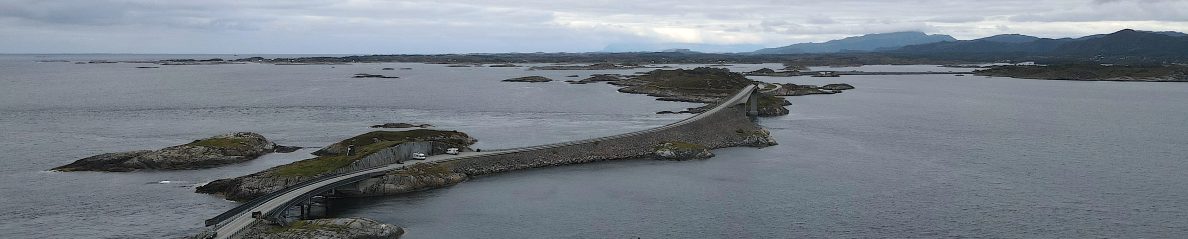


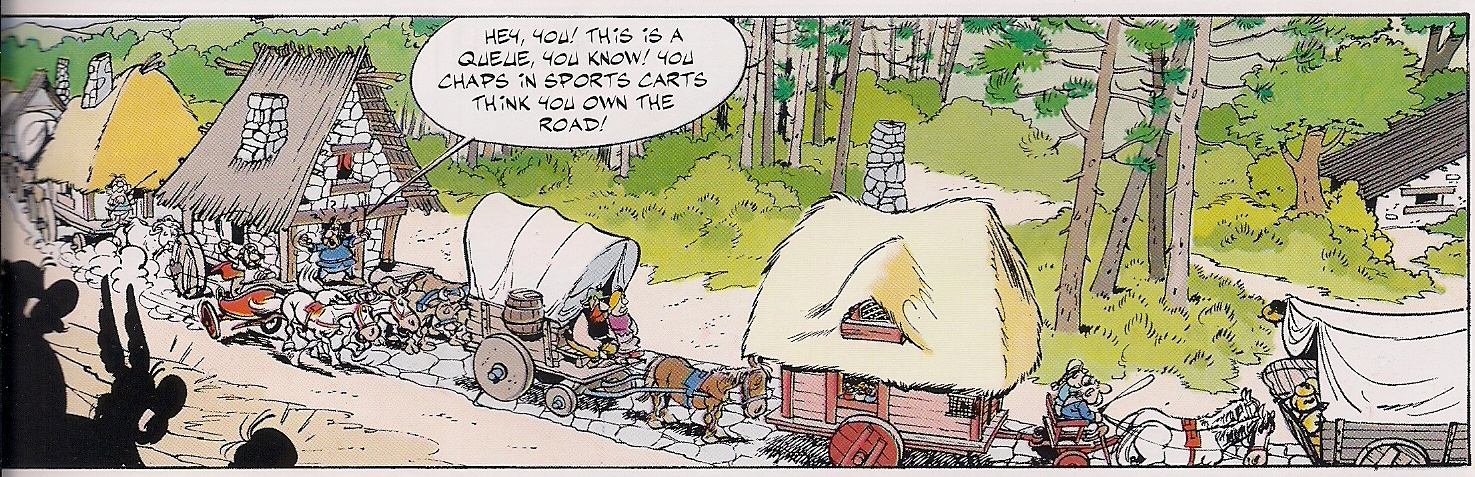

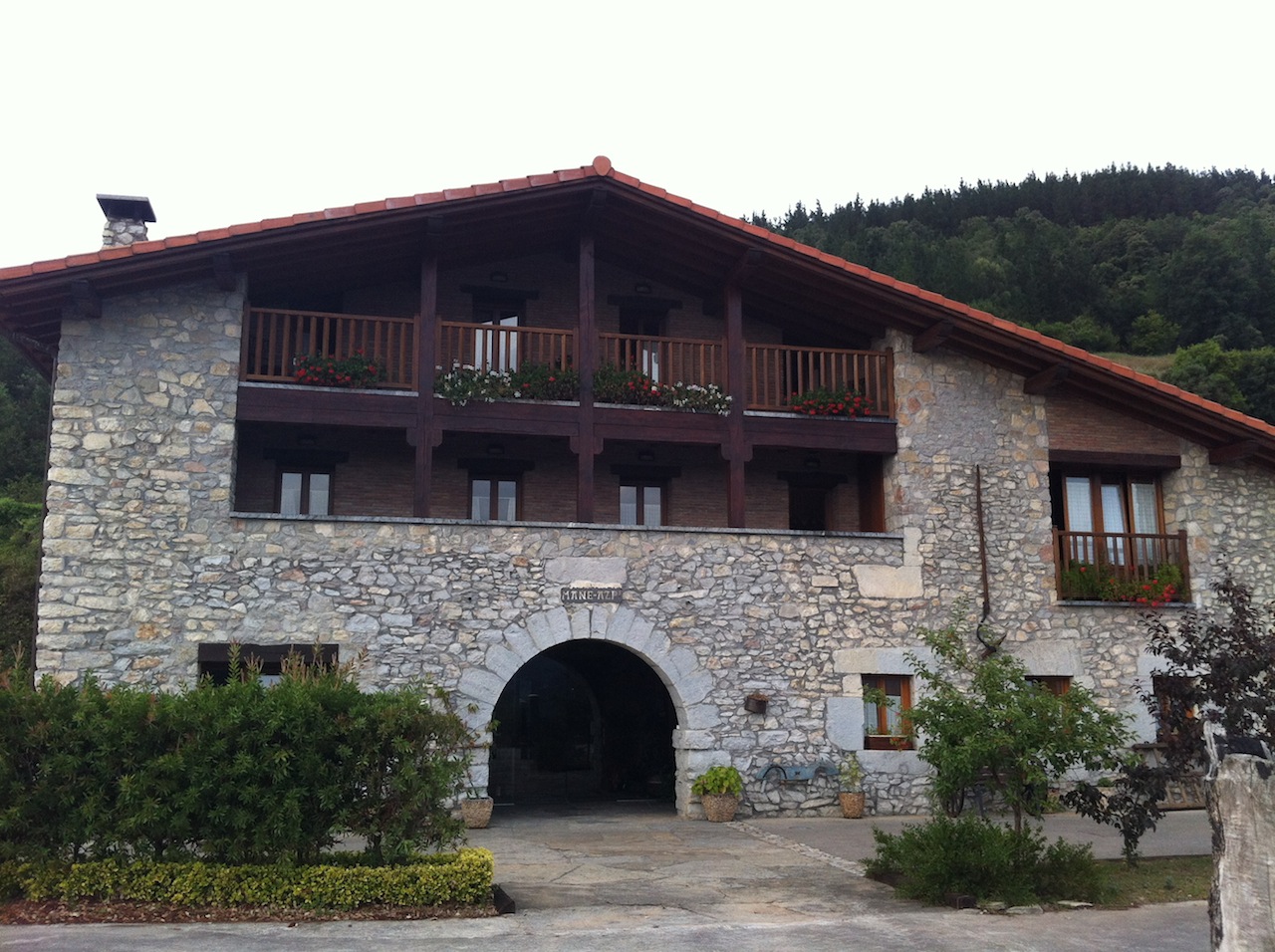


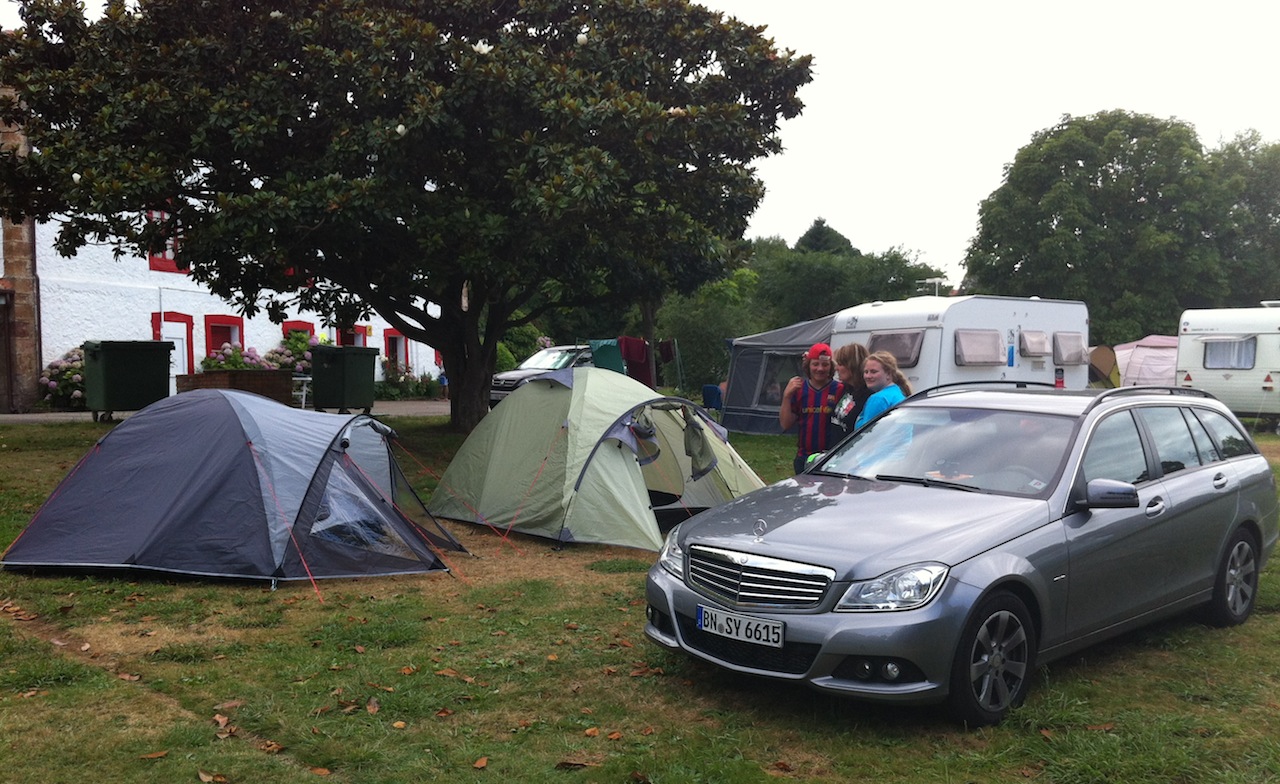


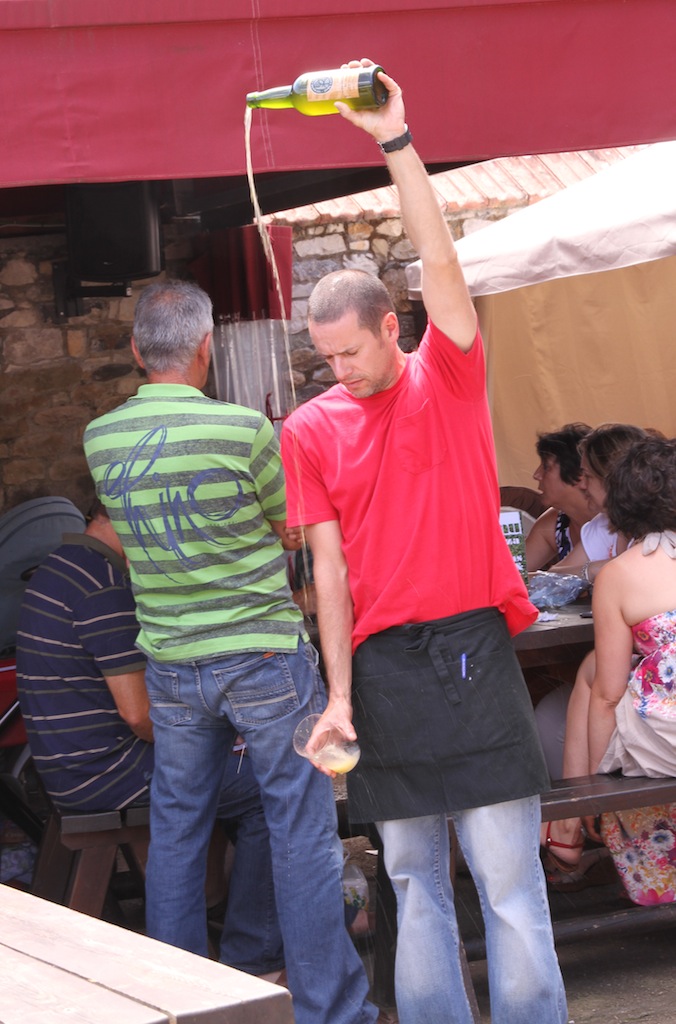

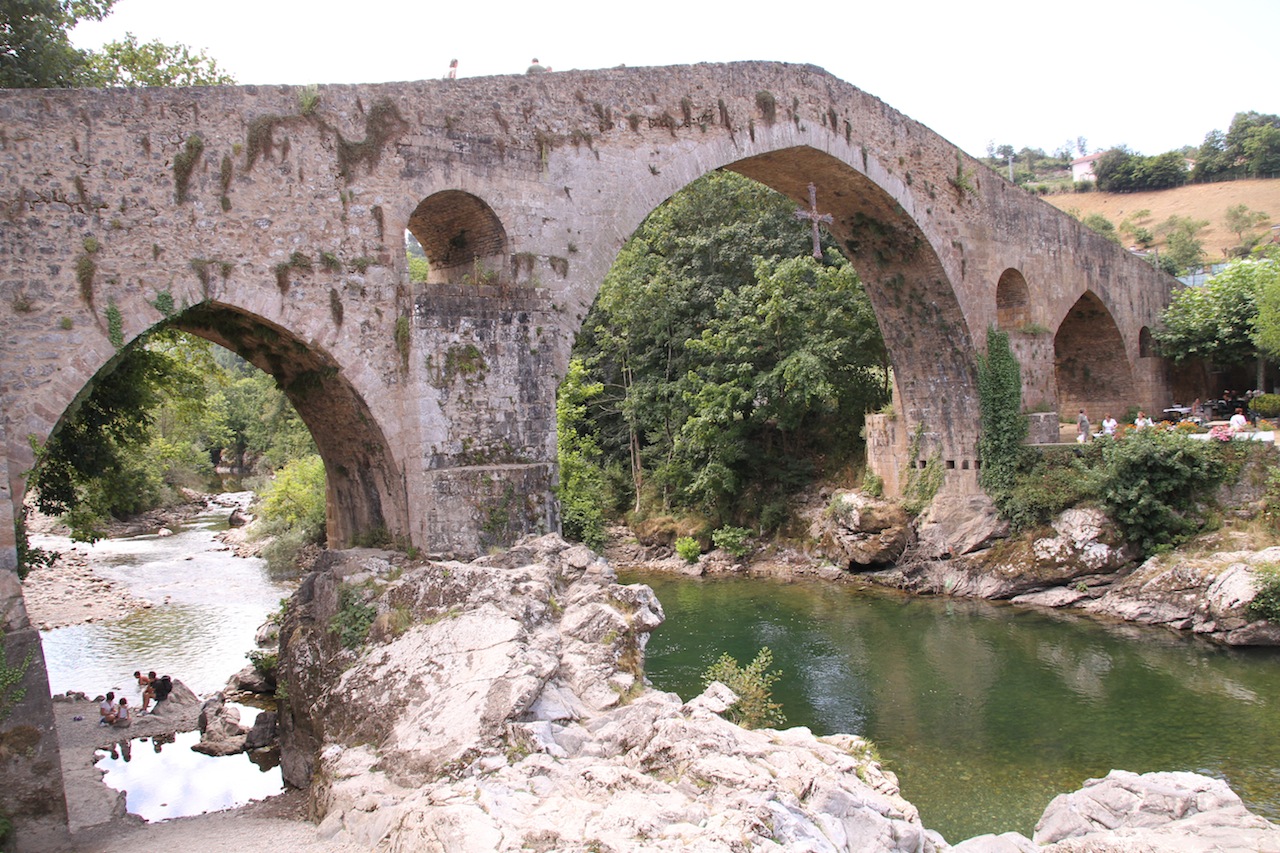

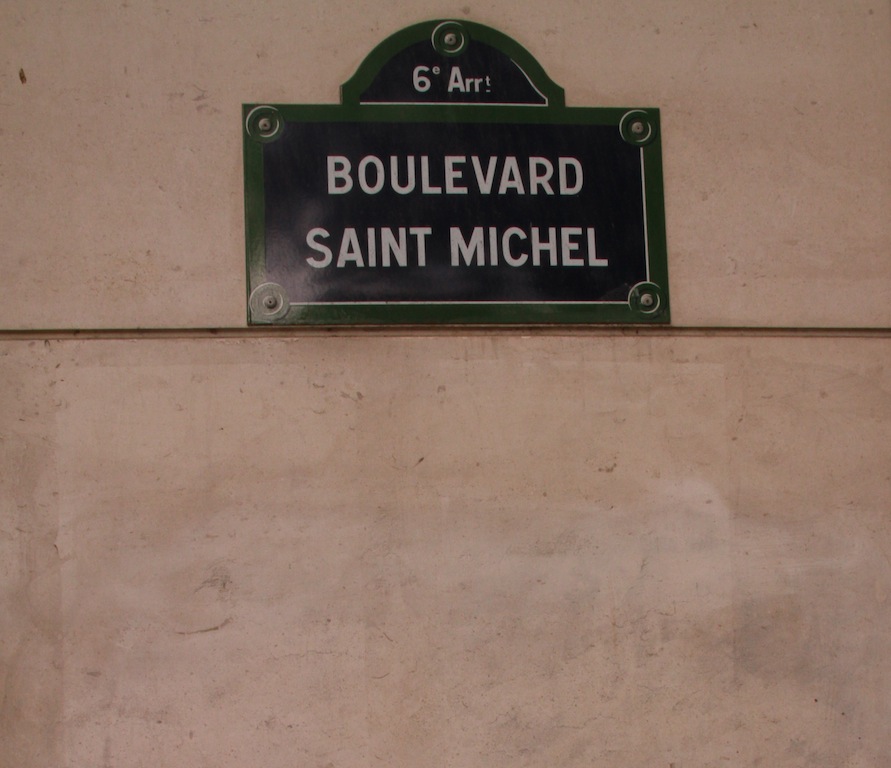
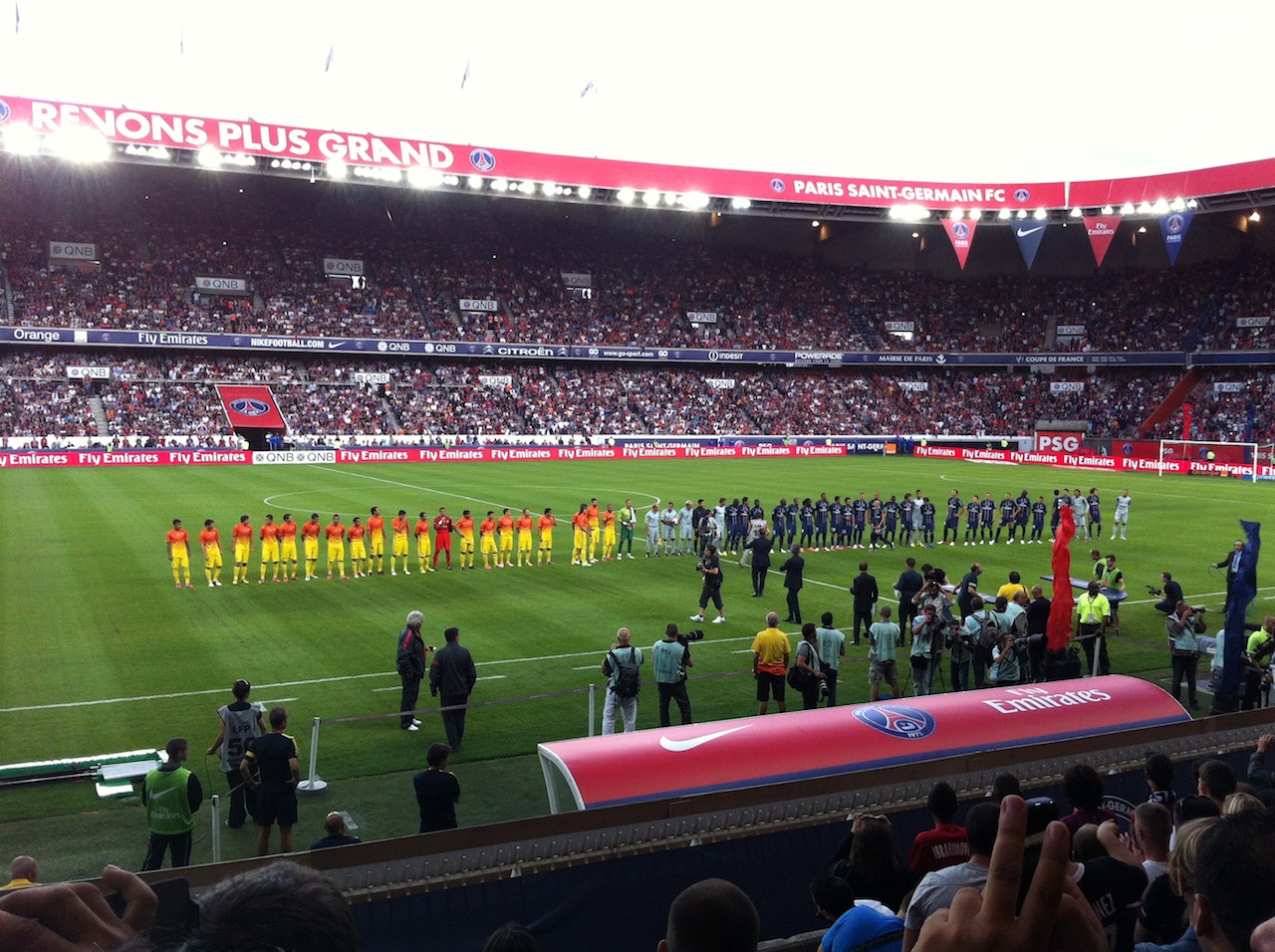
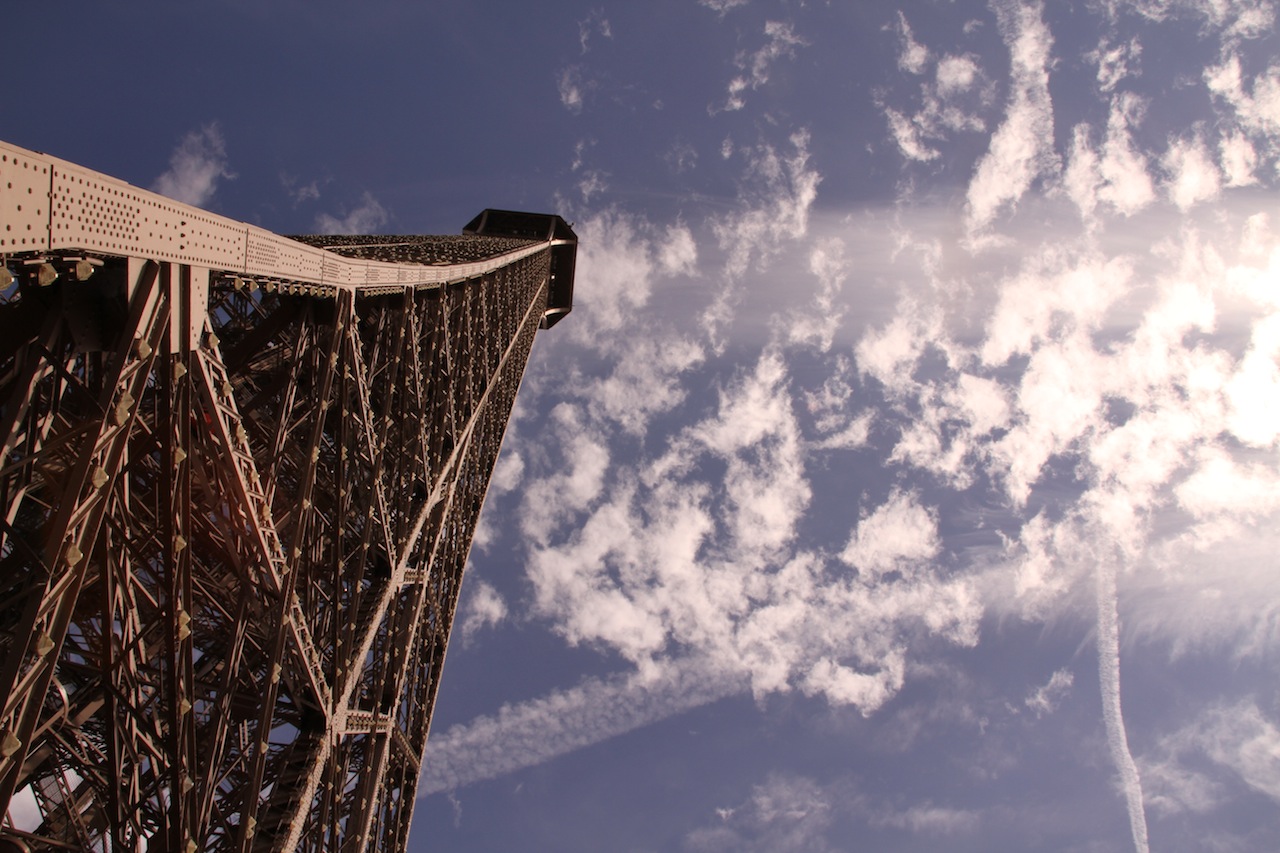
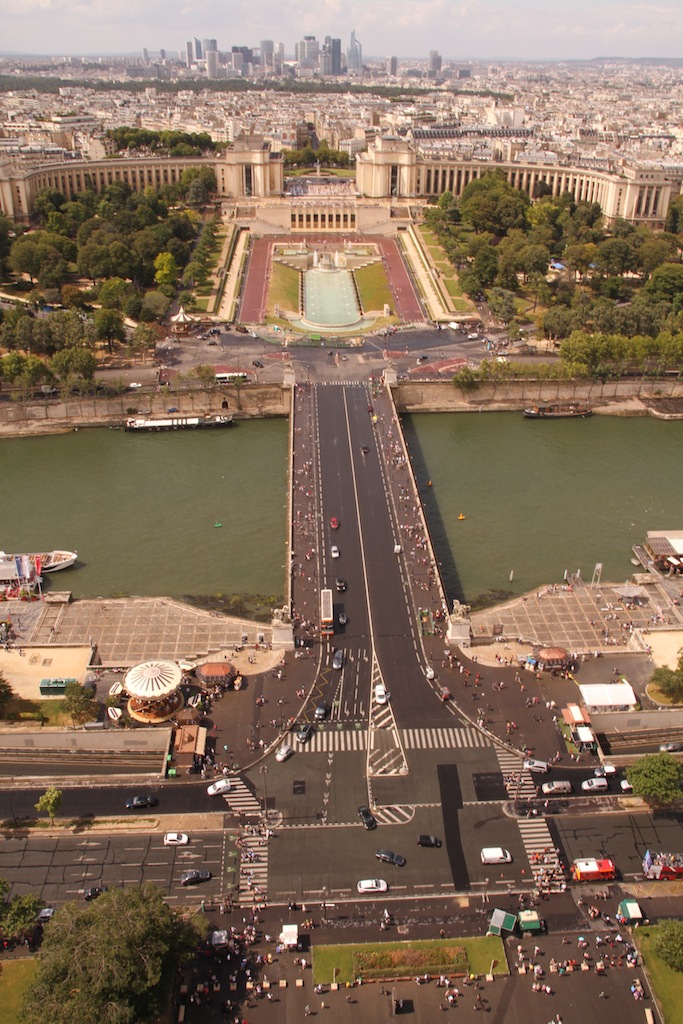


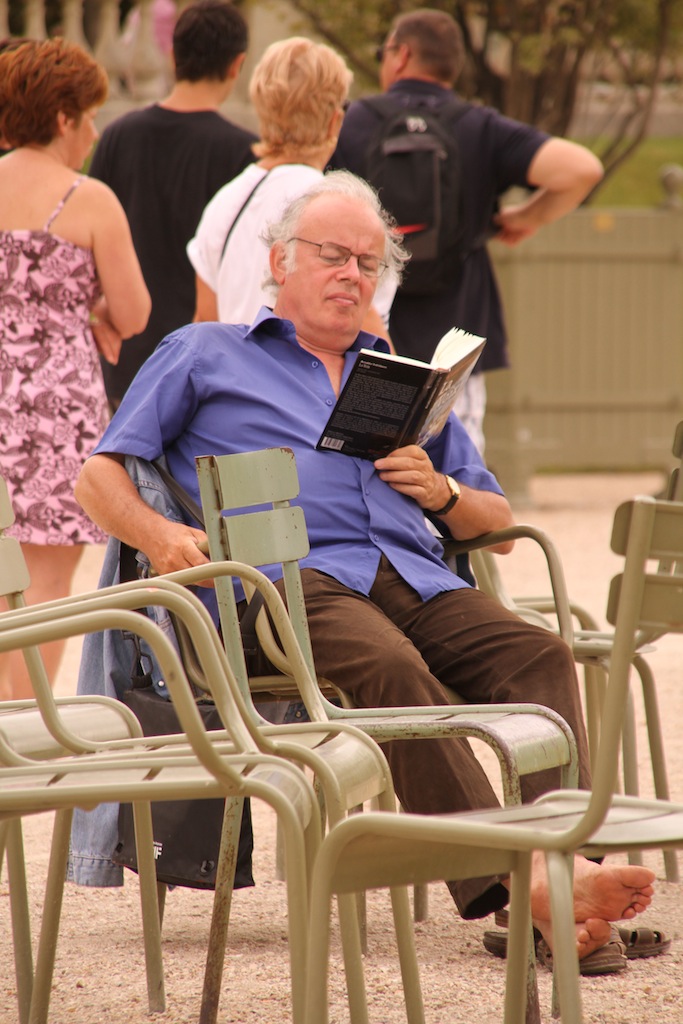
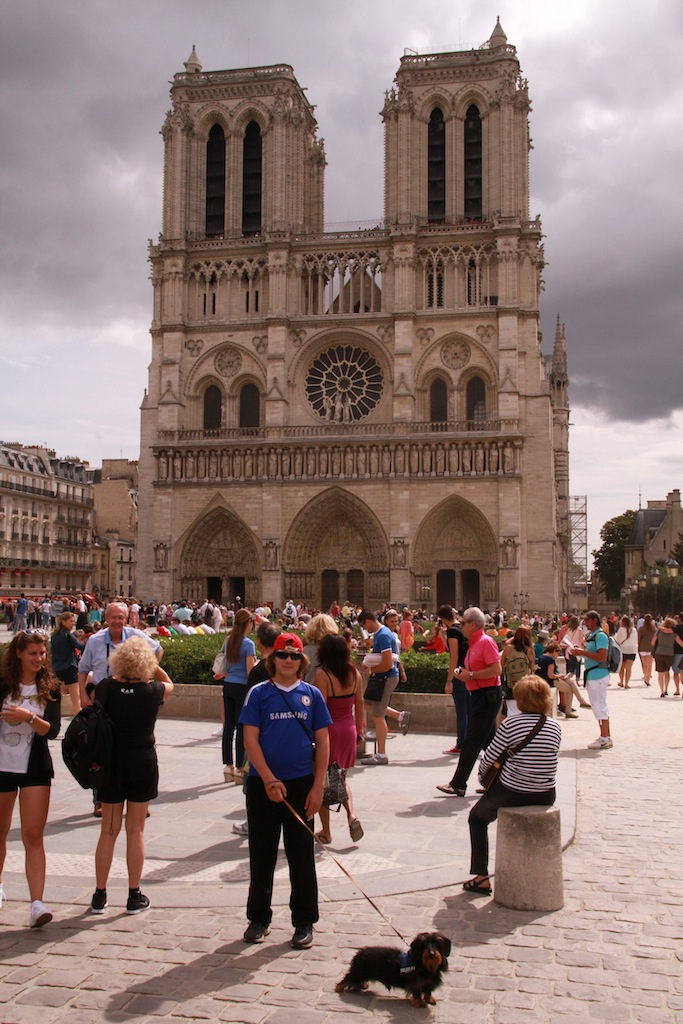


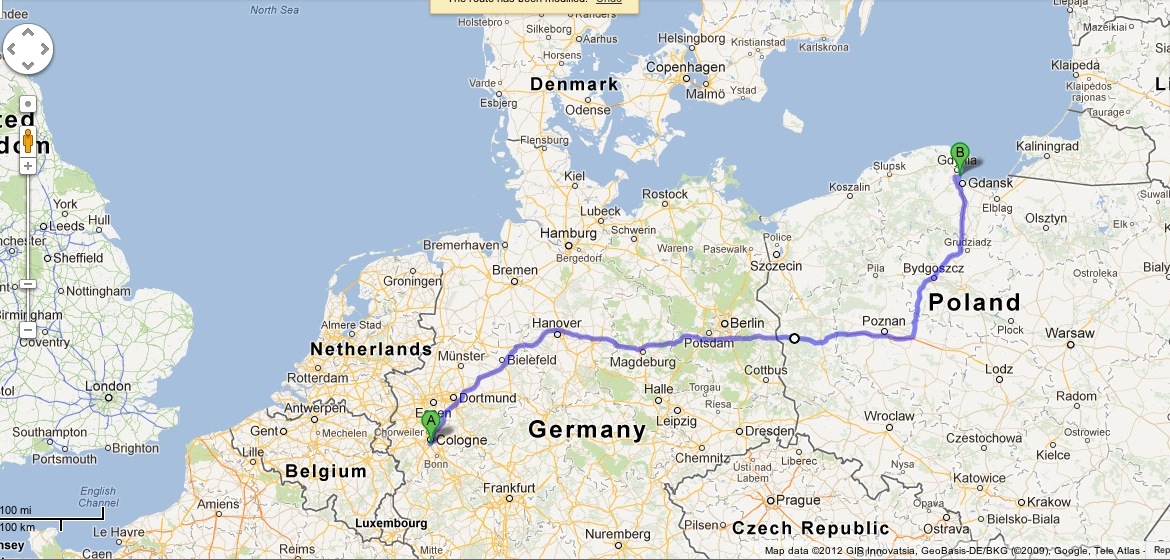


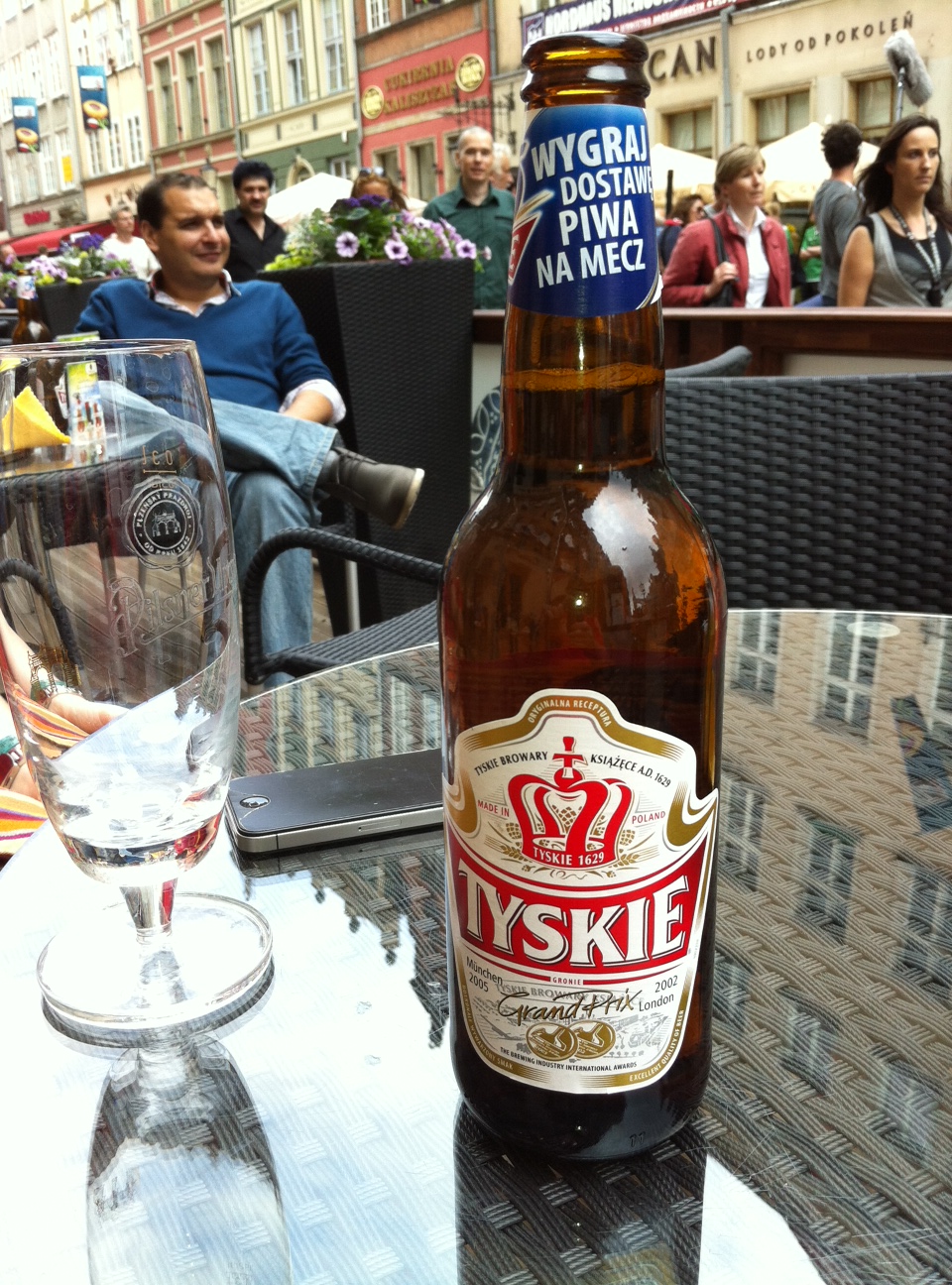


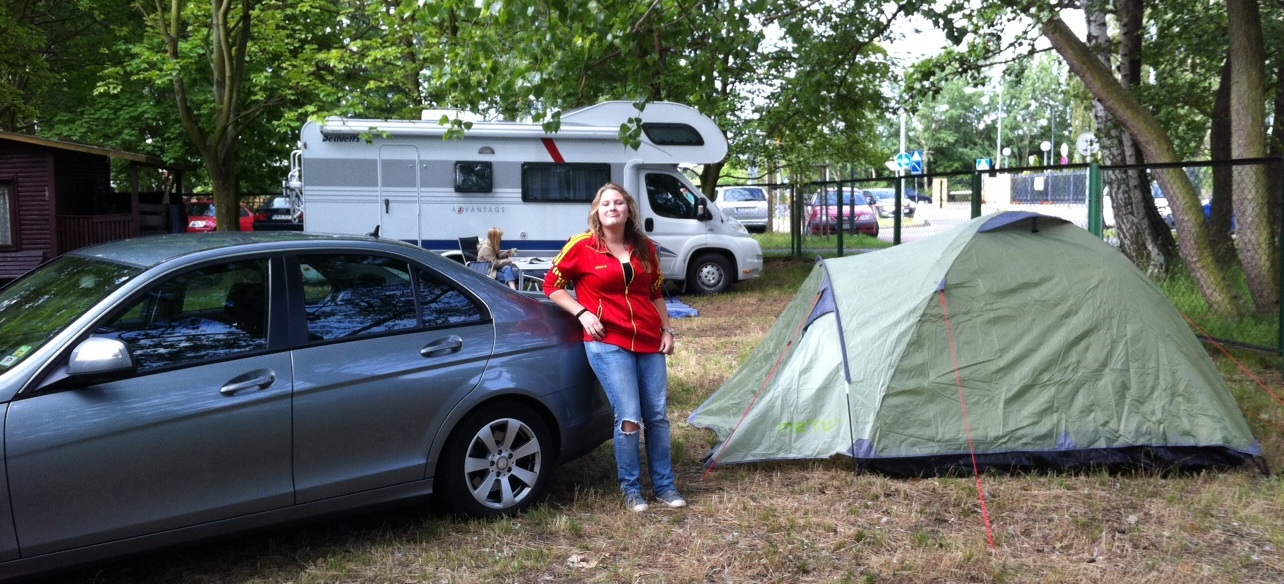
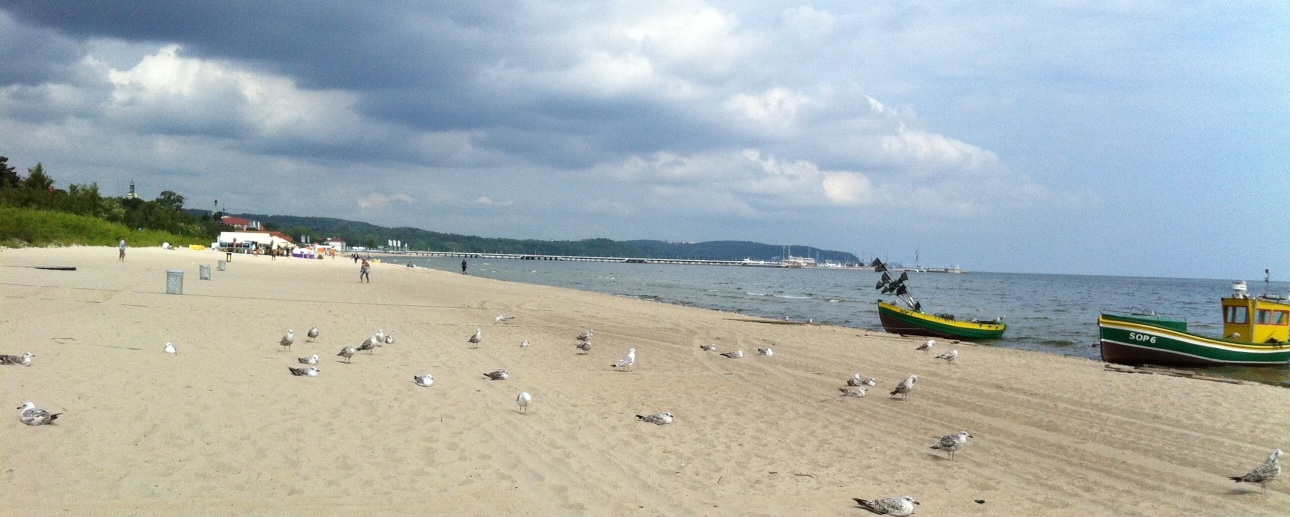


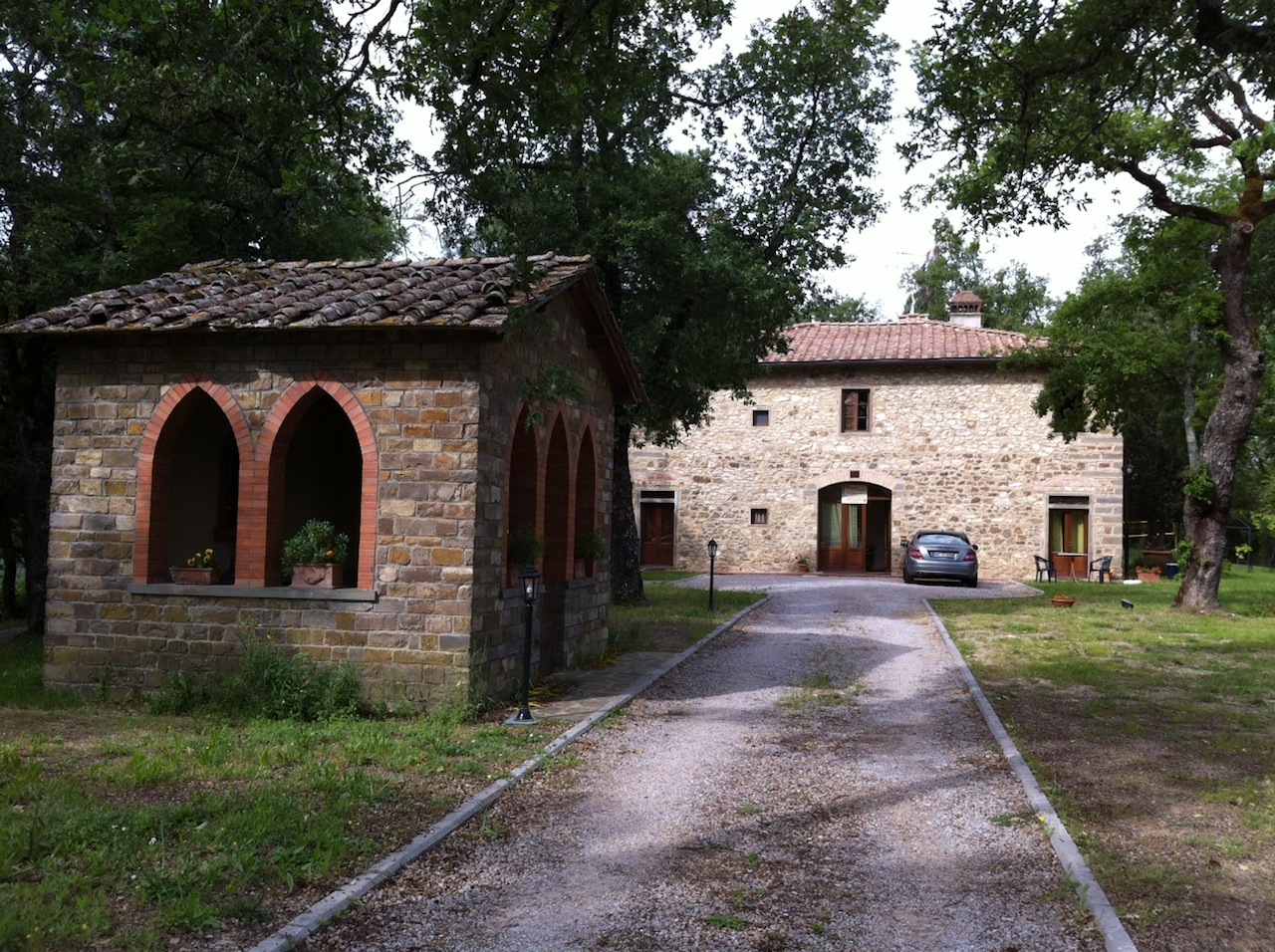


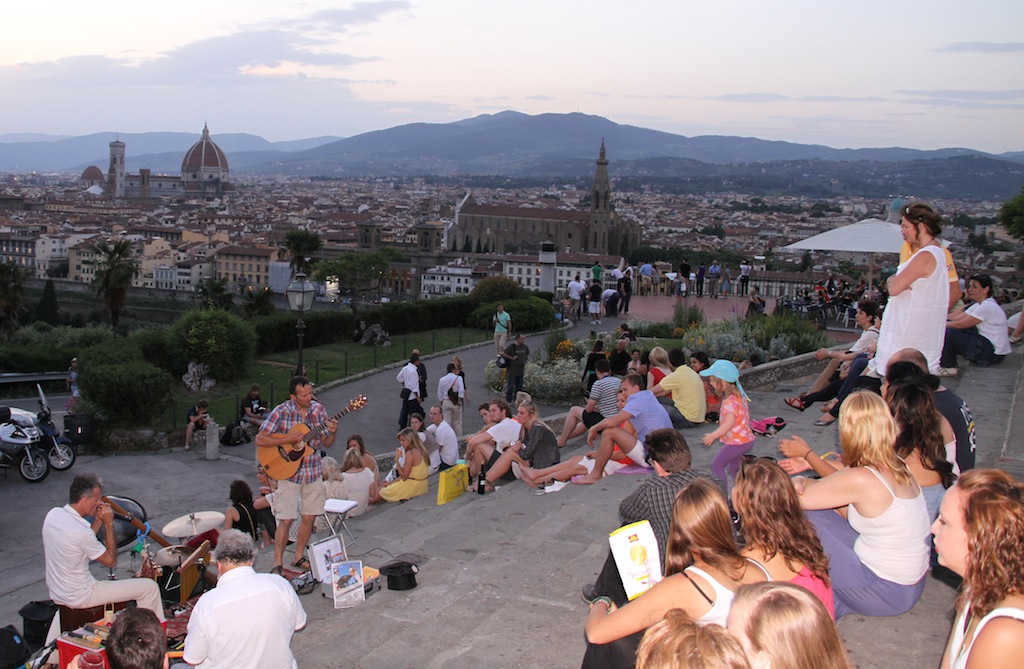


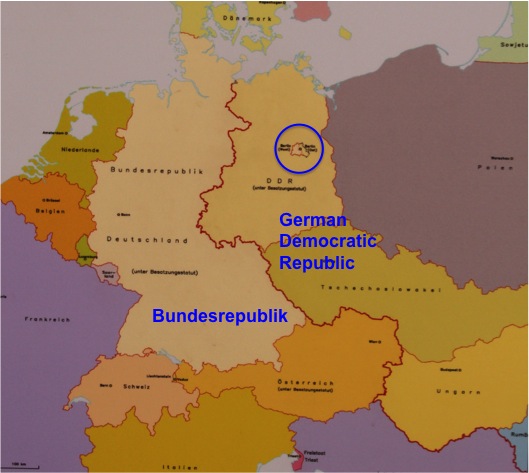


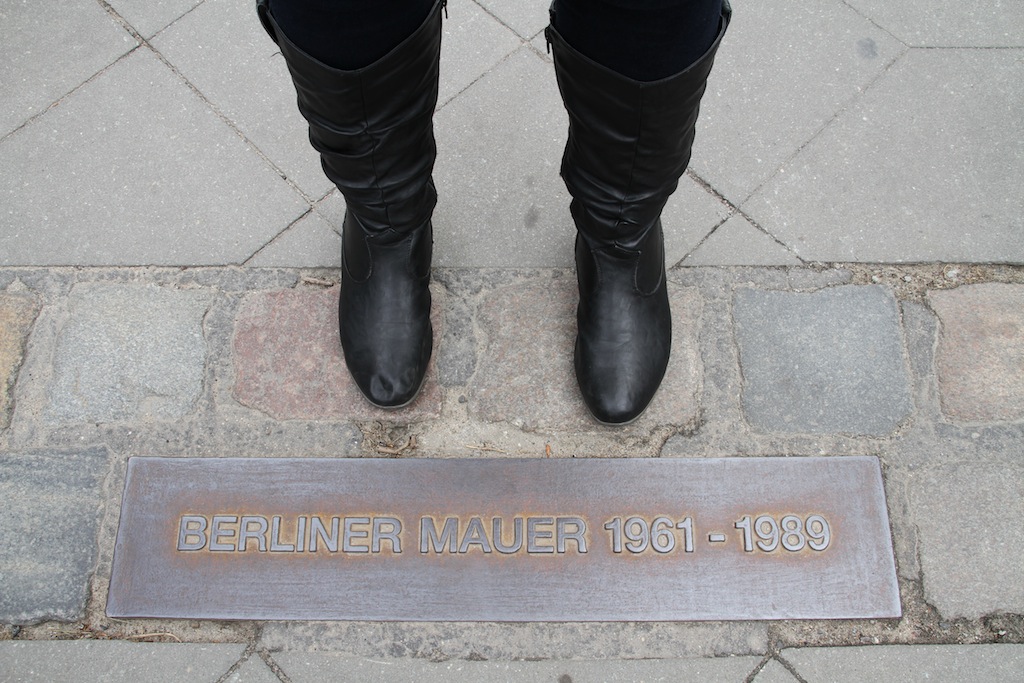


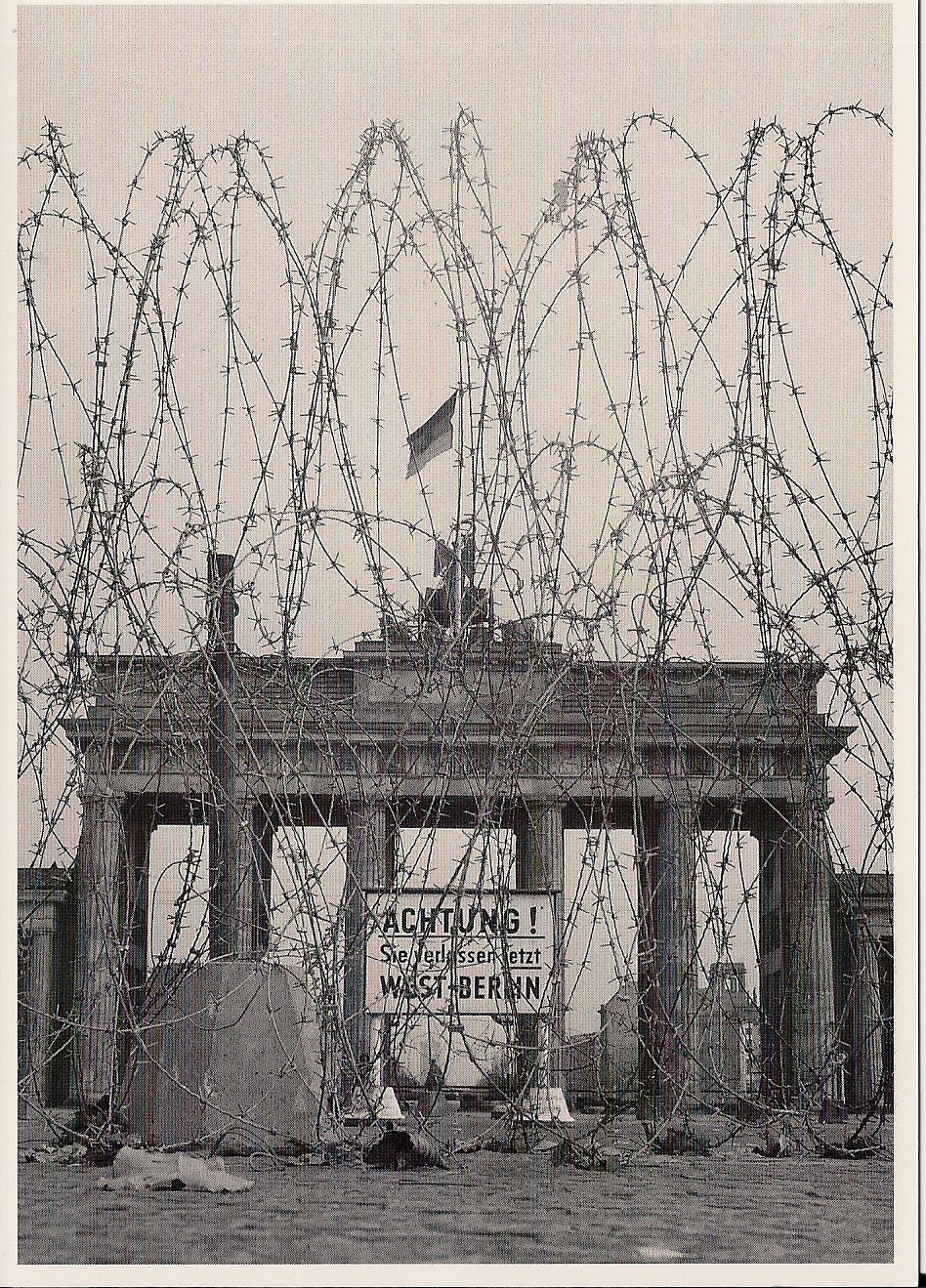


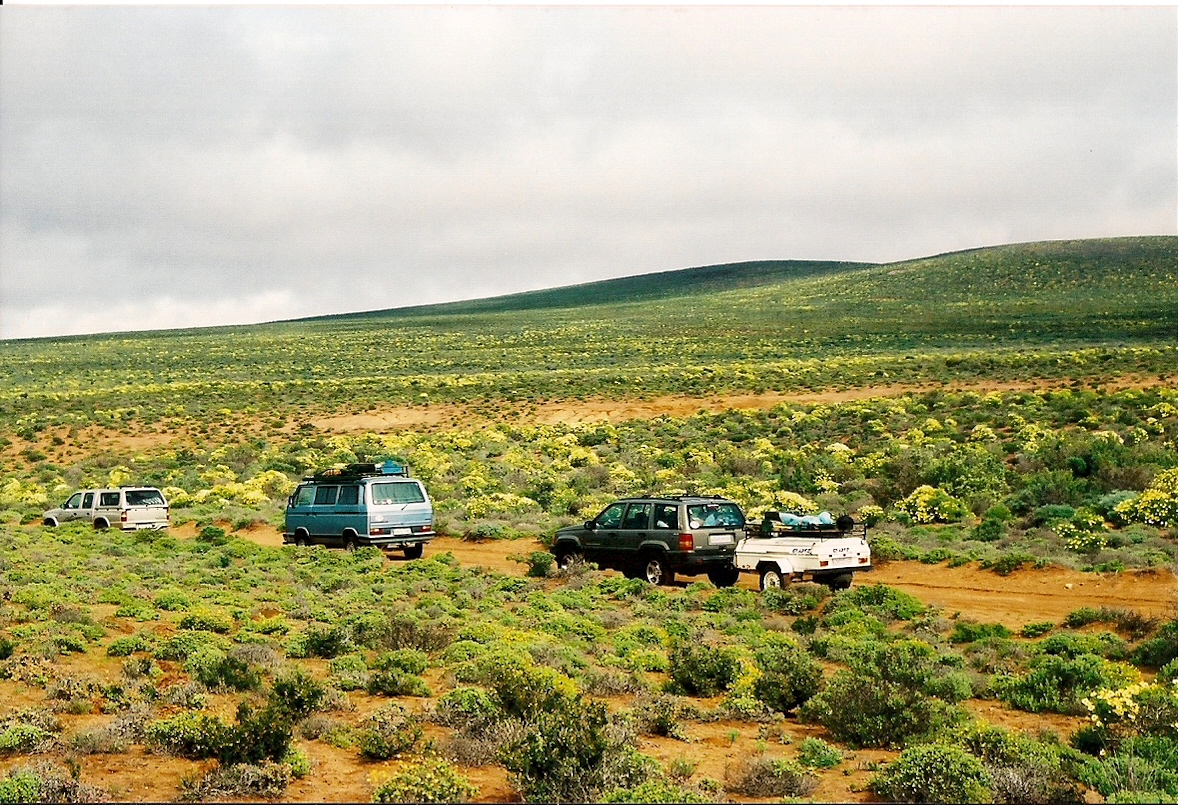
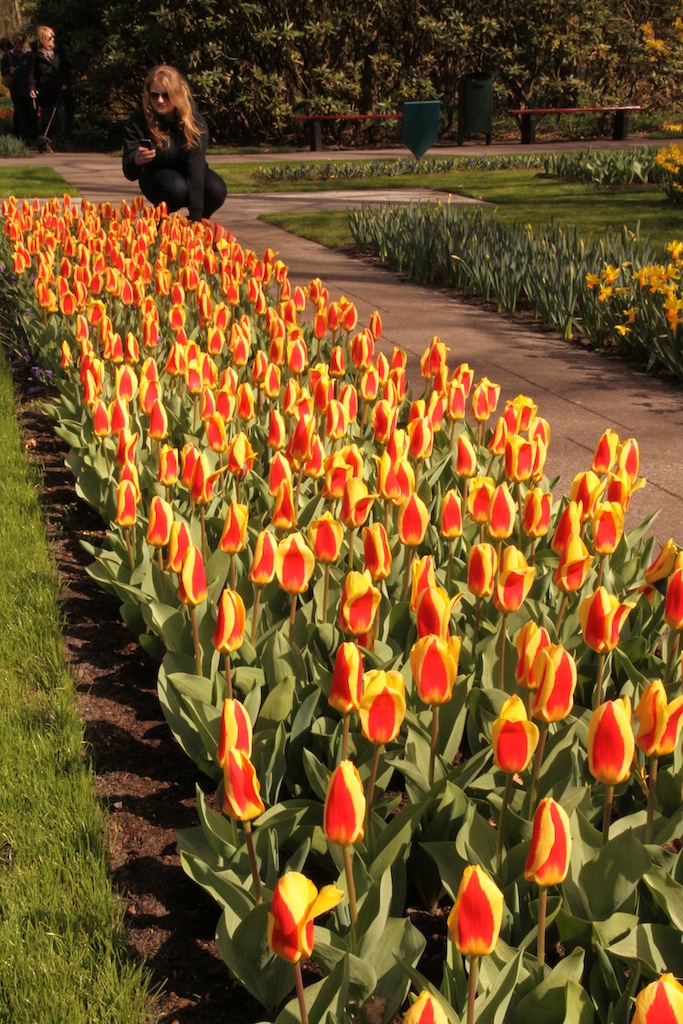
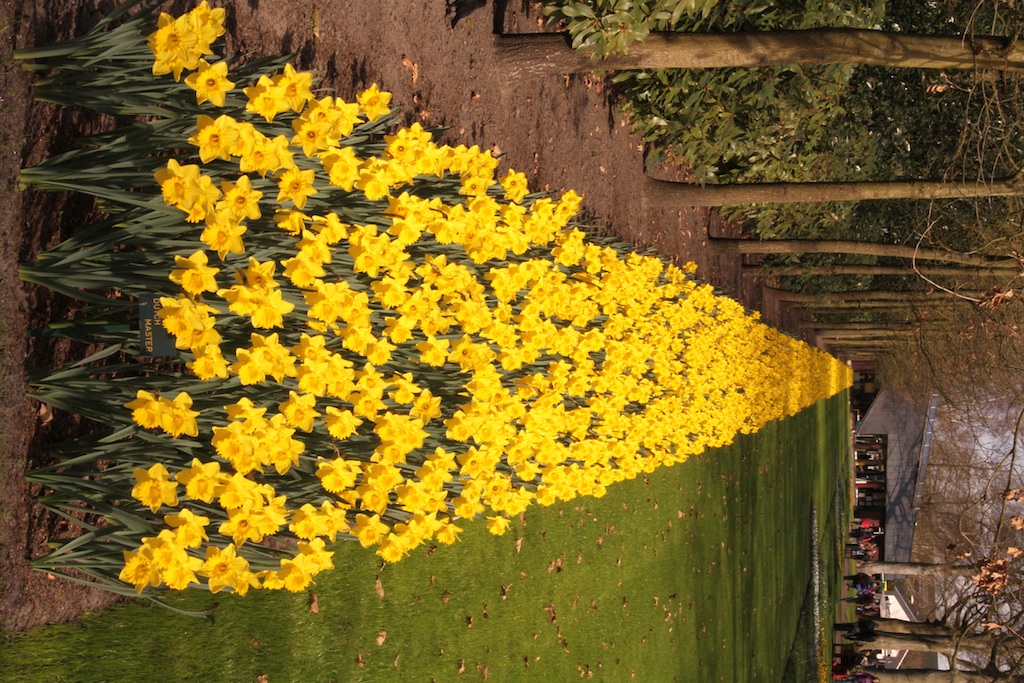

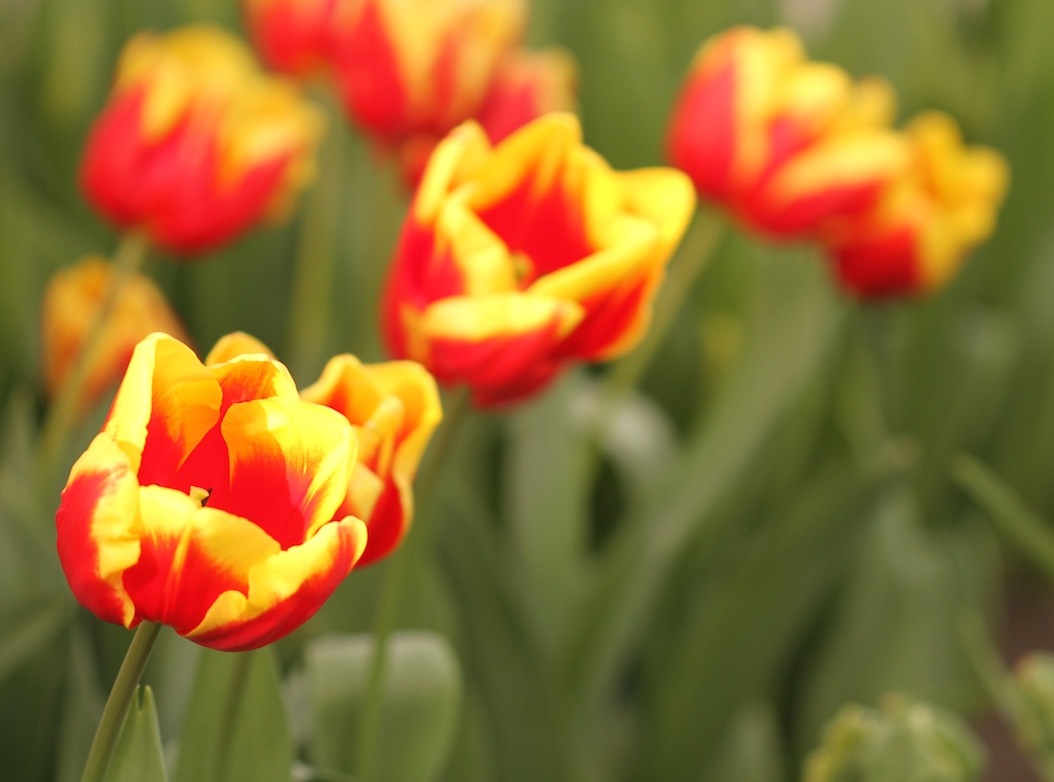


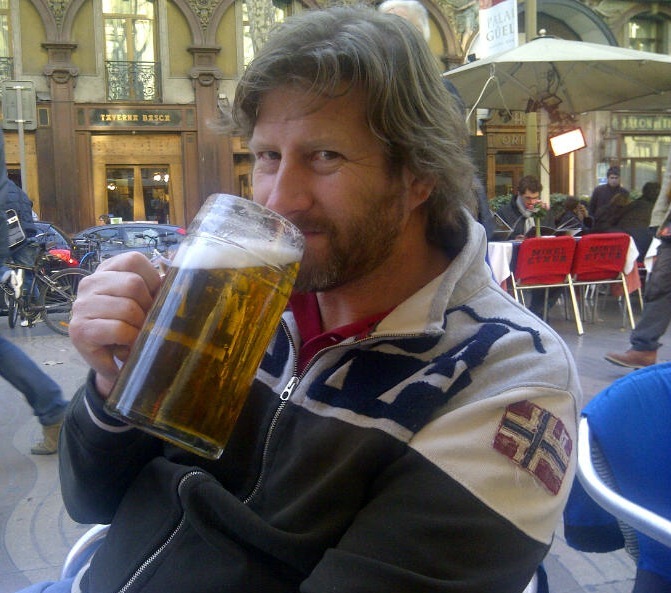
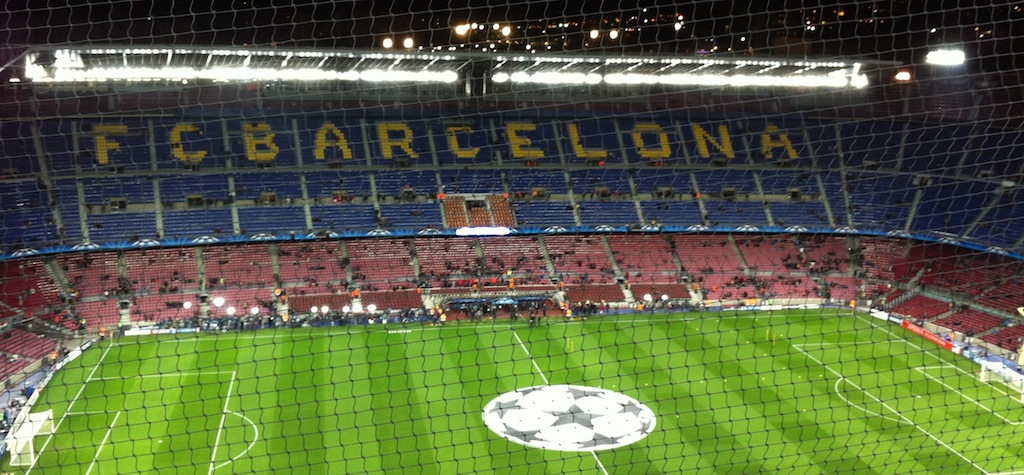


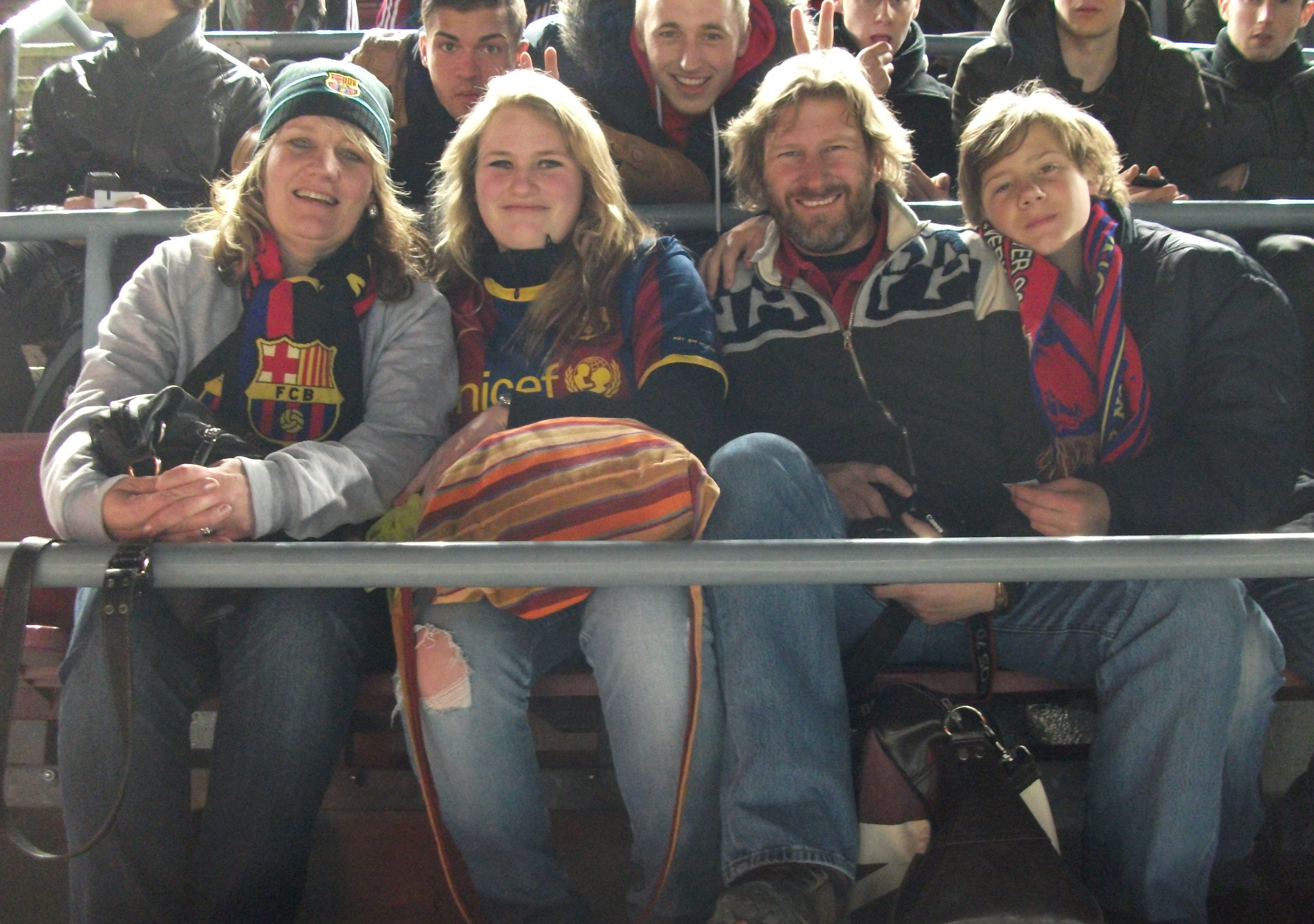


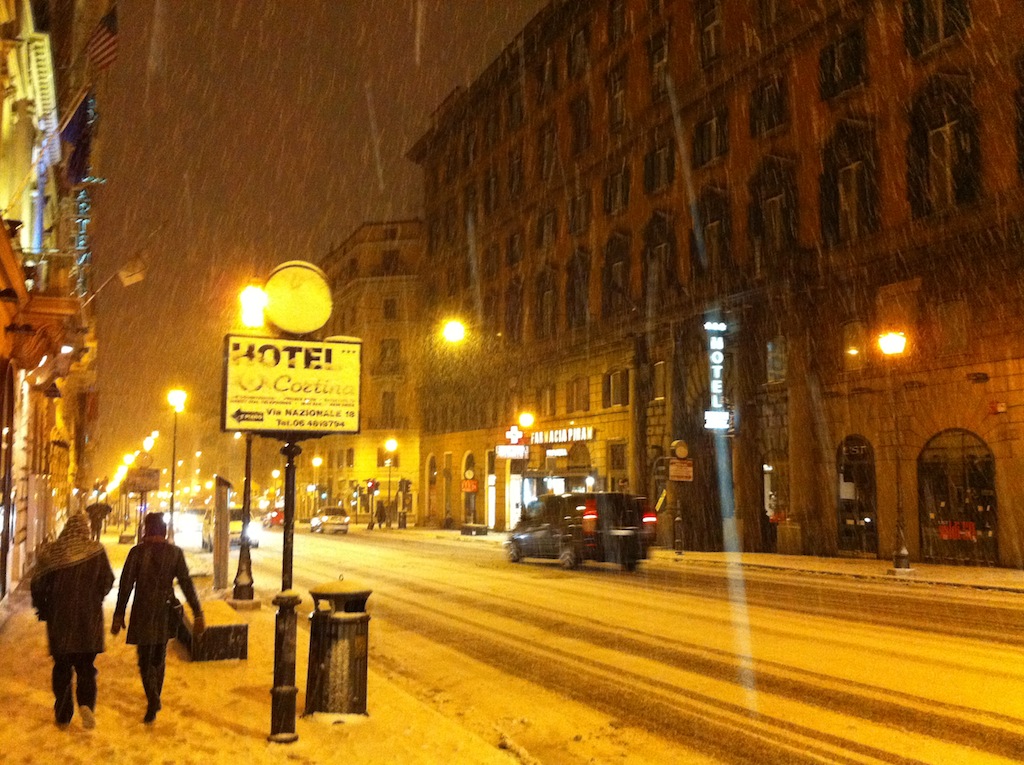
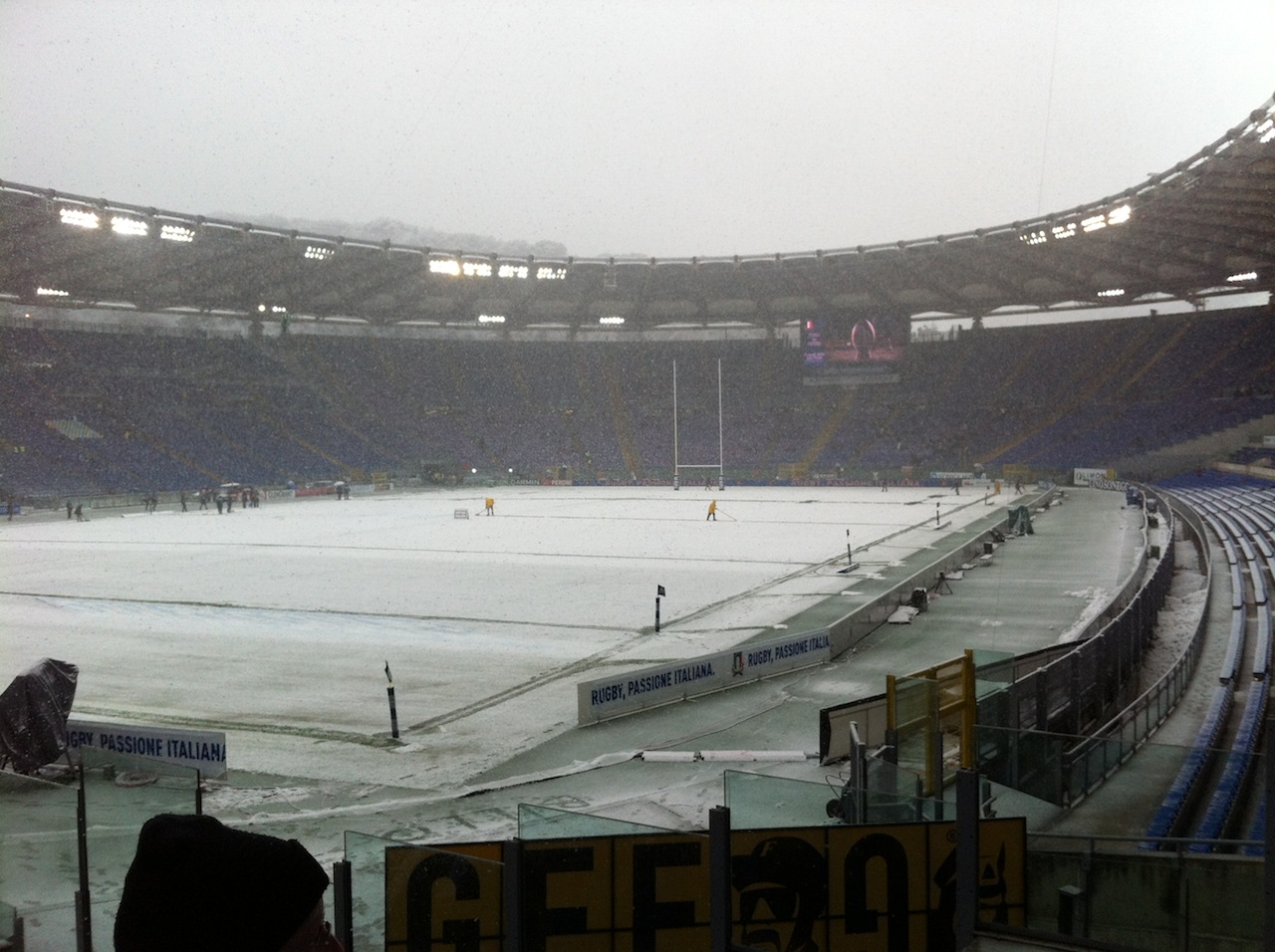


 aldiepaaie