Skiing is believing

I have now come to the conclusion that a 10-day ski-trip is very much the same as a 10-day beach holiday at say Scottburgh over the Christmas holidays, just colder. Its 10 days of real carefree childlike enjoyment in the way that you’ve last done when you were a kid with the energy of a kid and the honest enthusiasm for something new, like a kid. The refreshment of soft drinks has made way for something frostier though!

That’s what we did over Christmas 2011 and with some good Saffas friends joining us it was a great fun filled family outing where you have no commitments, no schedule, nothing to do other than to decide which slope will be tamed today and where will we get stuck for après-ski to mull over the adrenaline of the day, laugh at the expense of the ‘fallers’ of the day and sympathise, with the injuries.

Fortunately there weren’t any serious injuries, thus no real sympathy required!

In my book a proper holiday starts at home and not at the destination. This was no different and with the Moutons and a Verhoef visiting Köln for the first time, plus the need to stock up on some ski clothes the few days at our home was equally enjoyable. Our ski-trip therefor included three days of exploring- and shopping in Köln. We could boast off some of the Rhine scenery, some of the Weinacht-markets that are so abundant in Germany over the festive season and simply share some of the local bars and restaurants with our guests. We could also introduce them to the magnificent Köln Dom. Interesting little piece of trivia Dan shared with me is that his granddad bought a pocket knife outside this Kölner Dom on a visit there in 1952.

An added bonus, as if to really introduce the South Africans who departed SA in the height of summer was that that morning when we picked them up at Frankfurt Airport, it was snowing properly, even to the extent that driving was an adventurous new experience for me too. Point is a skiing holiday starting in falling snow when you step off the plane is just so much better than having to wait in the cold (pun intended) until you get to the mountains to see snow.

We were heading to La Plagne Montalbert in the French Alps as final destination with a packed VW Kombi and sedan Merc; 9 excited boertjies adamant to tame the ski slopes. It included the drive through some stunning Europe scenery starting off with meandering the Rhine Valley from Koblenz through scenic little towns such as Rhens, Boppard, Bad Salzig, St Goar, St Goarshausen, Lorelei, Oberwesel, Bacharach and exiting the valley at Bingerbruck after crossing the river twice by ferry. Heleen and I tend not to plan road trips in detail, which means no overnight accommodation was planned for as ‘you never know when something nice crosses you’re route’. This was the same on this trip and we decided to head for Lausanne in Switserland to bunk for the night. As it was already dark by the time we arrived and we planned hitting the road first thing in the morning, we didn’t particularly care about scenic accommodation. The kids held us ransom the next morning and we headed for MacDonalds in central Lausanne for breakfast before meandering around Lake Geneva, stopping for photos at the lake and listening to Chris de Burgh’s reference songs of the area, the war refugees and ‘saying goodbye to it all’.

Chocolate box picturesque, that’s so clichéd but its so real and accurate. This is Switzerland; Lake Geneva with its icy clear water and snow capped mountains surrounding it. Its also where so many things happened in history such as the unlikely couple of  ‘Oom’ Paul Kruger and Freddy Mercury sharing interest in Montreux and its just up the lake from where Asterix and Obelix kept a low profile in the Lakeside Hotel while hiding from Governor Curius Flavus while being not impressed with the local delicacy of cheese fondue.

(Paul Kruger spent his last days and past away in Clarence Switzerland, very far from his beloved South Africa. Freddy Mercury too had a soft spot for Montreux and spent lots of time with the other Queen members in their music studio in this town; there’s even a statue of him)
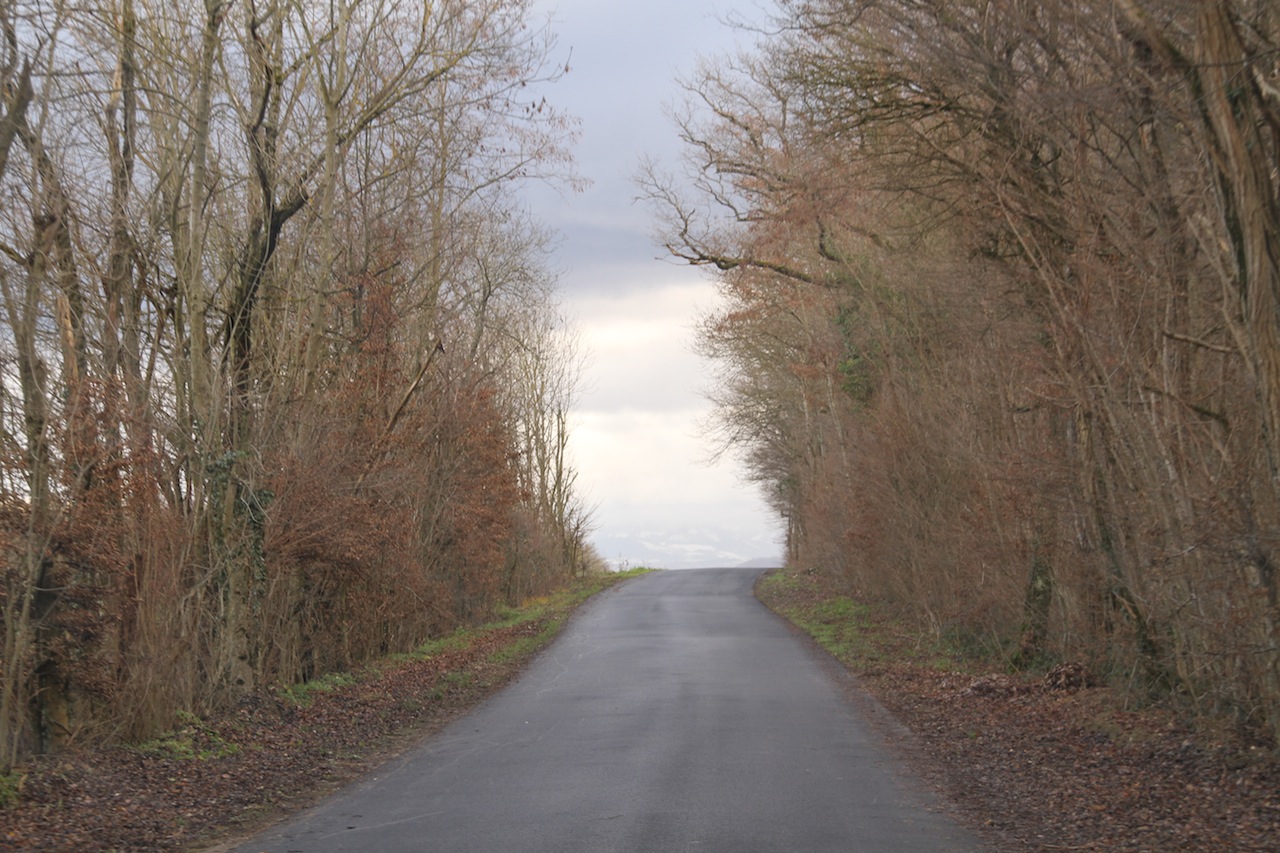
Country road in France

We also had a bit of ‘keeping a low profile’ to do as I forgot to pack the kids’ passports and didn’t want to land in a situation where we are confronted to show them while crossing into France; with the Swiss you’re never sure. Fortunately we have stayed in Genève in Daleen and Kevin’s house a few years ago and learned some of the back roads to sidestep officialdom. We circled the lake through Genève and the little town of Hermance and entered France on a stunning little country road from where we headed towards the absolute gem of Annecy

Annecy

and then destination Montalbert. Annecy truly has a spectacular ‘la vieille ville’ (old town) and it being Christmas time, they too had their markets where we stocked up on the ‘vin chaud’ (gluhwein), homemade nougat, salami, cheese, baguette and obviously crepe (large pancake).

‘La Plagne was created in 1961, as with many resorts in the Alps, to save the valleys from becoming deserted. The agriculture and mining industries were in crisis, which led to young people leaving the valley in search of work. In 1960, four towns (Aime, Bellentre, Longefoy and Macôt) created an association to defend their interests, with an initiative of Dr. Borrionne, mayor of Aime. On 24 December 1961, La Plagne opened, with its two drag lifts and its four slopes.’ Montalbert is one of the mountain villages in this bigger La Plagne area and has access to more than 100 kilometres of ski slope. It’s a typical small ski resort town with a few restaurants, bars, delicatessens and one little supermarket. Accommodation is self catering chalets and we were right on the slope, which means you exit you’re chalet dressed in you’re ski-suit and boots and ski down to the ski-lift! No bus commuting or other tedious exercise to get into the fun and action, its right there on your doorstep.

I was very relieved when I realised skiing is like cycling, once you’ve reached OK levels of competency, you can ski. Our previous skiing exposure was Dec 2009 and we were al very comfortable to simply tie our boots and ski, not necessary for any lessons! Fitness and strength is another story, but ability to ski was there, immediately and this gave us all the confidence and ease to really enjoy the slopes. The two newbies as far as skiing goes, Jacques (6) and Dané (4) started in the ski-school but were quick learners. Jacques specifically was extremely quick and after one lesson hit the slopes with ease. By the end of the trip he was a real competent little skier, complete with little jumps, speed and jokes.
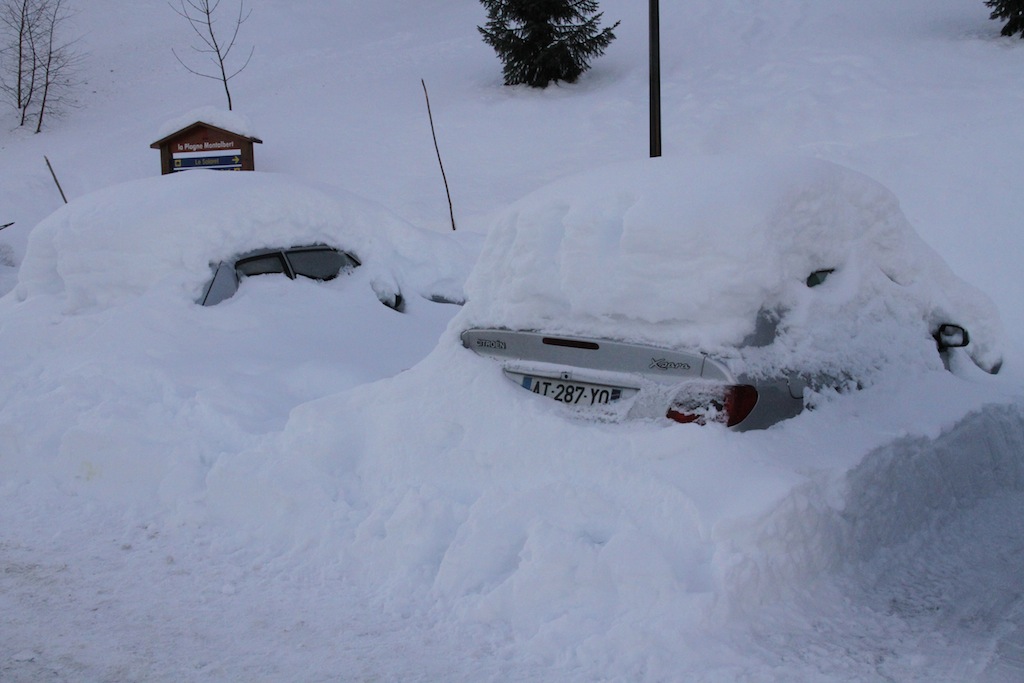
Had some serious snow while we were there

I have mentioned a ski holiday is the same as a December Scottburgh beach holiday. Its just so relaxing with a lazy breakfast, then skiing a few slopes, finding a pub or little eatery somewhere in the mountain, having a leisurely lunch with a beer or glass of wine and then an afternoon of further leisure skiing. The afternoons especially becomes such an enjoyable exercise because of that feeling when sunset creeps closer and you just don’t want this day and pleasures of the slopes to end; exactly as I remember those Scottburgh afternoons in the waves! Then its again hitting a bar for the après-ski (in Scottburgh is was the Wimpy, in Montalbert it was La Skanapia http://www.restaurant-leskanapia.com ) to close out the day, get some heat back into your frozen limbs and to decide what will happen for dinner. Every so often the hunger is so huge after the full day of skiing and cold that it became a case of ‘veni, vidi, velcro’ (We came, we saw and we stuck!) that the après-ski beer evolved into a full-blown dinner. Nothing wrong with that, because you are on such a relaxed, no appointments schedule.

We spent 10 days in this mode at Montalbert. I normally get itchy to drive around and see things after a few days but in these ten days we actually drove out to another town only once. It was a day of continuous snow falling that we simply wasn’t in the mood for getting ourselves soaked in temperatures under freezing point. Thus, heading for Macôt for lunch and testing our very expensive but compulsory snow chains was a good alternative.
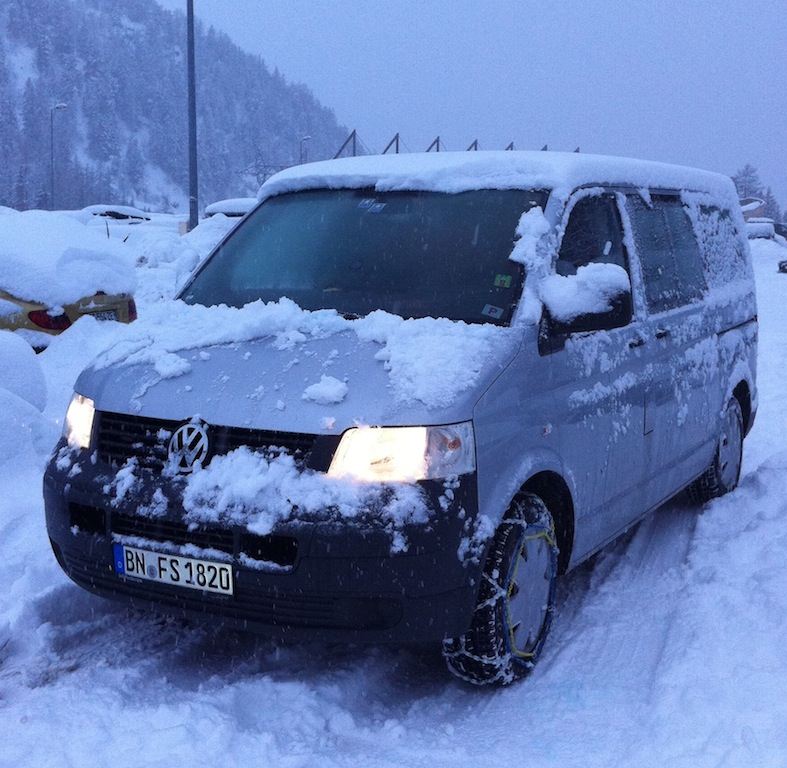
It does snow in South Africa, and South Africans do rush off to Lesotho and other mountains when reports of snow come through. However, to experience, not see but experience, the Christmas snow of the Alps at least once in your life is really something worth planning for. It is just one of those ‘wow’ experiences that is never forgotten and that is worth the effort and cost. I can truly recommend it! Obviously adding to this ‘wow-ness’ is the experience of other languages, a bit of the culture and the cuisine! Our exposure on this trip was the French and enjoying culinary gems such as their salamis, baguettes, cheeses, pastas, wine and aperitifs, Hautes Savoie (remember the French pronunciations, in this case something like ‘Ô Sawua’ with Afrikaans in mind) herbs and Alpine specifics such as cheese fondue for some and a marmite ‘potjie’ (again pronunciation is important; ‘marmiet’ where the ‘r’ is not silent!) for others made me gain a few pounds in spite of the skiing exercise! Not even to mention the 1664 and/or Kronebourg beers, cappuccinos, crepes and other desserts to finish off the eating. We’ll cut down on another occasion.

Driving back to Köln I chose the highways through France (to skip the Swiss authorities and see some new scenery). We didn’t sleep over again and did the 1000 odd k’s in one day.

We had a stunning white Christmas and incredible two weeks thanx to the friends who added to this little Fench skiing sojourn by simply committing when they heard we’re relocating to Germany and then executing without hesitation, the Moutons and Annie Verhoef. We thoroughly enjoyed it.

‘Merci beaucoup mes amis’

‘Country roads take me home’

I often feel very robbed when journalists write articles under the banner of country roads, roads less often travelled or “heelpad grondpad”. You see, in my head, I started it all, its my concept! My I’ve been doing it for years, and simply love the less traveled back roads.

I remember in 1995 when my firstborn was 2 months old; Heleen and I did a trip through the Groot Karoo of Britstown, Carnarvon, Williston and Calvinia. We camped at Algeria in the Cederberg and travelled through the Overberg and Klein Karoo. At that time I was traveling with a CLi Jetta and my ‘ventertjie’ was a Glider! Just outside Bredasdorp, at the Karsrivier, I turned onto the dirt road to De Hoop and Malgas, which I desperately wanted to see. However, here I realized that my equipment is not really suited for the road conditions. 70km of rock strewn dirt road with low profile tyres and towing the Glider with my wife and 2 month old baby on board suddenly made me doubt, and I reluctantly took the tar and crossed the Swartberg via the Tradouwspass to Barrydale. Spending a lovely night in Calitsdorp chatting with a du Plessis gentleman if I remember correctly, who was once a traveling journalist for the magazine “Panorama” I decided that the Jetta will just have to let me see the Swartberg Pass and that’s exactly what we did the next day. Fortunately without any hassles we saw the Swartberg, but once back in Pretoria I started searching for a more appropriate dirt road capable vehicle.

And I found more than once that a “normal” dirt road would prefer a 4×4 rather than just a 4×2 or soft-roader.

Ever since that trip, I loved to navigate these gem little back roads of South Africa and often do the back roads, simply because now I could!

In 2009 we did a trip driving through a little bit of Eastern Free State with the destination being the New England Wartrail area in the Witteberge of the Eastern Cape. After picking up Heleen in Sandton at 5pm, on Wednesday, we headed south to Heilbron, where we temporarily got lost! Now this is some sort of funny phenomenon, that with a GPS, on a pre-determined route, on a road you have traveled before and sort of know, you can still doubt all the electronics and follow your own head. But I suppose it is a well known male thing and therefore consider myself excused. I wanted to do the dirt road not going over Petrus Steyn but since it was already dark and “we should have been home by now” (if I may quote Andrew Lloyd Webber and Meatloaf), plus I knew Dora was waiting in Rosendal at the guesthouse and thus couldn’t make up my mind immediately between dark and dirt or safer on tar. The S219 and S1296 had me on my preferred R725 towards Lindley in a flash and we were on our way again, just to be further delayed by the local farmer doing his “voorbrand” next to the road. The smoke was so intense and fire near the road that we waited 20 minutes before carefully passing with very limited visibility. Without further incident we reached Rosendal and fully took advantage of a hot bath and warm beds in the stunning House Beautiful (www.housebeautiful.co.za).

My route through the Eastern Free State to New England

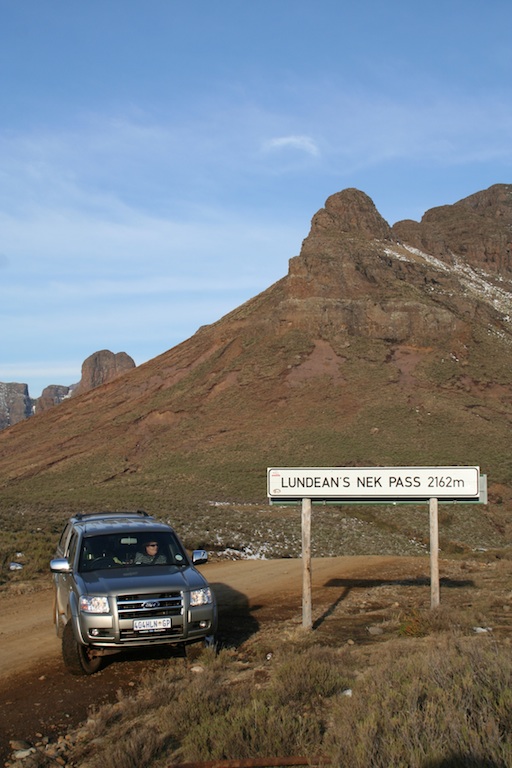
Next morning, after a lengthy chat with one Mr Kriek, who simply stopped his car in the middle of the road next to me and started enquiring about me taking photos of the town and then telling me about the town, its NG Church with its 52 confirmed members, the grazing and weather of Rosendal in typical “platteland” hospitality and after a delicious breakfast we hit the scenic Maloti route towards Wartrail. Since I was going to do the Lundin’s Neck pass, and didn’t want to do it in the dark, I stayed on the tar and simply enjoyed the scenic splendor of this stunning part of South Africa. I obviously did stop at the marvelous padstal outside Clocolan for biltong, koekies and jam, however.

My route navigated us through the little towns Clocolan, Ladybrand, Hobhouse, Wepener, Van Stadensrus, Zastron and then south-eastwards towards Sterkspruit and Tellebridge. It is here that we again started the dirt road driving and what became such dramatic scenery that it urged me to write this trip report. It was now late afternoon, the mountains were speckled with snow and the mood was so terrific with the kids relating the bits of snow with their recent fortunate skiing trip in Italy.

Top of the Lundean's Nek Pass

I know that our skiing areas and snow covered mountains can never be directly compared to the Italian Alps, or any part of the Alps for that matter, but I must emphasize that in South African context, this was absolutely magnificent scenery of scattered rural villages and friendly people in severe cold conditions surrounded by stunning scenery and covered in patches of snow, nogal! It was what I planned the weekend for, and it turned out to promise exactly what I hopefully anticipated.

T.V. Bulpin described this as “one of the most spectacular scenic roads in Southern Africa. It is gravel throughout with tremendous gradients, and there is no pleasure in doing it in wet weather. But in fair weather, in summer or when the mountains are covered in snow, it is a dramatic experience”. Though Bulpin wrote these words in 1970 it is still 100% applicable, and we did it with the mountains covered in snow.

During our abovementioned Italian ski trip, we incidentally became friends with the grandson of one Joseph Orpen, who still farms the family farm in these parts. Joseph was the surveyor who laid out the district in 1864 and who named them meticulously from the gazetteer from the UK resulting in names such as Snowdon, Balloch, Rosstrevor, Avoca, Faskally, Pitlochrie, Ben Macdui and Ben Nevis, even with the scenery being so magnificently African.

Our accommodation was Bidstone (http://www.wartrail.co.za/bidstone.htm) on the “Wartrail unpaved route” ala mapsource. It is the farming property of Andrew and Janet Viedge who provides very good, comfortable and scenic accommodation on a dinner, bed and breakfast basis. The dinner part of it is so necessary due to the remoteness of the venue. It is also the dinner part which added so much to experience and enjoying of the four nights we spent with them.

Bidstone Guest Lodge

It is here, around the dinner table, where you chat the night through with Andrew and Janet, and other guests if there are any, while really digging into Janet’s three course dinners. Warm and delicious soups, bolognaise, mutton bredies, lamb shoulder and the likes were on the menu and ensured for excellent dining every night. And not to mention the deserts afterwards. The thing about this format of accommodation is that you make great new friends. So was the hospitality that Andrew volunteered to show us the double caves on a neighbor’s farm. In the end, he spent most of his Sunday entertaining us on a magnificent walk/climb through the thick grass, on steep inclines and over slippery iced rocks to show us these caves. Besides the affect of the unexpected exercise on my unfit family, it turned out to be one of the highlights. Towering sandstone cliffs, caves and the Joggomspruit down below while a couple of fish eagles glides leisurely on the thermals completed the majestic creation around us. What a beautiful and serene setting. So much has the new friendship grown in just a weekend that my 11 year old son abandoned us, his family, for the rest of the day to go with Andrew and his family to look at newly found dinosaur fossils on a neighboring farm and have lunch with them.

The interesting railway linking Barkly East with Lady Grey to the northwest is also in the area. Because of the mountainous landscape, a system of eight “reverses” was incorporated into the line, which has an incline of 1 in 36. I once read that its one of only two in the world using these reverses, the other being in Peru. This fact needs clarification though.

My personal other highlight of the weekend away was obviously that I had the opportunity to drive the Bidstone Pass up and down with plenty of snow, ice and mud ensuring little adrenaline rushes. I have to state though, and not for the sake of being mucho, but more since I was the driver and thus experiencing the Forkie’s control on the road-condition that the adrenaline was more pumping through my passengers than me J. And this probably brings me to the essence of the everlasting debate whether it is necessary to buy a 4×4 or whether 4×2 is sufficient.

Idling up the Bidstone Pass in icy conditions

Since my Jetta trip I have driven a Syncro kombi, a Jeep Grand Cherokee, a Ford Ranger 2.5 4×4 and now the newer Ford Ranger 4×4 30TDCi. My finding time and again is simply that driving a 4×4 enables you that little extra, where other vehicles have to turn around, and I’m not talking serious off-roading only.  I’m definitely not on about saying which 4×4 is the best, but simply that 4×4 capabilities adds an extra dimension to normal travel, where you don’t really even expect to go 4x4ing.

Bidstone pass is the first 5 km of the Bidstone to Tiffendell road and is a steep pass up the mountain which will be accessible to most vehicles, in good conditions.

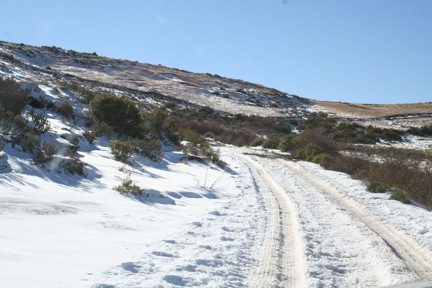
Our conditions were not extremely bad, but there was ice, snow and mud, while the gradient is sufficiently steep to create unease. I did the pass twice up and once down and every time with equal ease. The second morning certainly soothed the 4×4 driver ego in me when two bakkies met us at the foot of the pass. They stopped and asked whether I was planning to go up the pass and when I confirmed they enquired whether my Forkie was a 4×4. There’s were not and they turned around after a few 100 meters because of the conditions. This again confirmed to me that the combination of double the traction and drive of 4×4 drive, plus the availability and control of that lowdown power which the low range gears provides plus probably the good grip in those conditions of the BF Goodrich AT tyres enabled me to idle up the pass without even once experiencing spin or slide. Coming down I also had a guy stop next to me with a 4×2 vehicle, stating they “sh&t” themselves coming down sliding while again we came down in a complete controlled low range “foot far away from clutch” fashion, not a hint of sliding.

And this whole rationale above simply to state that I was able to experience one of the most stunning 20km drives I ever had.

Cara and the horses
Stunning views

Mountains around us covered with snow, iced stalactites hanging down from the excavations on the mountain side of the road and frozen dams complementing the dramatic scenery. This is a drive that is truly recommendable for its overall scenery and driving pleasure.

It was one of those long weekend trips where I have 300 plus photos to share, indicating the photogenic splendor of what we experienced, probably 2 extra kg of weight to shed, indicating Janet’s culinary skills and treats, more than a couple of letters of thanks and appreciation to write, indicating the friends made and hospitality experienced and many joyful hours of planning to do on a next trip, indicating the benchmark challenge I have set myself. Though this is merely a trip report to share a nice weekend, and by no means an advertisement paid for by some-one, I can with a clear conscience say, go visit the Wartrail, it is truly worth it.

(An edited version of this story appeared in Leisure Wheels magazine in October 2009)

Allez Racing, allez

I told Heleen Racing Metro is playing London Irish this weekend in Paris in the Heineken cup, and it’s the nearest rugby to our home in Köln. In true blue fashion she never hesitates to traveling proposals; weekends or longer, or an outing of any sorts and our weekend to Paris was on.

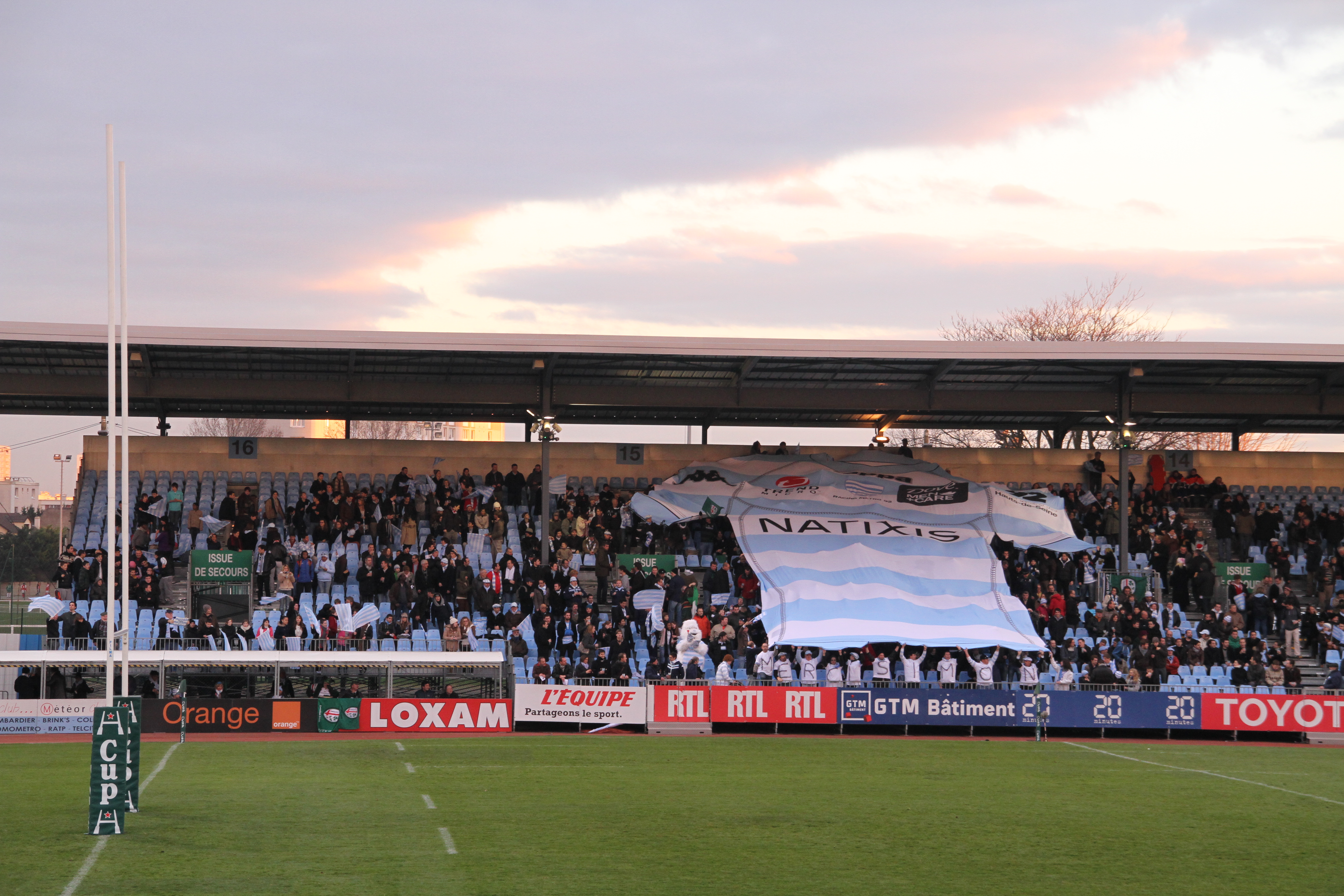
Racing fans showing their excitement

Its not the first time we travelled to Paris for rugby in the spur of the moment. In January 1994 we were on our first overseas trip together after selling our car to finance the trip. It was a six week back packing style trip including two weeks’ Kontiki skiing in Hopfgarten, Austria and four weeks’ Eurail train travel across Europe to wonderful places such as Vienna, Nice, London, Budapest, Venice, Florence, Geneve and Paris. It was Thursday 13 January ’94 (I know it sounds like a Neil Diamond song’s opening line) at about 16:00, having a beer in Budapest when I also mentioned to her that the French are playing Ireland (pure coincidence to the two teams in paragraph 1!) in the 5 Nations the coming Saturday. ‘Well, we have train tickets, why don’t we go and watch?’ was her immediate response. That evening at 21:something hours we boarded the train for Paris and arrived 16:something the next afternoon. It was before the euro and I remember that we had no deutsche marks for coffee going through Germany. You actually had to use the correct currency on the train for the country you were crossing at that point. In those days we travelled with Frommer’s as our GPS and found Hotel de la Paix in Paris as accommodation. It’s necessary to mention this as many years later I noticed Jason Bourne and Marie using the same hotel in The Bourne Identity.

This time we stayed in Hotel de la Paix’s sister hotel Hòtel Convention Montparnasse just off Rue de la Convention and its cosy cafes and bars.

For my South African frame of reference the mind-shift thing towards Europe is still slow. I found a parking garage at euro 38 for the weekend, but must admit that I did hesitate when the garage keeper simply ordered me to leave the car keys with him. Spread over his table was probably 50 car keys, each simply placed on a little invoice with your name on it!

The 5 Nations Test of ’94 was played at Parc des Prince as Stade de France was not yet built and the French won rather easily, very much to our liking! Those were the days of Philip Sella,  Phillipe Saint Andre, Marc Cecilon and Olivier Roumat to name a few and they ran with exquisite flair. If there is such a thing as your second team in rugby, the Cockerels are definitely mine. That day I bought myself a Springbok beret outside Parc des Prince which I still wear with pride and I have not yet seen a similar beret anywhere.

Parc des Princes in January 1994 with my Springbok beret

But back to December 2011 and our short weekend to Paris. Racing Metro is one of the two Paris based sides and has some of my favourite players such as Francois Steyn (unfortunately still injured after been bullied in New Zealand), Juan Martin Hernandez, Mirco Bergamasto and Sebastian Chabal in their ranks. Since it’s a leisurely 493km drive from Köln to Paris it makes for a very sensible weekend breakaway, and ‘El Classico’ played between Barcelona and Real Madrid in ‘La Liga’ on the Saturday evening complemented this one.

My varsity friend Henk often used the phrase that there is two things that make the world turn, sport and music. It crosses boundaries and cultures and makes people equal. The interesting thing about attending sports events in foreign places is that so much of the same little habits pop up such as the ‘braai and beer’ stalls outside the stadium, whether its at Loftus for rugby, Ellispark for Soccer 2010 or Stade Olympique Yves du Manoir for the Heineken Cup. This outing was no different and we enjoyed the ‘wors braai’, pommes frites and beer with mostly Irish supports outside the Stade Olimpique Yves du Manoir in Colombes to the north of Paris. This stadium hosted the Olympic Games in 1924 and was used as the stadium in the movie Escape to Victory starring Michael Caine, Sylvester Stallone and Pele in the early eighties.

We searched for a pub somewhere in Paris to watch the soccer after the rugby. Well, Paris doesn’t have many of the pubs we associate with sport, but they do use their cafes for big games such as ‘el classico’ and with great supporting spirit and gusto to accompany the good food and wine.

Obviously Paris is not only a rugby city, even if you practically only have a day and a half there. We have been in Paris a few times before, which negates that  ‘have to tick all the sites’ rush when visiting a city for the first time and allowing you to leisurely pace around the town and the hordes of people also roaming the streets. La Tour Eiffel, Champs Elysees and the Arc de Triomphe built by Napoleon Bonaparte to celebrate his successes on the battlefields, surely are always the sites to wonder around and enjoy the Christmas markets and ‘vin chaud’, a French version of glühwein and then to finish it of with a freshly baked Crepe.

La Tour Eiffel, stunning photo Heleen

I’m not sure why nor where it came from but I have a real liking for France, its mannerisms, even if they are often deemed to be rude, and the language. In the three months we’ve been living in Europe we’ve been to France three times (keep an eye on this blog for trip report on the third visit, skiing in the Rhone Alps) and I know that there will be a few more. And hopefully I’ll one day be able to ‘prononcer une phrase correcte’ and order those delicious ‘cafè au lait avec croissants’ without the bemused gaze from the waiter.

Allez les Bleu!

Hup Hup Holland

Just before leaving South Africa we attended the unveiling of a commemorative plaque on Irene’s Oval remembering the Irene Concentration Camp and all the suffering that occurred there 110 years ago. One of the leading people who played a role in The Irene Concentration Camp specifically was the well-known writer Johanna Brandt van Warmelo.

It was her actions that led to W.T. Stead running an article in the Review of Reviews about the appalling conditions in the Irene Concentration Camp, which contributed to a decline in British public support for the war.’ (Wikipedia)


So, based on the motivation that she actually wrote a book on Irene’s concentration camp as far back as 1905 and seeing in her ’Voorwoord’ that she wrote large parts of her book while staying at the Pastorie, Niezijl, Groningen, I thought it would be great to go and see this ‘pastorie’ and thus another meaningful weekend destination was identified. A 387km roadtrip for a weekend, just what the doctor ordered!

There’s two Groningens. One is the province and the other the city, a vibrant student city with stunning architecture, rivers running through it (pun intended), bicycles and riverboats.

A river runs through it

I, however specifically wanted to see a bit of the platteland. You see the province of Groningen is slightly lesser traveled as it is the furthest province north in Holland. Furthermore, this was my first visit to the Netherlands and it most certainly met my expectations. Although we’ve been in Europe now for nearly two months I still find it sort of surreal to be stopped at a 10 meter wide river by booms because there is a 30 odd meter long riverboat filled with anything from gas or coal to MSC containers passing by! Or to drive some 10km from the coast and to see that my Nuvi states I’m actually 17m below sealevel! Or to see a real windmill with emphasis on mill and not ’windpomp’! Its the scenes I read about in books in primary school in Yellowwood Park thinking ’I need to go and see that for myself!’

Now I too understand Jacques Brell’s ’mijn vlakkeland’ concept in context.

I Googled a stunning venue, Olle Pastorie in Vierhuizen (www.ollepastorie.nl) which is a very small town but providing excellent Bed and Breakfast in a recently renovated ’pastorie’. It’s located, obviously, next to the church, but a sad reality of this post modern era we live in is that so many stunning and very old churches in Europe nowadays are simply memories of days gone by and stand unused. This one is no exception, though it is still maintained and every now and then used for music and choir evenings. Irene and Martin has done a splendid job of renovating the ’pastorie’ including a lovely reading room/lounge with some cold wine in the fridge. It being winter and cold, we spent the first evening after arriving late there, sipping wine and finishing Wilbur Smith’s Assagai.

Vierhuizen (N53°21.624’ E6°17.499’) is a little town in the Marne area of Groningen and in the ’Nationaal Park Lauwersmeer’. Lauwersmeer is a man-made lake which was formed in 1969 when the dike between the bay called Lauwerzee and the Waddenzee was closed. The area is scattered with similar little towns and I stumbled onto the tiny and incidently agricultural little town called Niekerk (N53°20.544’ E6°19.804’). I have a few Van Niekerk friends back in SA, hopefully even reading this blog, and now my imagination ran wild with the idea that this is where you guys originally come from, From Niekerk?

From here Van Niekerks?

The thing a like about staying in B&B accommodation, is that you have the opportunity to chat and mingle with other guests and obviously the hosts. Breakfast becomes a relaxing and interesting occation where stories and experiences are exchanged. This was a similar occasion with a couple from the USA sharing our breakfast table with us and Irene (pronounced Iereene), the hostess hanging around and adding to the chatter. The two from the States are an elderly couple, who’ve been living in the States for 30 years but who are originally Dutch from Zoutkamp, 3km’s down the road. They were doing a family visit trip while nostalgically seeing the old sites which they used to walk as youngsters. They shared interesting insites on the area and suggested Westerbork as a stopover.

The other thing of B&B stays is the breakfasts, which is normally larger and more diverse than the croissant and coffee at a cafe. And with a growing teenage boy in the party, that’s a huge plus!

The thing I don’t like about B&B stays are the price tag; I’ll have to start thinking of other accommodation for my break-aways.

If you look at the map of Europe, and you locate the northern Netherland you will surely see that there is nothing between the Netherlands and Iceland, and ’that cold north wind they call La Bise’ was definately ’swirling around about our knees’ and noses with vigour and sting. Its such a lonely sky. This was the vlakkeland where nothing stops that cold wind and best you stay in the car or some eatery with something warm to protect you. That’s what we did most of the Saturday while driving from quaint little town to quaint little town and enjoying the ‚afrikaans’ roadsigns and names around us. Even speaking afrikaans rather than english with the locals proved easier communication. To exit the highway, for example, simply follow the ’uit’ sign.

I did stop over at Niezijl as well and walked to the church, a simple yet beautiful structure dated 1661 and found what I think is the ’pastorie’ where Johanna Brandt van Warmelo wrote her book, though I could not confirm it was the exact building.

Sunday’s drive back home included a quick stop-over in the city of Groningen which included coffees and a rather decadent cake in the stunning Drie Gezusters which is part of the huge coffeeshop/bar establishment including Groote Griet Cafe.

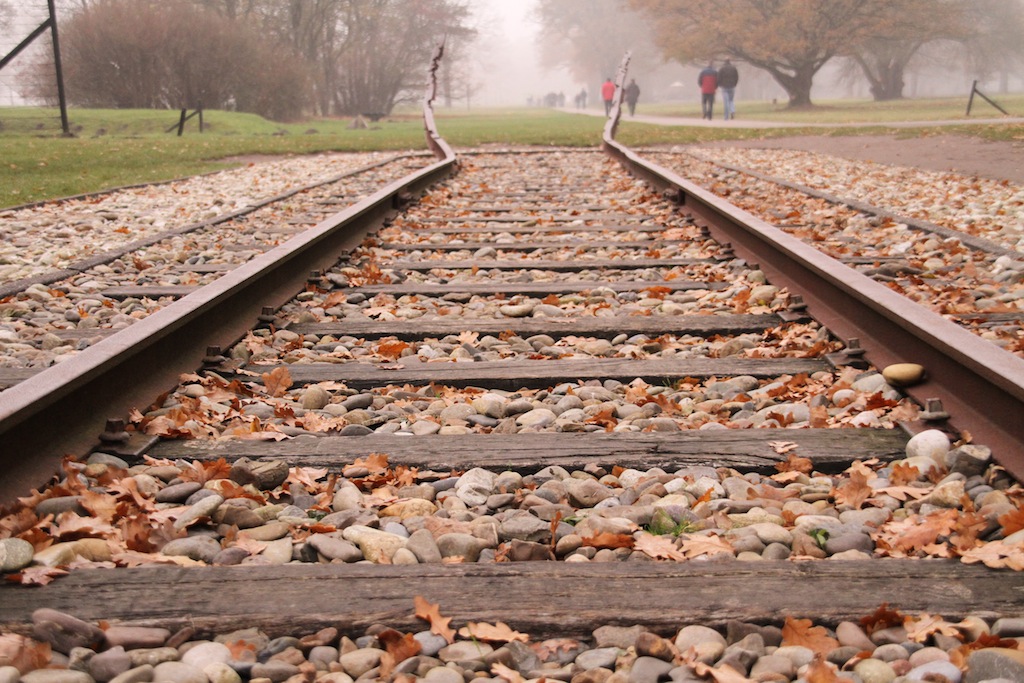
But I have found that the history of the things that happened in Europe some 70 years ago fascinates me far more than I ever imagined and I did the trip over Westerbork as suggested to me. Westerbork is a sort of transit concentration camp used originally for Jews, Gypsies and other groups who were captured in the then occupied Holland and then distributed further to the likes of Auschwitz. The famous Anne Frank spent a few weeks in Westerbork before she was dispatched to Auschwitz and her terrible and untimely death. As it worked out, the weather came in extra cold with clouds of mist rolling in while we were strolling the camp, adding to an eary and serious thought provoking experience. An experience many people should experience once in their lives. The simbolic stop of the railway at one end and its curled-up tracks at the other end hopefully promises that such atrocities will never happen again.

Never again

I’ve often used the quote ’traveling broadens the mind’, but it rings so true that I will probably use it even more. It‘s so much different and more valuable seeing and experiencing things for yourself, than just reading about or seeing it on TV. And this is what I truely enjoy at the moment about being in Europe. Its not just travel and relaxation though, don’t get me wrong. There’s dirty dishes, school homework and finances in this picture as well, to name a few, but the closeness and frequency of new things are just simply tremendous, I thoroughly enjoy it.

“Travel is more than the seeing of sights; it is a change that goes on, deep and permanent, in the ideas of living.” – Miriam Beard

‘The Good, the Bad and the Ugly’

I’m not yet qualified to write this commentary, I know. But the one standard question I get asked the most so far is ‘how are you guys doing?’

The one thing I have realised already is that living abroad is different. Whether it is Brisbane, London, Bonn or Beijing, its different and has different challenges than the familiar surroundings built up over 25 years living in Pretoria. OK, I do think living in Chifeng has a few extra un-pleasantries! Language, culture and all the little variations to what you’re used to add to confusion, challenge, learning and sometimes hilarious outcomes and experience.

Before reading this commentary, please take note of my disclaimer. I am simply stating a few things on face value at the moment and am not (yet) comparing countries, decisions or any such issues. I comment on my personal current reality.

The Good was known as Blondie. He was a man of few words, but he stuck to his guns. In that sense, living in Germany is sometimes similar. Rules are rules. If some or other standard operating procedure or governance principle states we do it this way, its done that way. Zat iz ze rule! And there are appropriate consequences if rules are not adhered to. Pedestrians walk because the car will stop and we wait for the green pedestrian light, whether there’s a car coming or not, nearly in a nerd way. Cyclists use hand signals. My experience is mostly that the rules are there to govern order and discipline, probably the thing most lacking where I come from. In business, there is a process, everyone knows the process and as long as you comply, there’s no problem. Quality of education and the discipline of delivering on education, for example and not the length of a boy’s hair is success factor. The result is a society that is responsible for the strongest economy in Europe, with all that German precision and quality that we are so aware of.

We all know about the autobahn, where there is sometimes no speed limit. It works simply because there’s no-one cruising in the fast lanes due to either stupidity or arrogance. All heavy vehicles stick to the slow lane. Society understands the logic and the bigger scheme of what needs to achieved and they adhere.

Furthermore, and obviously, the safety is good. It can never be entirely safe and I appreciate that we can make a huge mistake thinking there is no crime, but old people walk in remote parks even after dark and its OK. Kids travel alone by train, tram or bus from Bonn to Cologne and back to visit their friends and its OK. I think we have lost the belief that that is the way its suppose to be, by default it should be safe, not the other way around.

Some other ‘Goods’ include Kölsch, bratwurzt, autumnleaves, the Rhine, daylight saving, rauchhaar daschund and the fast lane on the autobahn.

The Bad (Angel Eyes) spent most of his time following the other two through the harsh cowboy terrain, sort of with the hope of scavenging from them when they make a mistake. There’s no scavengers here, or at least very few. Coming from South Africa I experience an obvious lack of diversity. That means in practice that you have 82 million people of which only about 7 million are “different” by being foreigners (and bring diverse thinking). That is bad. Diverse thinking is crucial in my mind. To understand this in real life I can share two recent examples.

  • Heleen had the opportunity to subscribe and the first 50 entrants would receive the Steve Jobs ebook for free. She was quick and enthusiastic and was one of the first 50 and yes, she did receive her free copy, a German version!
  • I bought my new laptop and obviously had to buy the Office suite as well. After sucessfully installing the software I realised it was in German as well. And after various Google searches on how to rectify the problem I came to the conclusion that that’s the ‘vay’ it is. Thus I am navigating this edition of my blog using Word functions such as Datei, Bearbeiten, Anzicht, Einfugen. I did not include any Fußnote to this document.

This non-diverse phenomonen creates a funny kind of feeling that the people of Germany are sort of old fashioned. Its contradictory Iknow, since with certain things they are very liberal, but I still experience a sort of 70’s type feeling. But then this one of the leading nations of Europe. The country and the individuals don’t always seem to match up!

Again what this means in practice is that there’s few cafes or coffee-shops with the variety of Bugatti’s, Cappuccino’s, Tasha’s or Cafe41. There’s plenty beer, wurzt, kebab, pizza type restaurants, but that one-stop-get-all café scene is scarce.

Well, if you start missing the familiar things back home, best is to do them here as well, or at least try! We decided we’re gonna Sunday braai before the real winter sets in.  Bought meat, (but stuck to pork as the rump steak price tag was a hefty euro 32.90 per kg (times R11 at the moment!)) and bought a little through-away braai! Charcoal is definitely not on par with the rooikool or hardekool wood I’m used to or even the charcoal. But after heating the chops on the braai the stove and pan quickly finished the braai job.

The well dressed chef
Best effort to braai four pork chops

And then there was the Ugly,  Tuco (Benedicto Pacifico Juan maria Ramirez) played by Eli Wallach. We don’t talk The Ugly here. Its in the past and ended in suicide in a bunker in Berlin in 1945. Its all about looking forward now.

So, when I’m asked how we are doing I can honestly still say that we’re good. Sometimes we struggle with language, different ways than we’re used to, unfamiliar substitutes and simply new things we haven’t seen before, but we’re enjoying the learning curve and are learning at rapid pace. We have settled into the American Protestant Church in Bonn and the kids are well settled into their school. We have by this time also realised that its not an European holiday as was the previous visits but a new home and that requires chores and tasks which may even be new to us spoilt Suffas.

Human beings are very very adaptable. ‘Its an adventure Harry, is good for you’

“Je ne regrette rien”

Well, not yet.

Its only been three weeks since we arrived in Europe.

It’s the kids’ first week-long break from school and Heleen took two days’ leave to give us our first long-weekend. And it being the rugby world-cup final, the logic destination must obviously be France, that clichéd beauty of a destination. Heleen and I have toured France on a few occasions before and know Paris well, have done the Nice, Antibes and Monaco stretch more than once and have camped in the Bourgogne areas of Dijon, Grenoble, Lyon and the Alps of Mont Blanc, Annecy and Megeve. The north east however, which is the world of champagne we have not visited and thus it was also perfect that Champagne/Ardenne was the nearest part of France to our home in Bonn.

Epernay is the main champagne town and this is where we headed. Now the one thing about the French is that they are passionate and classy. Though they have true passion here it did not prove to be a rugby area but maybe more the Café scene and champagne sipping passing of time. So for me, a true rugby-loving-All-Black-hating Afrikaner a slight disappointment to have only about 8 other people in the café (not bar or pub) actually watching the rugby and they were from Aus! It was France in the final remember! The rest of the café were just happy to sip their champagne and “mange” on their cheeses and croissants! But nonetheless, we did watch the rugby final in a beautiful brasserie (gemembeg to “g” your “r” when in Fgance) before starting to explore the sights, sounds and tastes of Epernay. This obviously is where champagne is still legally called champagne (and not bubbly or “vonkelwyn”!) and where the likes of one Claude Moet first produced champagne in 1743 which was served to kings and emperors across the world, and still is!

We visited the Moet et Chandon cellars, which is in the town and not in the country side as we are used to in the wine farms of the Cape. But the surprise here is that you enter the cellars in the middle of the town (picture, say Dorpstraat in Stellenbosch) and then find yourself in 28km of underground cellars and pathways in the chalk underworld of Epernay where the production happens. I must admit that the term “production” is to me a harsh term when talking wine and champagne, as production in my understanding conjures actions of sweat, hardly synonymous with the long slow process of eventually sipping on these delicacies!  In these same cellars the likes of Napoleon visited and drank champagne with Messieurs Moet and Chandon.

Interesting fact is that not even these large cellars own all the vineyards from which they get their grapes. They also buy in from independent little farmers, but there is a grading system which applies to the villages from which the grapes come. And these villages declare their status when you enter the town. The highest quality or status is Grand Cru while the next best status is Primer Cru. The term “cru” actually refers to town or village. I never knew that.

Grand Cru
Town boasting its quality

A ten minute drive out of Epernay is the most gorgeous little cru (village) Hautvillers. Please, concentrate on this pronunciation for a minute! The pronunciation is (try with Afrikaans in mind) ”Owieje”. Stunning!

Hautvillers (Owieje) is the home of the original Dom Perignon Benedictine abbey and this is where we experienced one of those quick little travel gems which you afterwards realise you did not make enough use of. But then it’s too late! After strolling through the abbey and still enjoying the incredible history and age of the building before us, a man suddenly starts babbling away to Heleen and me. He just returned from a 10 km run, is totally out of breath and sort of stretching after his run while telling us the tale of two of the pillars of the abbey before us which are original and more than 800 years old, the tiles in the entrance as well and the roof being fixed after the 100 year war (1337 to 1453, I know its not 100 years) with money donated by Louis IV. Then he disappears through one of the side doors into the abbey. It seems he is the current clergyman servicing in the abbey. I wish we could sit down and chat to this man for hours more.

Reims is the larger town of the area and though we preferred the little roads I needed to visit the Notre-Dame de Reims cathedral. I’m not a historian and don’t know all the facts, numbers and stories, but as I grow older (becoming part of history according to my kids) I enjoy understanding “what happened” when I visit new places. In Europe, I should probably refer to “first visits” rather to new places! The construction of Notre-Dame de Reims started in May 1211! On the same site and on ancient Roman baths, a Paleochristian cathedral was erected which was the first building in the western world which was dedicated to the Virgin Mary. From the coronation of Henri 1st in 1027 the kings of France all came to Reims to be crowned; that is to say 30 kings in total except Louis VI, Henri IV and Louis XVIII. And the funny thing about this cathedral, which is more than 800 years old, is that it was never finished! Work stopped in 1516 before the spires that had been planned were erected. It is still not completed.

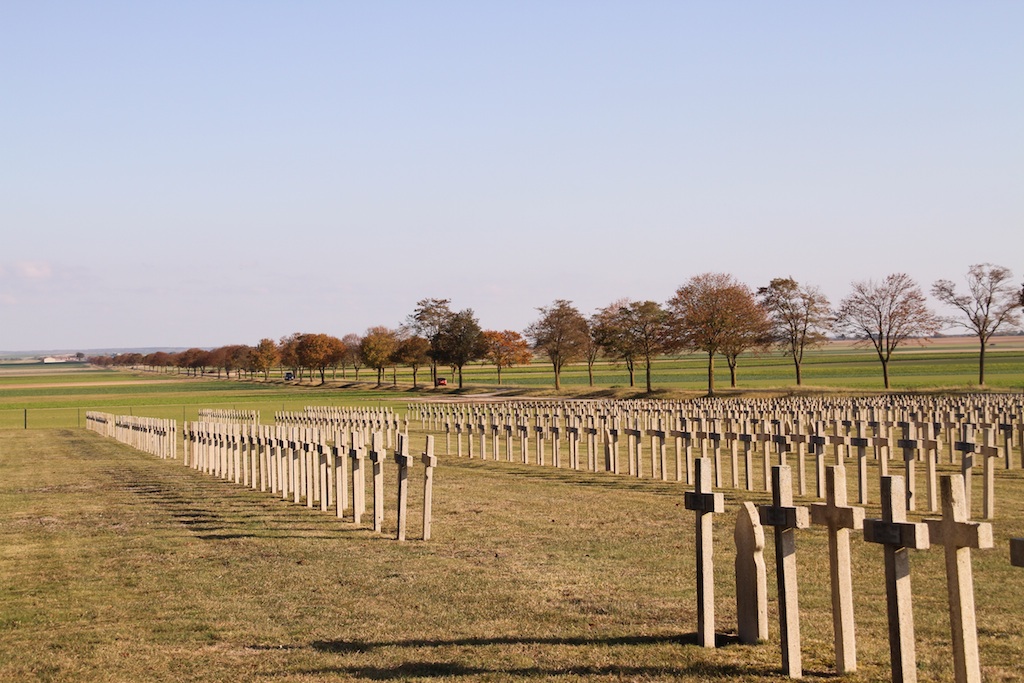
Back onto the country roads is where we found a number of World War cemeteries where numerous battles took place.

Remembrance
'Dit mag nooit weer gebeur nie, jy mag jou eie keuses maak'

Cruising through this part of France it is truly evident that it has always been an area where conflict, destruction and deep emotional pain reigned, though the current setting is stunningly beautiful with planted fields of various agricultural produce and scattered little villages all over. The trail of Louis XVI fleeing from Madame Guillotine leads through this lanscape. Louis and Marie Antoinette attempted to escape and where en-route to Varennes when they were recognised in Sainte-Menehould apparently from his face on the French coins. A short distance from here is where a year later in the battle of Valmy the new French Government (post the overthrown kingdom by revolution) successfully stopped an attempted invasion from Prussia which led to the birth of the Republic of France. More recently, many World War 1 and 2 battles took place here and there are many graveyards in remembrance of the many men who lost their lives here. As Johannes Kerkorrel so eloquently sings “miljoene jong soldate het gebloei in hierdie klei, en elke keer as die wereldoorlog afspeel is dit hier!” (Europhobia, Getransformeer).

Since I was very small I truly enjoyed the smaller roads, lesser travelled and through the little towns. It takes longer I know, but I regard that as so much part of the enjoyment, the clichéd “it’s the journey not the destination”. So I must admit that I feel truly blessed when my kids demand “klein paadjies” on weekends like this. And “klein paadjies” it was al the way back through rural Champagne/Ardenne and Belgium to Bonn – 9 hours to cover 430km in the company of mainly Valiant, Koos, Jan and Johhny K. It did include a sit-in “plat de jour” existing of duck for Cara and me in Vouviers and delicious sugar Belgian waffles known as gaufre in the French areas in Durbuy.

So, after three weeks in Germany, we had our first weekend away, one of the reasons we embarked on the Europe opportunity. We enjoyed a bit of France and Belgium and I realised that we have so many things to see, read and understand.

Furthermore, its not about ticking off destinations on some list. There’s centuries and generations of serious history to be discovered, there’s many different happenings to attend and there’s photos to be taken, many many photos to be taken. After the initial change shock, I’m now seriously looking forward to discovering Europe.

And I realised that the clichéd beauty of France is not clichéd at all, its truly deserved!