Hup Hup Holland

Just before leaving South Africa we attended the unveiling of a commemorative plaque on Irene’s Oval remembering the Irene Concentration Camp and all the suffering that occurred there 110 years ago. One of the leading people who played a role in The Irene Concentration Camp specifically was the well-known writer Johanna Brandt van Warmelo.

It was her actions that led to W.T. Stead running an article in the Review of Reviews about the appalling conditions in the Irene Concentration Camp, which contributed to a decline in British public support for the war.’ (Wikipedia)


So, based on the motivation that she actually wrote a book on Irene’s concentration camp as far back as 1905 and seeing in her ’Voorwoord’ that she wrote large parts of her book while staying at the Pastorie, Niezijl, Groningen, I thought it would be great to go and see this ‘pastorie’ and thus another meaningful weekend destination was identified. A 387km roadtrip for a weekend, just what the doctor ordered!

There’s two Groningens. One is the province and the other the city, a vibrant student city with stunning architecture, rivers running through it (pun intended), bicycles and riverboats.

A river runs through it

I, however specifically wanted to see a bit of the platteland. You see the province of Groningen is slightly lesser traveled as it is the furthest province north in Holland. Furthermore, this was my first visit to the Netherlands and it most certainly met my expectations. Although we’ve been in Europe now for nearly two months I still find it sort of surreal to be stopped at a 10 meter wide river by booms because there is a 30 odd meter long riverboat filled with anything from gas or coal to MSC containers passing by! Or to drive some 10km from the coast and to see that my Nuvi states I’m actually 17m below sealevel! Or to see a real windmill with emphasis on mill and not ’windpomp’! Its the scenes I read about in books in primary school in Yellowwood Park thinking ’I need to go and see that for myself!’

Now I too understand Jacques Brell’s ’mijn vlakkeland’ concept in context.

I Googled a stunning venue, Olle Pastorie in Vierhuizen (www.ollepastorie.nl) which is a very small town but providing excellent Bed and Breakfast in a recently renovated ’pastorie’. It’s located, obviously, next to the church, but a sad reality of this post modern era we live in is that so many stunning and very old churches in Europe nowadays are simply memories of days gone by and stand unused. This one is no exception, though it is still maintained and every now and then used for music and choir evenings. Irene and Martin has done a splendid job of renovating the ’pastorie’ including a lovely reading room/lounge with some cold wine in the fridge. It being winter and cold, we spent the first evening after arriving late there, sipping wine and finishing Wilbur Smith’s Assagai.

Vierhuizen (N53°21.624’ E6°17.499’) is a little town in the Marne area of Groningen and in the ’Nationaal Park Lauwersmeer’. Lauwersmeer is a man-made lake which was formed in 1969 when the dike between the bay called Lauwerzee and the Waddenzee was closed. The area is scattered with similar little towns and I stumbled onto the tiny and incidently agricultural little town called Niekerk (N53°20.544’ E6°19.804’). I have a few Van Niekerk friends back in SA, hopefully even reading this blog, and now my imagination ran wild with the idea that this is where you guys originally come from, From Niekerk?

From here Van Niekerks?

The thing a like about staying in B&B accommodation, is that you have the opportunity to chat and mingle with other guests and obviously the hosts. Breakfast becomes a relaxing and interesting occation where stories and experiences are exchanged. This was a similar occasion with a couple from the USA sharing our breakfast table with us and Irene (pronounced Iereene), the hostess hanging around and adding to the chatter. The two from the States are an elderly couple, who’ve been living in the States for 30 years but who are originally Dutch from Zoutkamp, 3km’s down the road. They were doing a family visit trip while nostalgically seeing the old sites which they used to walk as youngsters. They shared interesting insites on the area and suggested Westerbork as a stopover.

The other thing of B&B stays is the breakfasts, which is normally larger and more diverse than the croissant and coffee at a cafe. And with a growing teenage boy in the party, that’s a huge plus!

The thing I don’t like about B&B stays are the price tag; I’ll have to start thinking of other accommodation for my break-aways.

If you look at the map of Europe, and you locate the northern Netherland you will surely see that there is nothing between the Netherlands and Iceland, and ’that cold north wind they call La Bise’ was definately ’swirling around about our knees’ and noses with vigour and sting. Its such a lonely sky. This was the vlakkeland where nothing stops that cold wind and best you stay in the car or some eatery with something warm to protect you. That’s what we did most of the Saturday while driving from quaint little town to quaint little town and enjoying the ‚afrikaans’ roadsigns and names around us. Even speaking afrikaans rather than english with the locals proved easier communication. To exit the highway, for example, simply follow the ’uit’ sign.

I did stop over at Niezijl as well and walked to the church, a simple yet beautiful structure dated 1661 and found what I think is the ’pastorie’ where Johanna Brandt van Warmelo wrote her book, though I could not confirm it was the exact building.

Sunday’s drive back home included a quick stop-over in the city of Groningen which included coffees and a rather decadent cake in the stunning Drie Gezusters which is part of the huge coffeeshop/bar establishment including Groote Griet Cafe.

But I have found that the history of the things that happened in Europe some 70 years ago fascinates me far more than I ever imagined and I did the trip over Westerbork as suggested to me. Westerbork is a sort of transit concentration camp used originally for Jews, Gypsies and other groups who were captured in the then occupied Holland and then distributed further to the likes of Auschwitz. The famous Anne Frank spent a few weeks in Westerbork before she was dispatched to Auschwitz and her terrible and untimely death. As it worked out, the weather came in extra cold with clouds of mist rolling in while we were strolling the camp, adding to an eary and serious thought provoking experience. An experience many people should experience once in their lives. The simbolic stop of the railway at one end and its curled-up tracks at the other end hopefully promises that such atrocities will never happen again.
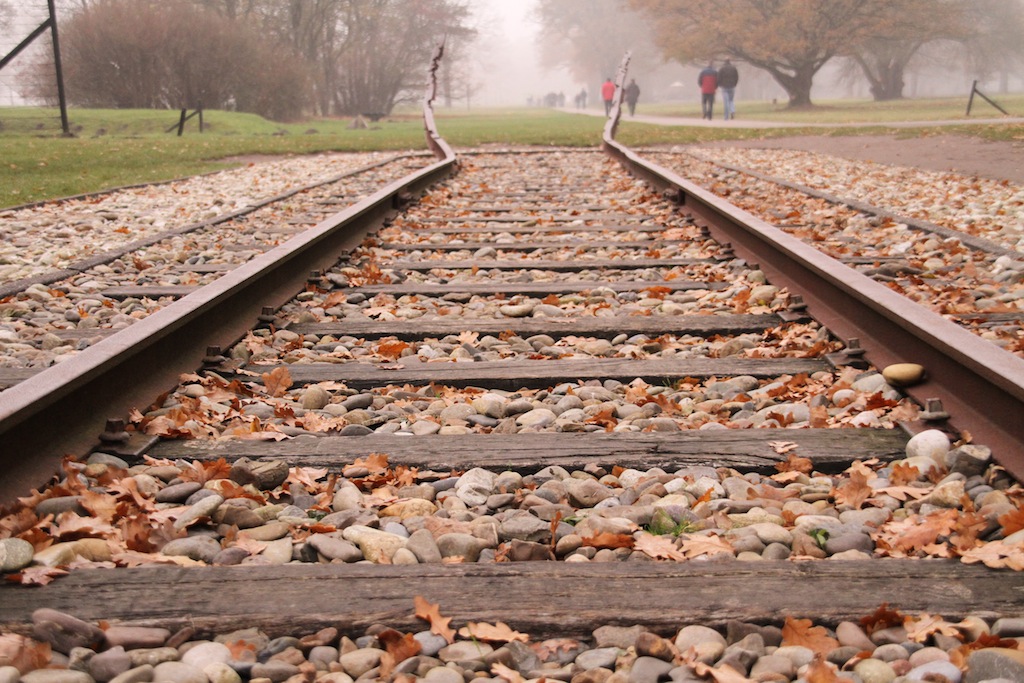
Never again

I’ve often used the quote ’traveling broadens the mind’, but it rings so true that I will probably use it even more. It‘s so much different and more valuable seeing and experiencing things for yourself, than just reading about or seeing it on TV. And this is what I truely enjoy at the moment about being in Europe. Its not just travel and relaxation though, don’t get me wrong. There’s dirty dishes, school homework and finances in this picture as well, to name a few, but the closeness and frequency of new things are just simply tremendous, I thoroughly enjoy it.

“Travel is more than the seeing of sights; it is a change that goes on, deep and permanent, in the ideas of living.” – Miriam Beard

‘The Good, the Bad and the Ugly’

I’m not yet qualified to write this commentary, I know. But the one standard question I get asked the most so far is ‘how are you guys doing?’

The one thing I have realised already is that living abroad is different. Whether it is Brisbane, London, Bonn or Beijing, its different and has different challenges than the familiar surroundings built up over 25 years living in Pretoria. OK, I do think living in Chifeng has a few extra un-pleasantries! Language, culture and all the little variations to what you’re used to add to confusion, challenge, learning and sometimes hilarious outcomes and experience.

Before reading this commentary, please take note of my disclaimer. I am simply stating a few things on face value at the moment and am not (yet) comparing countries, decisions or any such issues. I comment on my personal current reality.

The Good was known as Blondie. He was a man of few words, but he stuck to his guns. In that sense, living in Germany is sometimes similar. Rules are rules. If some or other standard operating procedure or governance principle states we do it this way, its done that way. Zat iz ze rule! And there are appropriate consequences if rules are not adhered to. Pedestrians walk because the car will stop and we wait for the green pedestrian light, whether there’s a car coming or not, nearly in a nerd way. Cyclists use hand signals. My experience is mostly that the rules are there to govern order and discipline, probably the thing most lacking where I come from. In business, there is a process, everyone knows the process and as long as you comply, there’s no problem. Quality of education and the discipline of delivering on education, for example and not the length of a boy’s hair is success factor. The result is a society that is responsible for the strongest economy in Europe, with all that German precision and quality that we are so aware of.

We all know about the autobahn, where there is sometimes no speed limit. It works simply because there’s no-one cruising in the fast lanes due to either stupidity or arrogance. All heavy vehicles stick to the slow lane. Society understands the logic and the bigger scheme of what needs to achieved and they adhere.

Furthermore, and obviously, the safety is good. It can never be entirely safe and I appreciate that we can make a huge mistake thinking there is no crime, but old people walk in remote parks even after dark and its OK. Kids travel alone by train, tram or bus from Bonn to Cologne and back to visit their friends and its OK. I think we have lost the belief that that is the way its suppose to be, by default it should be safe, not the other way around.

Some other ‘Goods’ include Kölsch, bratwurzt, autumnleaves, the Rhine, daylight saving, rauchhaar daschund and the fast lane on the autobahn.

The Bad (Angel Eyes) spent most of his time following the other two through the harsh cowboy terrain, sort of with the hope of scavenging from them when they make a mistake. There’s no scavengers here, or at least very few. Coming from South Africa I experience an obvious lack of diversity. That means in practice that you have 82 million people of which only about 7 million are “different” by being foreigners (and bring diverse thinking). That is bad. Diverse thinking is crucial in my mind. To understand this in real life I can share two recent examples.

  • Heleen had the opportunity to subscribe and the first 50 entrants would receive the Steve Jobs ebook for free. She was quick and enthusiastic and was one of the first 50 and yes, she did receive her free copy, a German version!
  • I bought my new laptop and obviously had to buy the Office suite as well. After sucessfully installing the software I realised it was in German as well. And after various Google searches on how to rectify the problem I came to the conclusion that that’s the ‘vay’ it is. Thus I am navigating this edition of my blog using Word functions such as Datei, Bearbeiten, Anzicht, Einfugen. I did not include any Fußnote to this document.

This non-diverse phenomonen creates a funny kind of feeling that the people of Germany are sort of old fashioned. Its contradictory Iknow, since with certain things they are very liberal, but I still experience a sort of 70’s type feeling. But then this one of the leading nations of Europe. The country and the individuals don’t always seem to match up!

Again what this means in practice is that there’s few cafes or coffee-shops with the variety of Bugatti’s, Cappuccino’s, Tasha’s or Cafe41. There’s plenty beer, wurzt, kebab, pizza type restaurants, but that one-stop-get-all café scene is scarce.

Well, if you start missing the familiar things back home, best is to do them here as well, or at least try! We decided we’re gonna Sunday braai before the real winter sets in.  Bought meat, (but stuck to pork as the rump steak price tag was a hefty euro 32.90 per kg (times R11 at the moment!)) and bought a little through-away braai! Charcoal is definitely not on par with the rooikool or hardekool wood I’m used to or even the charcoal. But after heating the chops on the braai the stove and pan quickly finished the braai job.

The well dressed chef
Best effort to braai four pork chops

And then there was the Ugly,  Tuco (Benedicto Pacifico Juan maria Ramirez) played by Eli Wallach. We don’t talk The Ugly here. Its in the past and ended in suicide in a bunker in Berlin in 1945. Its all about looking forward now.

So, when I’m asked how we are doing I can honestly still say that we’re good. Sometimes we struggle with language, different ways than we’re used to, unfamiliar substitutes and simply new things we haven’t seen before, but we’re enjoying the learning curve and are learning at rapid pace. We have settled into the American Protestant Church in Bonn and the kids are well settled into their school. We have by this time also realised that its not an European holiday as was the previous visits but a new home and that requires chores and tasks which may even be new to us spoilt Suffas.

Human beings are very very adaptable. ‘Its an adventure Harry, is good for you’

“Je ne regrette rien”

Well, not yet.

Its only been three weeks since we arrived in Europe.

It’s the kids’ first week-long break from school and Heleen took two days’ leave to give us our first long-weekend. And it being the rugby world-cup final, the logic destination must obviously be France, that clichéd beauty of a destination. Heleen and I have toured France on a few occasions before and know Paris well, have done the Nice, Antibes and Monaco stretch more than once and have camped in the Bourgogne areas of Dijon, Grenoble, Lyon and the Alps of Mont Blanc, Annecy and Megeve. The north east however, which is the world of champagne we have not visited and thus it was also perfect that Champagne/Ardenne was the nearest part of France to our home in Bonn.

Epernay is the main champagne town and this is where we headed. Now the one thing about the French is that they are passionate and classy. Though they have true passion here it did not prove to be a rugby area but maybe more the Café scene and champagne sipping passing of time. So for me, a true rugby-loving-All-Black-hating Afrikaner a slight disappointment to have only about 8 other people in the café (not bar or pub) actually watching the rugby and they were from Aus! It was France in the final remember! The rest of the café were just happy to sip their champagne and “mange” on their cheeses and croissants! But nonetheless, we did watch the rugby final in a beautiful brasserie (gemembeg to “g” your “r” when in Fgance) before starting to explore the sights, sounds and tastes of Epernay. This obviously is where champagne is still legally called champagne (and not bubbly or “vonkelwyn”!) and where the likes of one Claude Moet first produced champagne in 1743 which was served to kings and emperors across the world, and still is!

We visited the Moet et Chandon cellars, which is in the town and not in the country side as we are used to in the wine farms of the Cape. But the surprise here is that you enter the cellars in the middle of the town (picture, say Dorpstraat in Stellenbosch) and then find yourself in 28km of underground cellars and pathways in the chalk underworld of Epernay where the production happens. I must admit that the term “production” is to me a harsh term when talking wine and champagne, as production in my understanding conjures actions of sweat, hardly synonymous with the long slow process of eventually sipping on these delicacies!  In these same cellars the likes of Napoleon visited and drank champagne with Messieurs Moet and Chandon.

Interesting fact is that not even these large cellars own all the vineyards from which they get their grapes. They also buy in from independent little farmers, but there is a grading system which applies to the villages from which the grapes come. And these villages declare their status when you enter the town. The highest quality or status is Grand Cru while the next best status is Primer Cru. The term “cru” actually refers to town or village. I never knew that.

Grand Cru
Town boasting its quality

A ten minute drive out of Epernay is the most gorgeous little cru (village) Hautvillers. Please, concentrate on this pronunciation for a minute! The pronunciation is (try with Afrikaans in mind) ”Owieje”. Stunning!

Hautvillers (Owieje) is the home of the original Dom Perignon Benedictine abbey and this is where we experienced one of those quick little travel gems which you afterwards realise you did not make enough use of. But then it’s too late! After strolling through the abbey and still enjoying the incredible history and age of the building before us, a man suddenly starts babbling away to Heleen and me. He just returned from a 10 km run, is totally out of breath and sort of stretching after his run while telling us the tale of two of the pillars of the abbey before us which are original and more than 800 years old, the tiles in the entrance as well and the roof being fixed after the 100 year war (1337 to 1453, I know its not 100 years) with money donated by Louis IV. Then he disappears through one of the side doors into the abbey. It seems he is the current clergyman servicing in the abbey. I wish we could sit down and chat to this man for hours more.

Reims is the larger town of the area and though we preferred the little roads I needed to visit the Notre-Dame de Reims cathedral. I’m not a historian and don’t know all the facts, numbers and stories, but as I grow older (becoming part of history according to my kids) I enjoy understanding “what happened” when I visit new places. In Europe, I should probably refer to “first visits” rather to new places! The construction of Notre-Dame de Reims started in May 1211! On the same site and on ancient Roman baths, a Paleochristian cathedral was erected which was the first building in the western world which was dedicated to the Virgin Mary. From the coronation of Henri 1st in 1027 the kings of France all came to Reims to be crowned; that is to say 30 kings in total except Louis VI, Henri IV and Louis XVIII. And the funny thing about this cathedral, which is more than 800 years old, is that it was never finished! Work stopped in 1516 before the spires that had been planned were erected. It is still not completed.

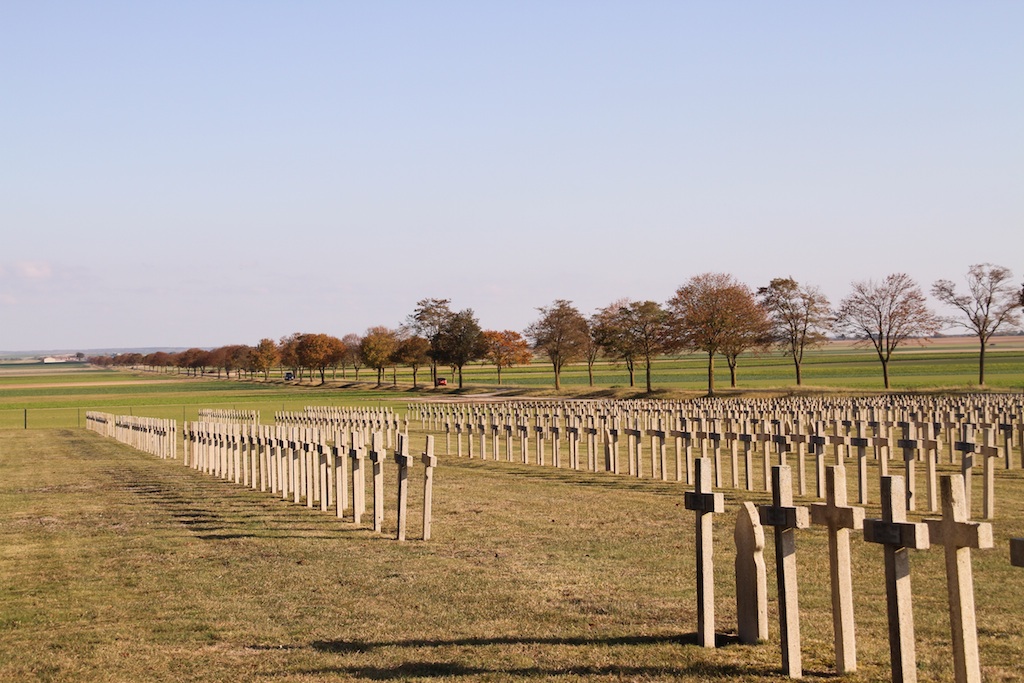
Back onto the country roads is where we found a number of World War cemeteries where numerous battles took place.

Remembrance
'Dit mag nooit weer gebeur nie, jy mag jou eie keuses maak'

Cruising through this part of France it is truly evident that it has always been an area where conflict, destruction and deep emotional pain reigned, though the current setting is stunningly beautiful with planted fields of various agricultural produce and scattered little villages all over. The trail of Louis XVI fleeing from Madame Guillotine leads through this lanscape. Louis and Marie Antoinette attempted to escape and where en-route to Varennes when they were recognised in Sainte-Menehould apparently from his face on the French coins. A short distance from here is where a year later in the battle of Valmy the new French Government (post the overthrown kingdom by revolution) successfully stopped an attempted invasion from Prussia which led to the birth of the Republic of France. More recently, many World War 1 and 2 battles took place here and there are many graveyards in remembrance of the many men who lost their lives here. As Johannes Kerkorrel so eloquently sings “miljoene jong soldate het gebloei in hierdie klei, en elke keer as die wereldoorlog afspeel is dit hier!” (Europhobia, Getransformeer).

Since I was very small I truly enjoyed the smaller roads, lesser travelled and through the little towns. It takes longer I know, but I regard that as so much part of the enjoyment, the clichéd “it’s the journey not the destination”. So I must admit that I feel truly blessed when my kids demand “klein paadjies” on weekends like this. And “klein paadjies” it was al the way back through rural Champagne/Ardenne and Belgium to Bonn – 9 hours to cover 430km in the company of mainly Valiant, Koos, Jan and Johhny K. It did include a sit-in “plat de jour” existing of duck for Cara and me in Vouviers and delicious sugar Belgian waffles known as gaufre in the French areas in Durbuy.

So, after three weeks in Germany, we had our first weekend away, one of the reasons we embarked on the Europe opportunity. We enjoyed a bit of France and Belgium and I realised that we have so many things to see, read and understand.

Furthermore, its not about ticking off destinations on some list. There’s centuries and generations of serious history to be discovered, there’s many different happenings to attend and there’s photos to be taken, many many photos to be taken. After the initial change shock, I’m now seriously looking forward to discovering Europe.

And I realised that the clichéd beauty of France is not clichéd at all, its truly deserved!

“I’m leaving on a jet plane, don’t know when I’ll be back again”

“So, where do I begin

To tell the story of how great ……..”

Jip, it’s a love story, born out of a love to travel.

Probably OK to start when things started falling in place but to really provide insight, I’m going further back to provide proper background. I think its rather important that you understand why and what gave reason for us to embark on change; real huge change. And then what a move like this really entails.

Since Heleen and my first ever overseas trip we’ve always wanted and hinted on going overseas. There was always some sort of adventurous pulling factor for us to also “experience it!” We settled into jobs early in our life and jobs became careers, we became a family of four and we “settled for suburbia” and comfort.

Then we made a mistake! We introduced our kids to travel. They liked it and we liked to be able to share experiences, cultures and diversity with them. In the back of our minds we started thinking of giving them exposure and opportunity wider than Pretoria and South Africa. In the old days expanding horizons meant you move from, say Hofmeyer, to the cities, such as say Bloemfontein. In the current “global village” Bloemfontein can easily become Europe and this we decided is what we want to experience.

Important here for me to mentioned that we want to experience living abroad, experiencing different cultures, ways of coping and be able to travel for cheaper, because destinations are closer. I love South Africa and we are not “leaving” South Africa. We are gaining Europe at the moment. Understand this. I will miss Karoo dirt roads, Kruger, Kgalagadi, West Coast, The Sharks, the Bushveld, Midlands, the Overberg and all other wonderful places and things in SA, but for now I will gain what Europe can give.

OK, so back to now. Exxaro presented me with an elegant opportunity to exit, and though with emotions I didn’t know I had, I left my 21 year comfort zone, security and excellent employer to pursue something new. What that something will turn out to be I still need to find out. Heleen, on the other hand also received an excellent opportunity. She could pursue new opportunities within her current employer, T-Systems; continue her good career and gain international working experience while we pursue our dream of the Europe experience thing.

Heleen and I have been so blessed through our lives and all necessary moving parts fell into place to realise this dream and opportunity. I thank God for looking after us.

So, packing up a huge house in which four “gatherers” have been living for 16 years was one massive task. Practical issues such as my wine, which I could not relocated to Germany for practical and import duties reasons had to find new homes. Its stupid to “store” wine when you leave for an uncertain period as most of it is good drinking wines. I handed out wine in excess of 100 bottles! And now, here in Germany drinking cheap local reds, how I whish I had a few of those reds and chardonnays I know so well!

Books, furniture and personal stuff which will never fit into a standard German residence had to be dumped as storage to friends and family and I must say, they all came to our help on this challenge, thanx guys again for your help and support.

But other challenges of what we embarked on were Martha and Kgomotso, our live-in domestic help of 22 years and her son, attending the local Irene Primary School. Furthermore, finding good homes for three dogs that have been much part of our lives for the past 8 years proved an emotional drain as soon as the packing started. I now understood that clichéd phrase “the devil is in the details” fully when our concept of moving abroad had to be realised through impact on each and every little detail of our lives.

However, we are now in Germany. We’re living in temporary accommodation to provide time for our stuff to arrive and time to house-hunt. Both of these already seem to be more complicated than originally thought, but more on that a little later. Part of our stuff to arrive is the 10 boxes of airfreight not included in the crate of everything which will be sent via sea-freight. This airfreight includes my coffee machine, and those of you who know me, will know how important that is!

The kids are in St George’s, The English International School (50° 52.516’N 6° 56.802’E) in a little town Rondorf in southern Koln while we currently live in Bonn (50° 43.293’N 7° 9.405’E). I’m commuting them everyday and already that seems a time consuming effort. They both settled in nicely and we already had a fruitful parent teacher evening where feedback on both Cara and Stean was extremely positive. This school exposure already proves very interesting after the strict disciplined and nearly draconic experiences of previous schools on issues such as hair, uniform, make-up and general attire. Cara loves attending school with hair hanging loose, wearing boots to school (its cold out here) and replacing them with “pumps” for the school day! I know a few guys back home who’ll flip over if they see this.

Bonn was the capital of West Germany from 1949 until unification in 1990 and the official seat of government of united Germany from 1990 to 1999. It is located on the Rhine River and is an extremely scenic city, with forests, greenery and farmland around it. Typical in Germany and Europe is that there are plenty of little “Irene-like” villages around the main centers. Rondorf is one such town.

So, after just more than two weeks all seems fine, but the grind will come. Language, culture, ways of doing and just plane differences from the Suffas way will surely kick in soon!