It was magic. Madiba magic. For 21 years after his release from prison he showed South Africa and the world the meaning of forgiveness and pursuing good.
Nelson Mandela, forgiver, leader, example, freedom fighter, reconciliator; visionary father of a nation has passed away. He made a nation, from a diverse community of many historical and conflicting peoples and beliefs he was able to build a strong ‘proudly South African’ nation, as multi-coloured as the rainbow. South Africa and the world is a poorer place today.
May you rest in peace, Madiba and may your legacy continue to inspire, guide and lead our beautiful but complex South Africa.
And allow me to (also) quote those beautiful words of Jan F Celliers, which he wrote for General Christiaan de Wet and which is so applicable to you and your life:
‘Stil, broers, daar gaan ‘n man verby.
hy groet,
en dis verlaas.
Daar’s nog maar één soos hy;
bekyk hom goed.’
Loosely translated and unfortunately probably losing its impact these words are
‘Quiet men, there’s a man passing by
He greets
And its for old time’s sake.
There’s but only one like him
Observe him well’
Rest in peace Madiba.
Goodbye Tata
‘For to be free is not merely to cast off one’s chains, but to live in a way that respects and enhances the freedom of others’ – Nelson Mandela
The Europeans are a classy bunch, well, mostly. The high fashions of Paris, Milan and London are well known across the globe and browsing throung the streets confirm this. At this very moment I’m sitting in Extrablatt am Neumarkt in Köln having a breakfast and I’m amazed at how well dressed every-one around me are. Scarfs, jackets, boots and cardigans of the highest quality, design and fashion are in abundance. Even jeans are wore with style so typical of European way and not in the casual way the Saffas will wear them. Its not always easy to put your finger on the exact difference, but the general look certainly is different.
But, ‘o my word’ the Europeans are bad at beach attire! The men, I specifically mean the men, are incomprehensibly bad when it comes to dressing for the beach. Let me put it clear that I find very little fault with the swimming attire the European beach-going ladies wear (or not wear). But why the men have stuck on wearing only ‘speedos’ or even worse, those tight fitting little trouser costumes with the short straight ‘legs’ sometimes even with the little fish belt and buckle, that I last wore as a five-year old boy back in the sixties, I simply cannot comprehend. As soon as a boy turns 7, the mom should put him in baggy shorts, and nothing else, and that is what he should wear to the beach for the rest of his days. But then again, its probably better for them to wear those ugly costumes, than the few (mostly guys, it seems) who wear nothing and parade around on the fringes of some normal family beaches in the Adam suits. These Europeans surely have some strange habits.
My preference, though is travel, photos and stories, not fashion. So travel I did once more during the past summer holidays. With parents visiting and us having to hit the road all the way to the Costa Brava in Cataluña, that stunning country bordering Spain,
The day before yesterday the Catalan people formed a human line 400km long, from the Pyrenees to Valencia to support their quest for independence
we decided to try out the very popular RV (recreational vehicle) or camper van as they are also called, as means of transport and accommodation. I am used to camping; in South Africa, I own a 4×4 trailer and we have done many off-road camping trips to nature reserves, wild life areas such as Baviaanskloof, Marakele, Mapungubwe, Kruger National Park, Botswana and Swaziland. Take note, these are all remote wilderness type destinations, none are beach holiday ‘caravan parks’, which means the shear thought of camping in the RV in a crowded caravan park where the tent ropes of your neighbour stretches into your braai area was daunting, to say the least. I do, however, believe in trying out new things first and then decide whether its good or not in stead of just writing them off from preconceived perceptions, thus entered behind the wheel of the monster camper with some uncertain anticipation and hit the road.
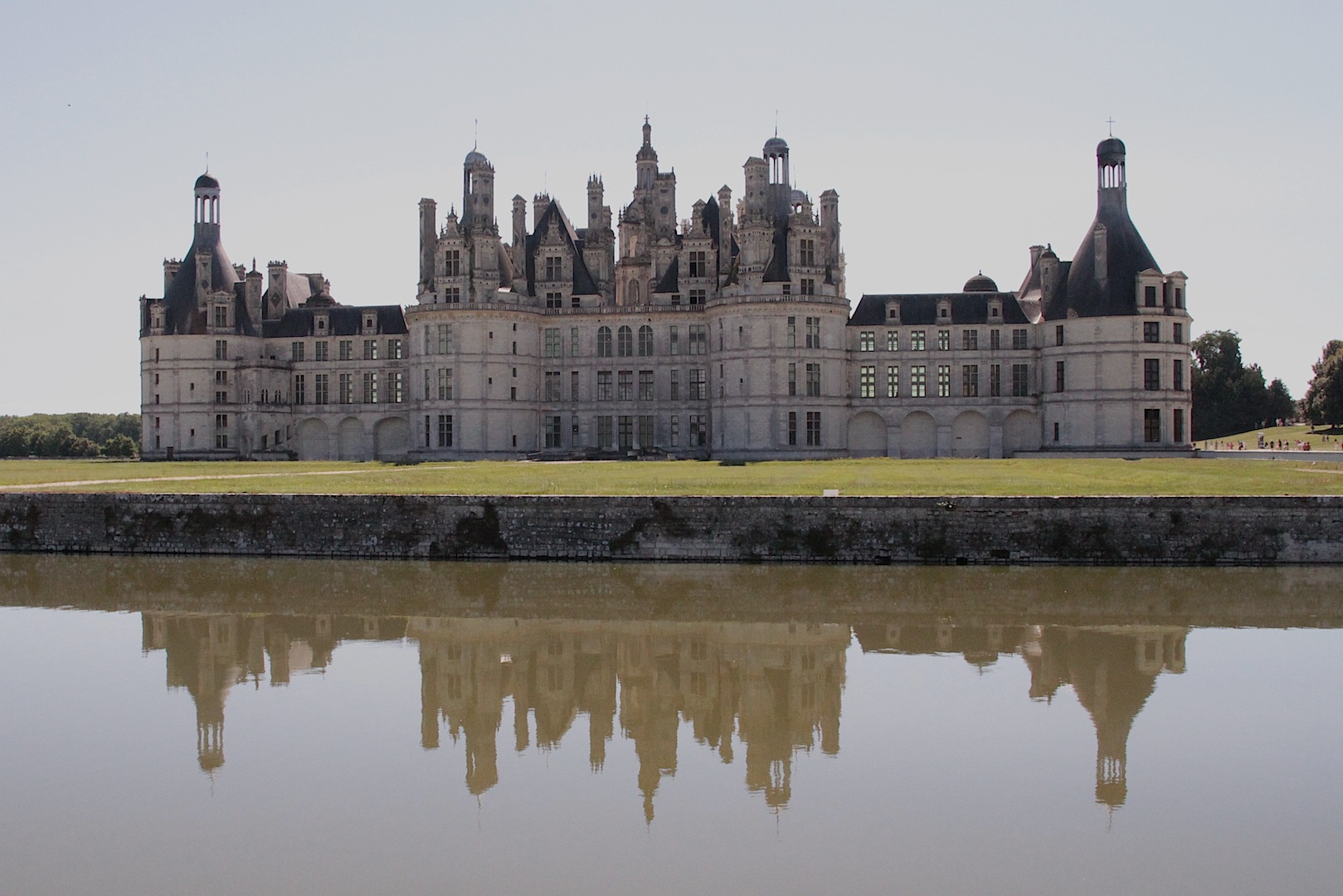
Many of my travel companions in the past must have rued traveling with me, as I tend to add time and kilometres in curiosity of places and other roads than the obvious straight line. The result of this was that we added 600km to our already 1200km trip from Köln to the Costa Brava but the positive is that we were able to explore the Loire Valley of France and to witness the decadence of the royalty of 16th century France. The architecturally magnificent Chateau de Chambord being one fine example of this decadence. This castle was built for François I in the 1500’s and took 30 years to build. It was built as a ‘hunting lodge’ and apparently with money laundered from the church. Must have been some hunting party when these guys came together to shoot boar as this chateau has 440 rooms. Since it was built in the wild and for hunting purposes, the effort and cost to furnish it was so vast that it was never furnished on permanent basis. Each time it was used, everything was brought with the hunting party; imagine that! No wonder François spent only 7 weeks there in all his life, and no wonder the French revolted some 250 later.
The ‘hunting lodge’ of Francois I, Chateau de Chambord
Our end destination was Lloret de Mar (pronunciation lesson nr 14, Lloret is pronounced Joret as double ‘l’ in Spanish is a ‘j’. Disclaimer though for the Capetonians, please don’t start calling Llundudno Jundudno as it is named after a Welsch town, not a Spanish one). Lloret is a smallish town on the spectacular Costa Brava, some 70km north of Barcelona and this is where my daughter decided to spend the next 8 months to learn Spanish. I too asked the question ‘why learn Spanish in Cataluña?’ but when I saw the beauty of Lloret de Mar, any other reason wasn’t required anymore. With beaches (ignore the men in their bathing shorts for proper comprehension here), cafès, villages, parks, horse-riding and Barcelona at her doorstep, it will require some discipline to focus on the studies, thus preparing her well for what lies beyond being able to speak Spanish.
Lloret de Mar beach
And exactly here, at Lloret de Mar, is where we camped in our RV for a week. The RV camping went well, as its very easy camping with everything in its place. Setting up camp very much consists of
RV Campsite
park your vehicle,
turn the fridge from 12V to 220V,
stack out your chairs and table
and open a beer!
Lloret de Mar, as most of the towns on the Spanish coast, stems from old fishing towns where some remnants of the days gone by are still visible. A pristine example of the ‘old town’ still relative intact is the walled old town of Tossa de Mar, a few kilometres north of Lloret. With a sandy stretch of beach lined with multiple restaurants where the tapas, wine and beer are excellent and the view across the sandy beach from your dining table exquisite. To the south the beach is intercepted by a rocky hill with the old walled fishing town and remains of the church still beautifully preserved. Walking the inside path of this old village provides the most stunning views across the roofs of the town to the west, the sandy beach to the north and the pristine rocky seaside to the south, and when we were there, the rising full moon over the Mediterranean to the east.
The walled old town of Tossa de Mar
We had to return home, the holiday was over, and Köln a long drive (10 hours for 450km in the August holiday traffic of southern France just to get to Lyon) away. Then the reality shock of returning home hit me and I realised that my family has now reached that first major change which happens to all families, but for which we were not nearly sufficiently prepared. We had to leave our eldest behind. Cara finished school in June and her first ‘after school’ objective is to learn to Spanish. This is why we headed to Lloret specifically, because this is where my daughter will stay for the next 8 months to learn Spanish before embarking on her university studies. It was one of the hardest parenting duties I have ever had to do, driving back home while your kid stays behind, in another country, nogal!
‘Pappas ook nie’ Incidentally, while we were in Lloret, a Facebook friend felt similar sentiments
But then, thinking about it rationally, I realised this is exactly why we moved to Europe originally. We came here for new challenges and opportunities and this has always been a major item on Cara’s bucket list, to live in Spain, learn to speak Spanish and to work with horses. That is precisely what she is now doing. Thus, slowly but surely we are fulfilling what we set out to do, sometimes with a very serious emotional shock accompanying the reality of our decisions, but also with the gratitude and a sense of achievement overshadowing that emotional hesitation. Still, as her younger brother said when we arrived home and the visiting grandparents also left for South Africa ‘our home is suddenly weird’.
… and yes, he’s got a cool beard, Hashim Amlaaaaa.
He’s great He’s feared He’s got a cool beard Hashim Amlaaaaaaa
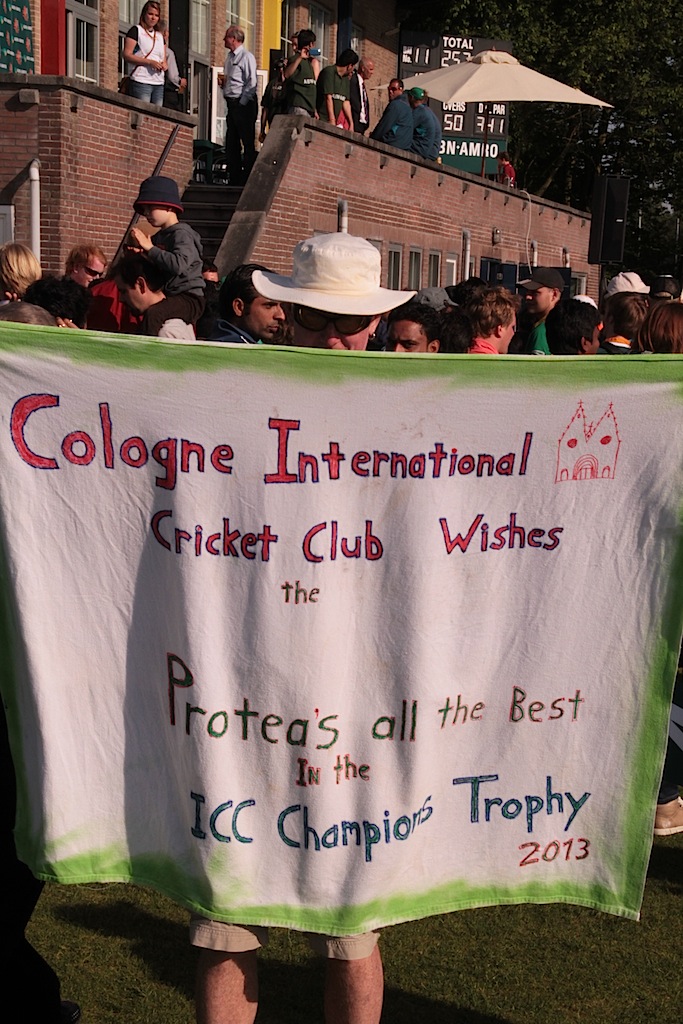
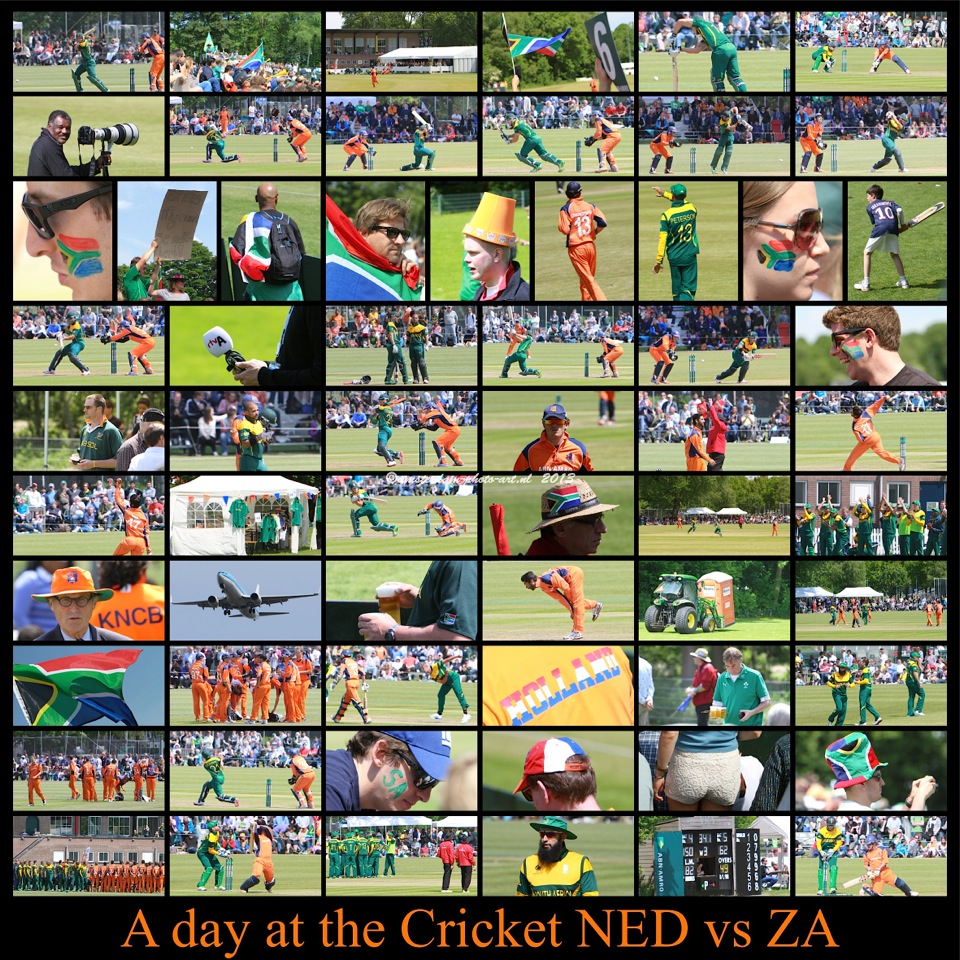
But greater than he’s beard was the Proteas’ visit to Amsterdam to prepare for the ICC Champions Trophy and their preparation included an ODI against the Netherlands. This provided the opportunity for many Saffas to see ‘their boytjies’ up close and live. Kitman says in 45 years it’s his first live match attendance of his team, and in Amsterdam nogal!
What an exciting and unique outing to be part of the small crowd at VRA Cricket ground in Amstelveen, in Het Amsterdamse Bos.
VRA Cricket grounds, Amstelveen
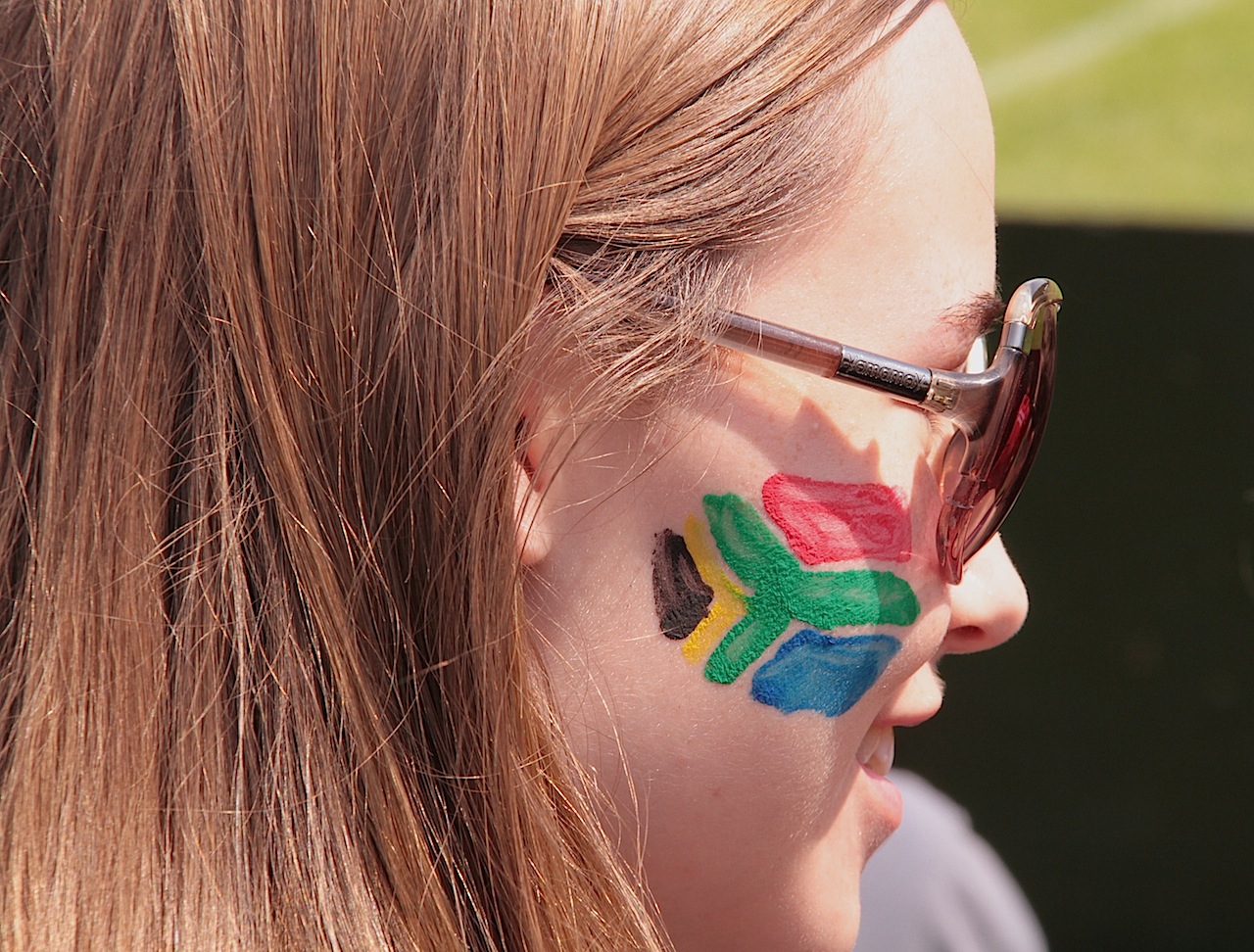
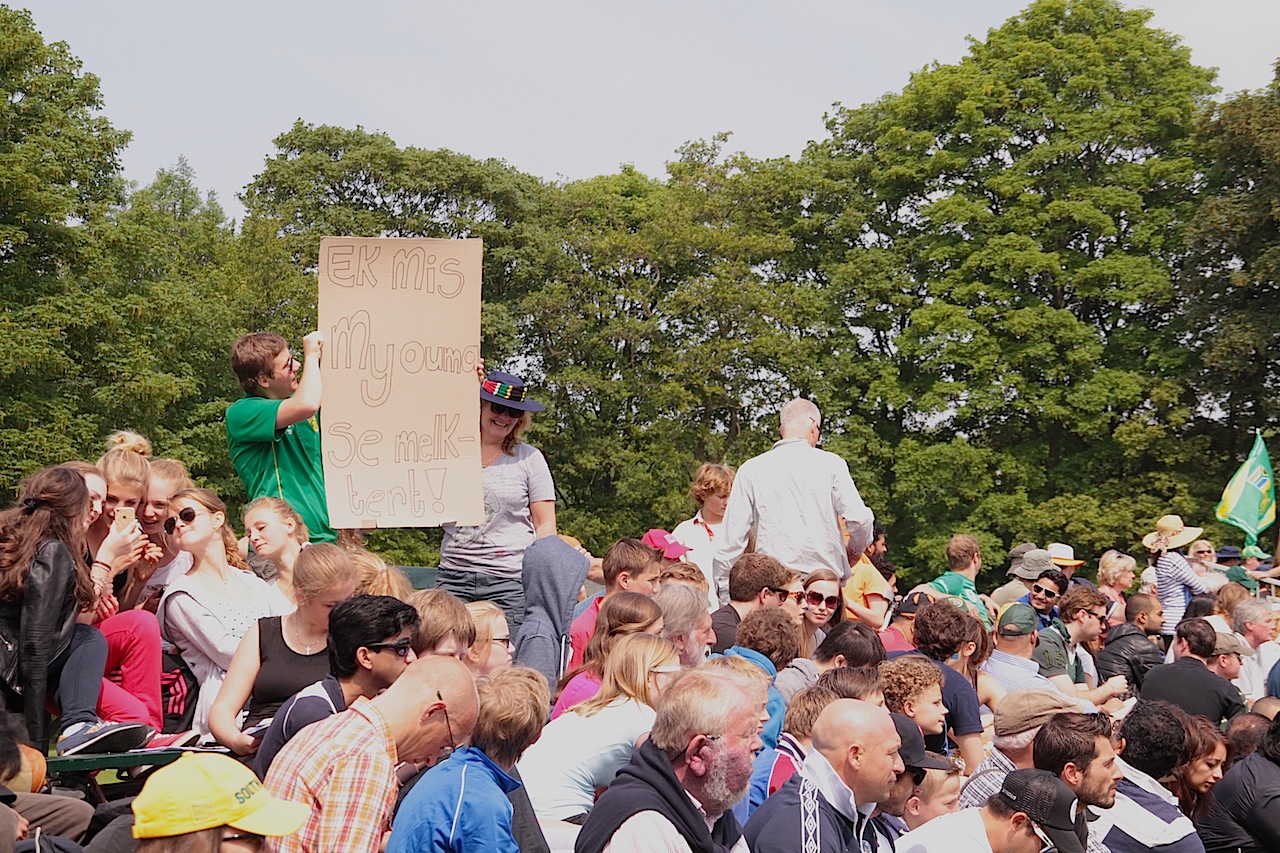
Sitting on the small stand (the ground has a capacity of just 4500 spectators), in this beautiful cricket setting felt like watching international cricket at the Irene Oval or some rural venue like, say Bergville or Himeville. There were obviously plenty of South African flags and colours, though most of us (yes, me too) had to wear our Springbok attire, as we don’t own Proteas clothes. Maybe, just maybe the boys will deliver in the final and bring home (err sorry, I mean take home) a trophy, which will force my hand. However, what was more enjoyable than seeing the many Saffas around the stadium was the actual Dutch support for their team in this perceived foreign game. And how the Saffas grouped their neutral friends to be South Africans for a day. In front of us sat a group of international students of which two were South African. There they were, a Swede, two Canadians, two Americans, some-one else and even a Britt, al ‘proudly’ wearing their SA flags on their cheeks. It did take explanation on the nuances of this odd game for the entire day to the Canadians and Americans but on their support for South Africa there were absolutely no doubt.
Cricket is not big in The Netherlands, though they have played cricket at this specific venue since 1939. The die-hard Dutch enthusiasts that were there are all huge cricket fans, passionately supporting their team and seriously hoping for another upset, as they have done in 1994 when they beat South Africa in an ODI. And while pondering this stunning event with my Dutch neighbour on the stands over a large local brew (reminder, the venue is set in AMSTELveen) in the very welcome and long overdue European sun, my said neighbour (to my shame I forgot his name) introduces me to a Dutch cricket legend Klaas-Jan van Noortwijk. So there I am, chatting away (as if I’m a Robin Jackman of some sorts) on the tactics, strengths and weaknesses of the 22 players in action with a guy who has scored a 4 off Allan Donald and who has gotten rid of Brian McMillan through a catch on his day. Klaas-Jan is certainly a cricketer of note; still holding the Netherlands’ individual highest score of 134 not out in the 2003 World Cup and being remembered for his 64 against England in the 1996 World Cup and obviously still a hero in the local cricketing fraternity as was evident in how often he is stopped for a few words where-ever he goes.
The waving flagsand missing a few things from homeFoto courtesy of Amanda Weideman
As with all sport, cricket can be such a cruel reality, as I am sure Dutch number 2 batsman Eric Szwarczynski (ironically born in Vanderbijlpark, South Africa) will still be thinking in weeks to come. After a brilliant spell of 98 against the current number 1 team in the world to then be run out from an excellent straight drive from your batting partner unfortunately through the fingers of Behardien, the bowler, onto the wickets to catch you out of the crease is probably the cruellest way to get your marching orders; a chance in a lifetime gone begging.
Hup Hup Holland
In my humble opinion (I’m not really on the Robin Jackman level of cricket knowledge) I am however worried that, though they won on the day, the Proteas are not where they should be. Thanx to JP Dumminy, who stood tall for his 150 not out the win ended as fairly comfortable, yet not too convincing. For us, however, the result was academic, as the outing, the sun, the sights and the pure delight was what made the day. This is what needs to be enjoyed when presented, results can be fixed.
JP en route to his 150 not out
While living in Europe, every opportunity must be utilised, and this was no different. We had the opportunity to buy some real Boerewors from http://www.boerewors.nl and chucked in a couple packs of ‘karnemelk beskuit’ from www.beskuitblik.nl too. Can’t leave Amsterdam with just satisfaction and a cricket win under the belt; you need something tangible too even if I clearly know it will not last very long.
Support from far away places
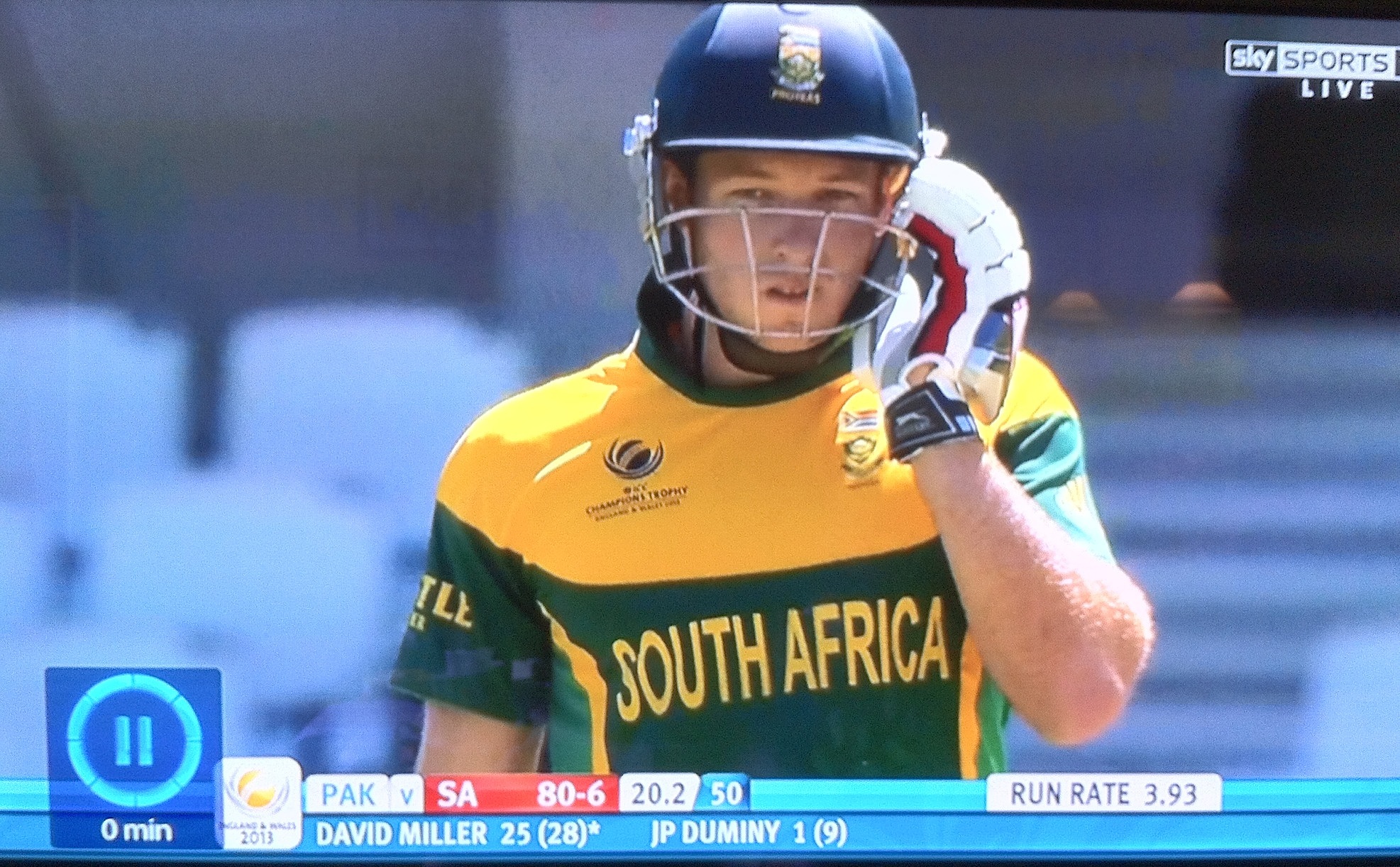
My sincere thanx to the Proteas for playing this game, getting amongst the fans who don’t often have the opportunity to see them other than on the telly, but who never lose the urge to support and appreciate Proteas cricket. Now, boys, go ahead and grab that trophy, even if your current warm-up against Pakistan doesn’t look too good.
Not a nice picture, but its only a warm-up
I mean, after all, …. ‘he’s got a cool beard’, you boys are feared.
I love music. I listen to music and it makes me think. I hear the words, I link it to real life issues and happenings and I get inspiration, motivation or sometimes simply a smile. Most songs actually have a useable message in there somewhere; think of the profound life lessons in classics such as ‘Oops, I did it again’, ‘Papparazi’ or ‘Daar onder lê drie pikkewyne’ (Down there lies three penguins) and ‘Baby Tjoklits’.
Me? I tend to prefer the real stuff. The Linkin Park, REM, Jan Blohm, Valiant Swart and of course Meatloaf type of stuff that is simply the inspiring uplifting songs with meaning, questions or philosophy entrenched in deep rhythm, rock, blues ……….. and ‘time’. I can’t stop wondering about some mystic ‘boer’, what I’ve done, in the end, a Van Goch touched canvass, those local odd-fellows behind the firehouse and how terrible it is to waste a kiss!
And that is the one song that I often refer back to when I’m hesitant to jump on a new opportunity, ‘A kiss is a terrible thing to waste’, as performed by Meatloaf and written by Sir Andrew Lloyd Webber and Jim Steinman. This song is about letting the future in, and not allowing the things you leave behind to drag you back.
However, last night on my way to my German lesson, as part of letting my future in, I was rudely taken back to the past and I realised again that we couldn’t ignore nor forget the past. We have to learn and improve from it. As I stepped off the bus at Sülzburger Gurtel a small little plaque in the pavement caught my eye. It was the commemorative plaque of Benedikt and Lina Juhl, plastered into the pavement tar and which simply stated that this is where the couple lived, before they fled to Holland, were imprisoned to Westerbork (see my blog posting Hup Hup Holland) and then deported to Sobibor, Poland in 1943. There they died on 21 May 1943, next week 70 years ago.
Here lived Benedikt and Lina Juhl
And then I sat in the class, sharing the confusion whether its ‘die, der or das kugelschreiber’ and how funny it looks when you write out 999 in German (pretty much in Afrikaans too) as ‘neunhundertneunundneunzig’, with an American, an Aussie, two French, three Spaniards, a Cameroon, a Romanian, a Bulgarian, two Italians, two Greeks, two Zimbabweans and a Pole and I thought to myself ‘what a wonderful world!’
The above paragraph-long sentence at least shows that my German lessons are working.
Blasé it may sound, and rightfully so. I have seen and travelled to stunning cities through Europe in the past 18 months and have enjoyed every one of them. However, you reach them all on tarred roads! Some times you need back to basics, back to dirt roads, under stars and in nature; wild nature where beasts roam free and spaces are open and wide. I was hungry for the kind of basics that doesn’t exist in city streets and built-up rural Europe.
‘I had a dream, a dream of bushveld braais, game viewing, friendship en early mornings in the veld’
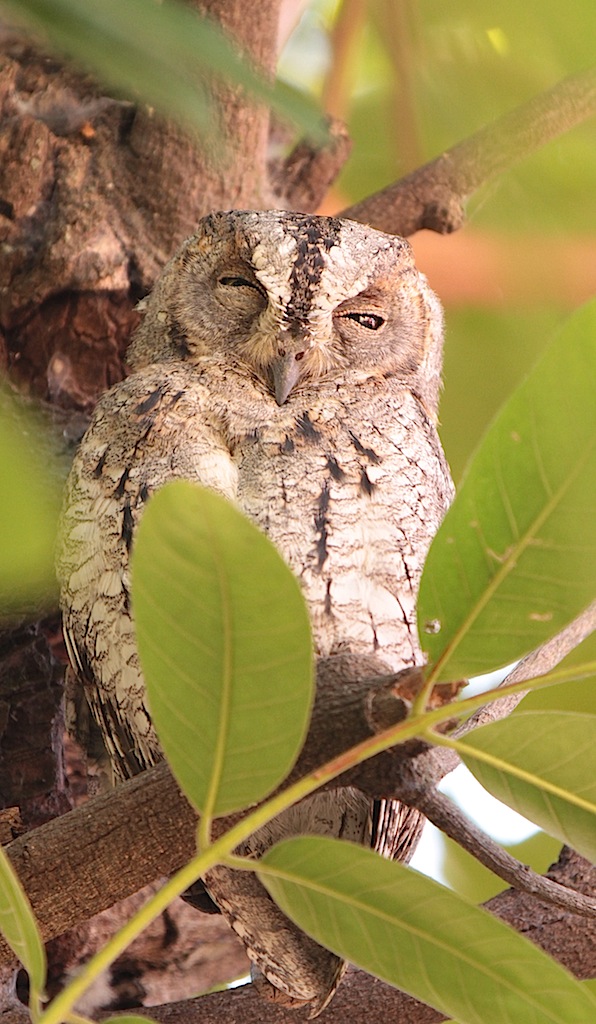
Southern White-faced Scops Owl
I organised such a trip with family and friends and headed off to South Africa for a three-week holiday recently. When living abroad, you cannot just pitch-up at OR Tambo and announce you’re here. It’s important to plan seriously what should happen when, simply because there are so many people to see and chat to, it gets hectic. Vacation planning to neither me, nor Heleen comes naturally. In our minds a good holiday is setting up location and then having nothing specifically to do, and having the whole day to do it in. But we have learned the value of planning visits back home by now, to get the most out of our time, and to get the most out of friends and family. We also have the enthusiasm and help of a sister-in-law to make it happen which proved invaluable when more than 20 people festively showed up at her place for ‘our’ Sunday welcoming (okay, I must probably admit that there also was a 60th and some other birthday which added as motivation for all to attend) ‘braai’, even a little rugby, plenty sunshine but no Chevrolet. To my few European readers, let me repeat, ‘plenty of sunshine’. Two pairs of grand parents and a wide spectrum of friendship complimented a perfect Sunday braai where all were simply dressed in shorts, t-shirts and bare feet, because they could. It has been a long cold winter in the north. But I’m sentimentally digressing.
We saw this leopard about 3 km from the Timbavati picnic site
Balule (named after the Tsonga word for Olifants river) is very close to heaven (at 24°03’12,79”S, 31°43’59,83”E). Balule is very centrally located north of Satara and lies on the banks of the Olifants River, in the true bushveld savannah of the big five sanctuary in the Kruger National Park. It has very basic facilities, no electricity and a lowish, thinnish fence, which means you really get the best of that wild exposure only Africa can provide with hyena and hippo frequenting the fence. This was to be our base for the week from where we would recce every little dirt road, every little river loop and every picnic site within a day’s travel from Balule. And we did.
Struggling to chew those sinewy bits
To speak about Balule and not sharing the Kruger National Park info to provide context (again for the few European readers, and to be read in conjunction with the ‘sunshine’ remark earlier) will simply not do justice to this world class, nearly 2 million hectare tourism destination.
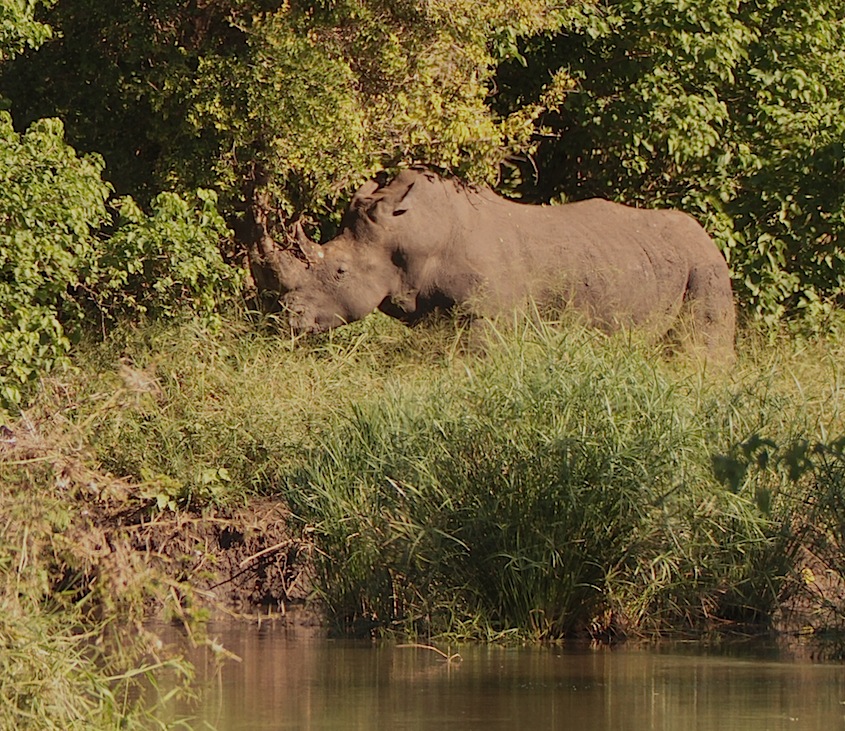
The Kruger National Park was established in 1898 to protect the wildlife from us! And unfortunately, we are still struggling to protect them as the 618 rhino’s that were killed in 2012 and 203 in 2013 (up to 3 April only) show.
Facing the true brutality of survival is a humbling experience
The Kruger is home to an impressive number of species (http://www.sanparks.org/parks/kruger/), which includes 336 trees, 49 fish, 34 amphibians, 114 reptiles, 507 birds and 147 mammals. Also included are bushman rock paintings and two majestic archaeological sites, Masorini and Thulamela. So, its obvious that from a conservation point of view the Kruger is setting the pace. I’m proud though, to also say that from a tourist point of view, it must be one of the best destinations in the world where one can get back to nature without having to fork out hundreds of rands, euros, dollars, pounds or zillions of Zim dollars. For a campsite you will pay a mere R210 for the first two persons on that site; that’s a mere €17.6830192 for two persons per night!
‘Dik gevreet’ That drowsiness after a big Sunday lunch
Enter at Orpen Gate in the Timbavati region and you immediately recognise that you are now in the real deal. In 115 years there were no cattle grazing, no ploughs and tractors or any other civilized activity on this beautiful bush landscape, except for establishing the excellent infrastructure to allow us to enjoy the bush. This is where God’s original creation is still intact and driving at 30km/h with windows down with birdsong and bush scenes engulfing you, I confirmed to myself, ‘it indeed was time for Africa’.
Photographers
The bush, and nature as a whole, is not predictable and this is not a zoo where you can simply stare through cage barriers to tick off your list animal sightings. Man is the foreigner here and you should find the sights for yourself, not as the Aussie tourist I met around the campfire in Lower Sabie many years ago unwittingly suggested, ‘its too difficult to find lions. They should have a few cages at each camp where they keep the important animals for people to see them easier’. Duh!
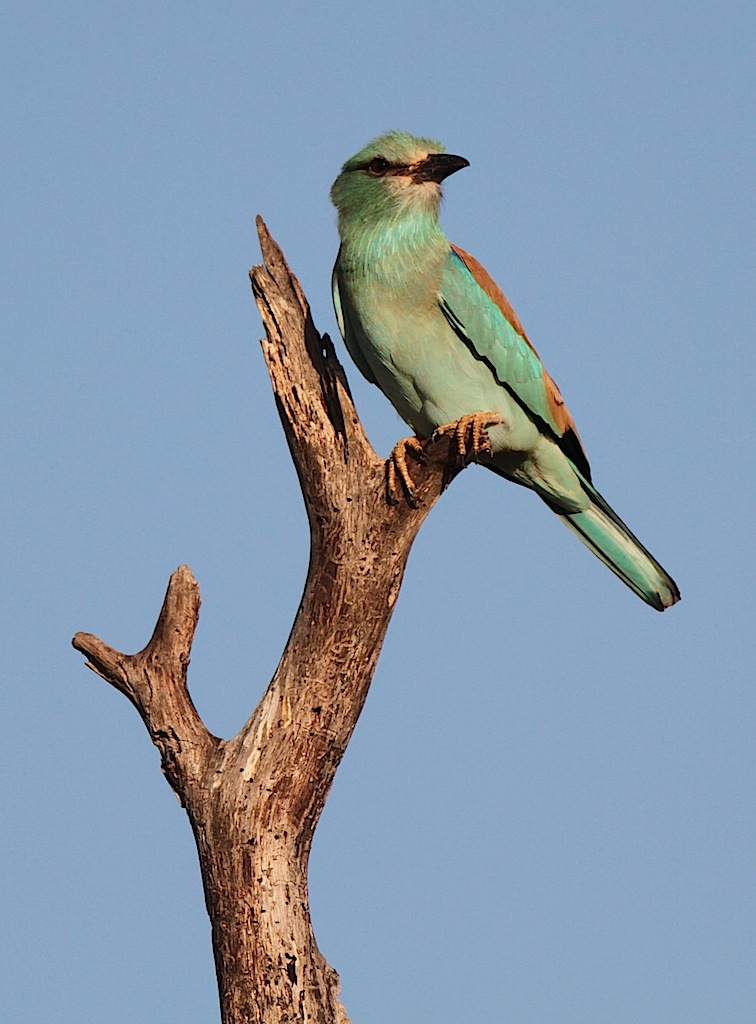
European Roller enjoying his last few days of African sunshine before heading of to Eurasia
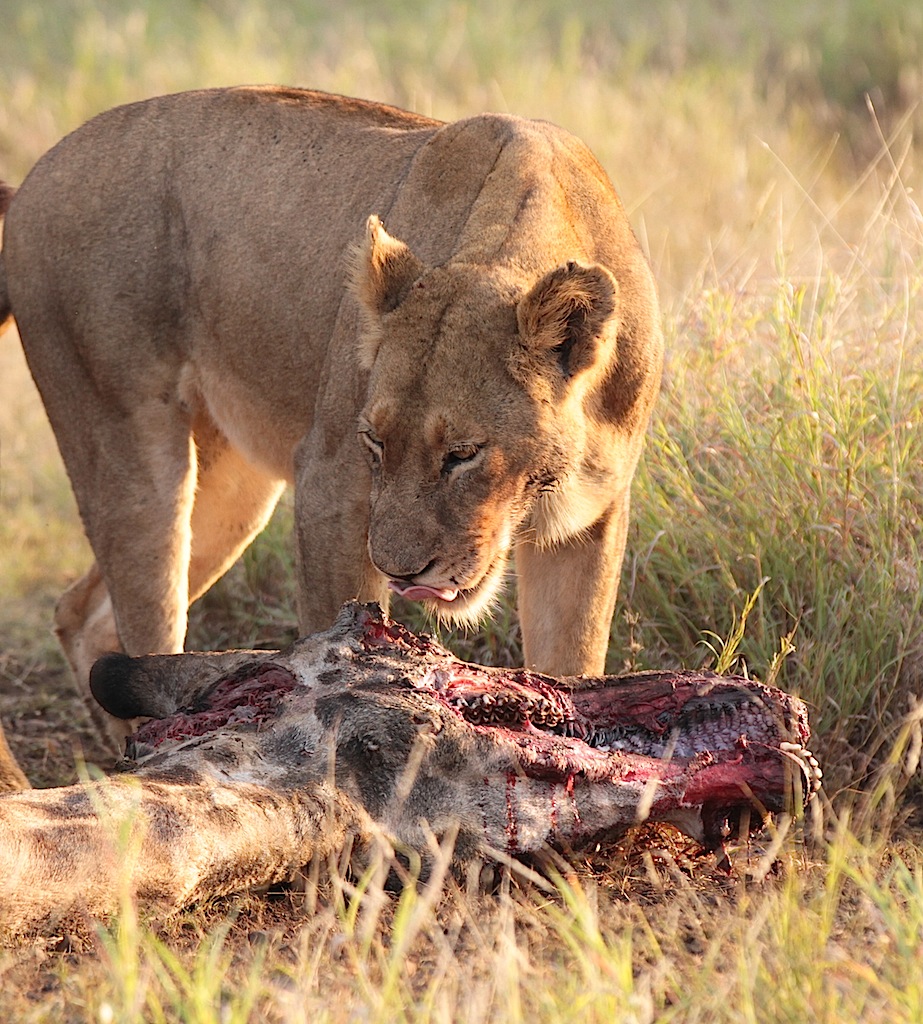
However, we were extremely lucky this time around not only with the big five ticked off successfully (and I’ll let the few photos and video-clip confirm that) but also a few gems such as honey badger, jackal, civet and close to 80 bird species positively identified. The highlight though was the stunning leopard sighting near Timbavati as well as the 12 lions that killed a giraffe 2 km’s from our camp’s gate. We were provided with ample photographic opportunity and by the end of the week even the stench of the decomposing carcass to fulfil all the senses of the brutal reality of the African bush.
Purpose number one of the Kruger Park is obviously nature conservation with educational, natural and travel enjoyment a definite second on the list. A huge part of the tourism aspect is the opportunity to share experiences, share time and share anecdotes, jokes and simply ‘saamwees’ (togetherness) with close friends and family.
Black backed jackal
Sometimes not all can make every trip, and that was unfortunate that a few friends and family members could, due to personal circumstances, not make this trip. We rented two-way radios to enhance the experience and communication, as we were a group of 26 in 8 vehicles and this proved to be a great success. We were able to chat the whole day while driving, share sights and annoy those who forgot the coffee flask at Balule. I truly believe every person in the world should at least once enjoy the African bush in all its glory. It is here where people still take the time to slow you down, look you in the eye when you hastily order a Cadac ‘skottelbraai’ for your ‘urgent’ breakfast, and calmly say ‘Hello, I am Joel. How are you?’ before delivering on your blunt request, making you realise you have ample time, stop rushing.
All is not always well, though. The Kruger Park is located in a malaria area, and it is always strongly advised to take malaria medication as precaution.
White Rhino Disaster in progress with increasing poaching with 27 Rhino killed in the Kruger in the last 10 days!
As all medical advice will say without exception, ‘there is no debate, take the precaution and be safe’. I stopped at The Moot Hospital in Pretoria to get a prescription to buy the malaria tablets. We are a family of four and the verdict at this hospital was, just for the doctor to write the prescription each person will be charged the R700 consultation fee! Fortunately we made the call to walk away from these money clowns and stop at our old service provider, Intercare in Southdowns where the doctor did not hesitate to give us the prescription for free for all four, ‘since the medication is already very expensive’. Thank goodness for common sense.
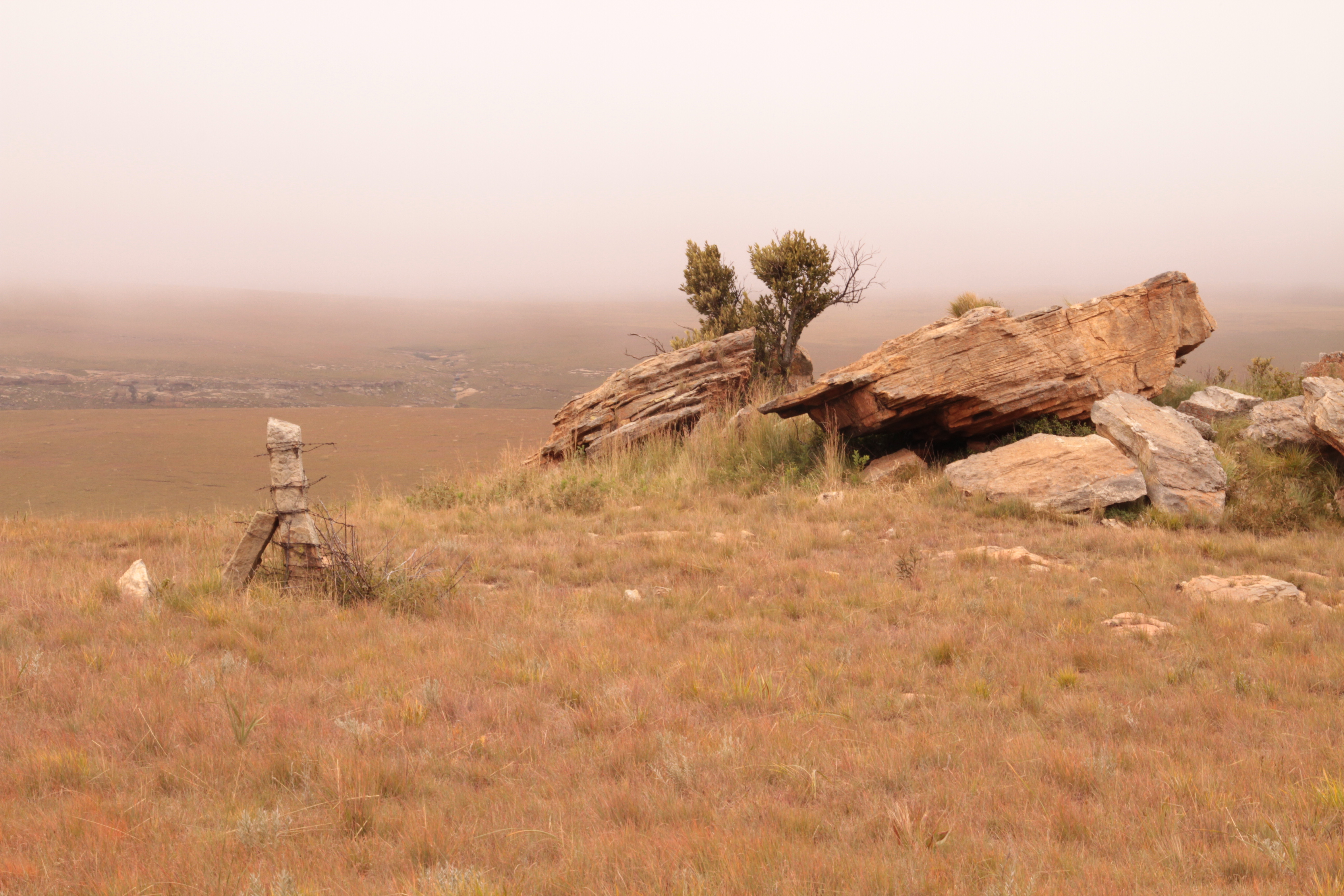
Eastern Free State beauty
I was, after the bushveld fortunate enough to also have a few days with my parents in the Eastern Free State’s sandstone haven around the Sterkfontein dam and Golden Gate National Park. This, as opposed to the warm savannah bushveld where I spent the previous week is the grasslands and sandstone Maluti mountain area of exceptional natural beauty. This is where one can find the bearded vulture (which unfortunately still evades me) and breath-taking rock-face and flowing hill scenery. A vary valuable lesson I’ve learned when travelling is to enjoy the moment, that Carpe Diem cliché, and this surely paid off. Again set in awe inspiring natural beauty and in the company of my appreciative parents I toned down on pace, stopped frequently to take pictures and share with them the beauty, enjoyed ‘roosterkoek’ in Clarens and chatted nostalgically about so many things we hardly get time for in our hasted everyday life.
Two world-class natural and tourist destinations, and add to that the friendliness of Pretoria and the passion and clinical athleticism displayed at the two rugby venues, LC de Villiers and Loftus Versfeld which I attended during my South African visit made me realise again what a great place South Africa is. If only those in power would realise the potential of the assets they already have in their hands, and positively optimise that.
For the sake of future enjoyment, I have drafted the following list of things to do when planning a similar trip:
If you plan to attend the Varsity cup semi-final (and this proved true for the final too), support Tuks
Buy your meat at Toits butchery
Rent a strong diesel powered microbus if you plan to tow your off-road trailer. Hyundai’s H1 bus is ideal, but their 2l petrol engine might just add a day to your travel time!
Have your beers very cold when you pitch camp in 38° Lowveld sunshine
Ensure your iPod interfaces with the vehicle
Take anti-malaria medication, but choose wise where to go
Choose wise who joins you on a trip such as this. Basic camping always is hard work. My friends and family comes with high recommendation, contact me if you want to ‘lend them’
It’s the first week in February and Cologne is in a buzz. In the workplace, meetings are rescheduled to create available time for the next few days, behaviour seem to develop a ‘dodging the responsibility’ flavour, and funnily dressed people start to appear on the streets. Even the rubbish removal schedule is changed. Something odd is going on, but to be more accurate, it has been going on since 11 November, its now simply climaxing.
The ‘fifth season of the year’ begins on 11 November at 11:11 when carnival is officially declared open which indicates the start of the festivities. It’s a nearly three-month period; of which the tempo is fairly low key until ‘Weiberfastnach’ (Shrove Thursday), the Thursday before ‘Rosenmontag’ and when the highlight of the crazy time in the Cologne Carnival kicks off in earnest. As far as I could determine, the larger Cologne area is the German ‘Mekka’ (Iz it againzt ze rules for me to use that reference in this context?) of German carnival celebrations and has become a major tourist attraction too.
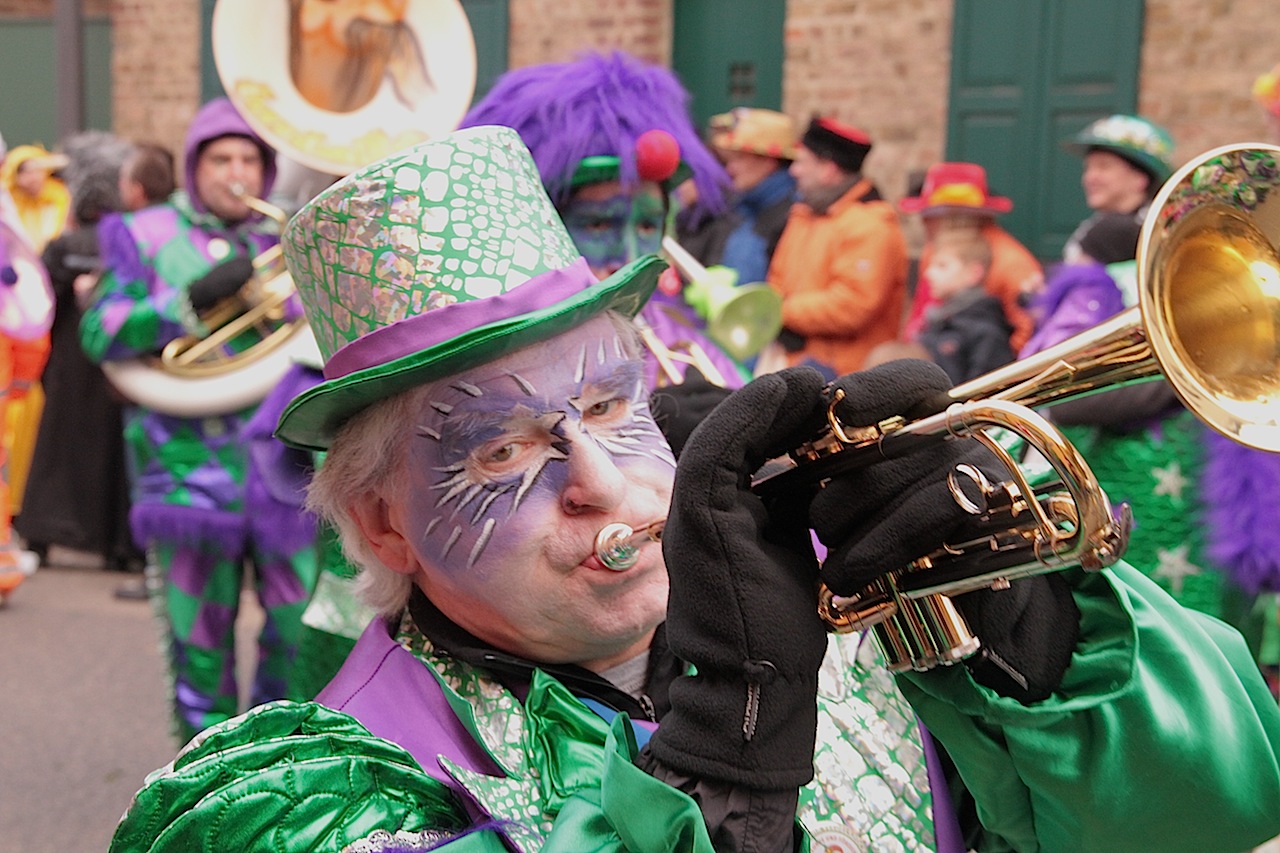
Music and masks
There are contrasting views on the origin of the word ‘carnival’, but for the sake of my narrative I like the one where it is believed that the word ‘carnival’ comes from ‘carne vale’, which means ‘farewell to meat’ and which leads into the Lent and the 40 days of Jesus’ fasting in the desert. The Cologne carnival is almost as old as the city itself. The Romans and Greeks celebrated cheerful spring festivals in honour of Dionysus and Saturn with wine, women and song. The ancient Germans celebrated the winter solstice as homage to their gods and the expulsion of the evil winter. Later, the Christians adopted into the heathen customs. It is traditionally held in areas with strong Catholic and Orthodox roots, while Protestant communities do not have a carnival celebration per se.
Medievel Italy is probably the real original carnival with specifically the masked parades in Venice being well known. From Italy the celebrations spread first to the predominantly Catholic nations of Spain, Portugal and France, who in their turn took the custom across the world to their colonies.
Colour
From France, it was introduced to the Rhineland area of Germany, where, in 1823 the first worldwide carnival took place in Cologne. Thus, this first week in February has been a huge babelaas (babelaas is afrikaans for hangover) for Köln for 190 years. I wonder if I’m up for the challenge to witness the celebrations in ten years time?
But now, it’s the first week in February 2013 and Cologne is in a buzz. The Germans, more specifically, I presume the Kölsch and all visitors to Köln during this week however don’t care and don’t think about the origins, I can assure you. To them it’s about the costumes, the beer, the bratwurst and the song and dance, which accompanies all parties of this public nature.
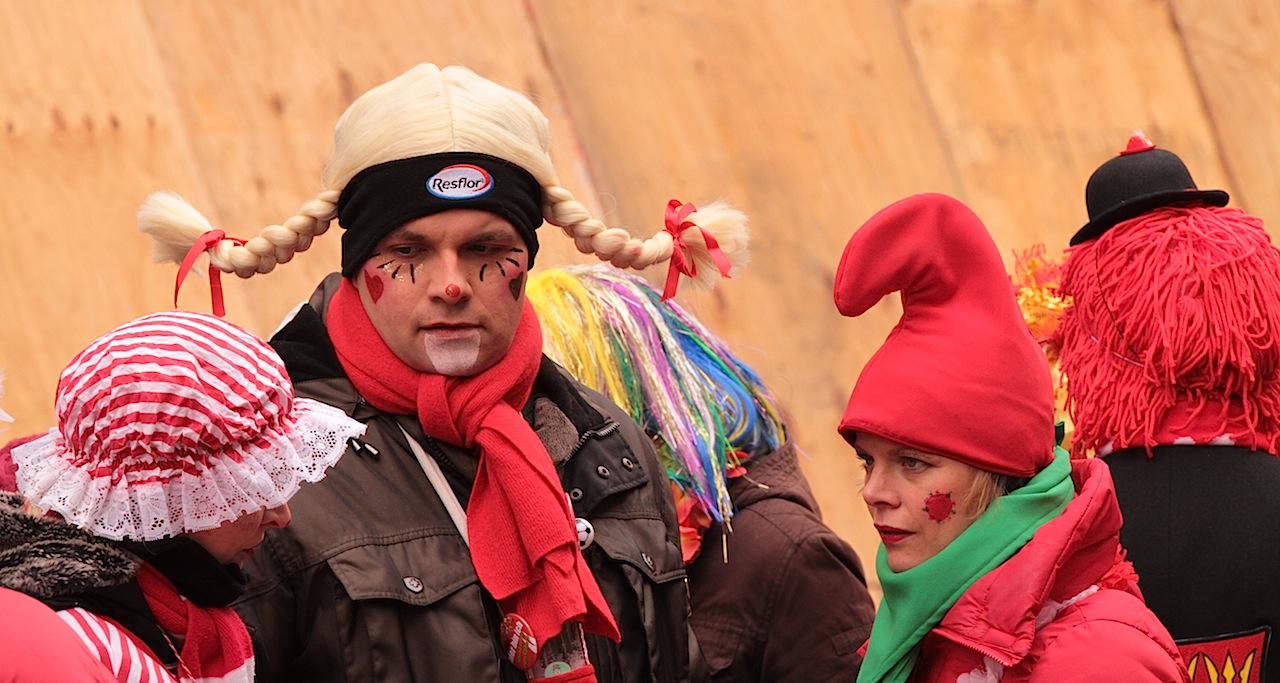
My limited experience of street parades, public fancy dress, floats and street chaos is the so much a smaller scale varsity rag (jool in Afrikaans) and which is done for a complete different reason. By the way, a little useless trivia, the Afrikaans term ‘jool’ is the acronym for ‘jou onbaatsigtige opoffering vir liefdadigheid’, which means its primary objective, is to collect funds for welfare. But in Cologne it’s huge and certainly not limited to students. Old people, young people, family people and single people all dress up, whether its just a funny hat, a full lion suit or the full-monty aristocrat costume, you are aware that its carnival where-ever you go. And these costumes are not only worn on Rosenmontag, but for the entire crazy period, from Thursday through to Rosenmontag.
Spectators in costume too
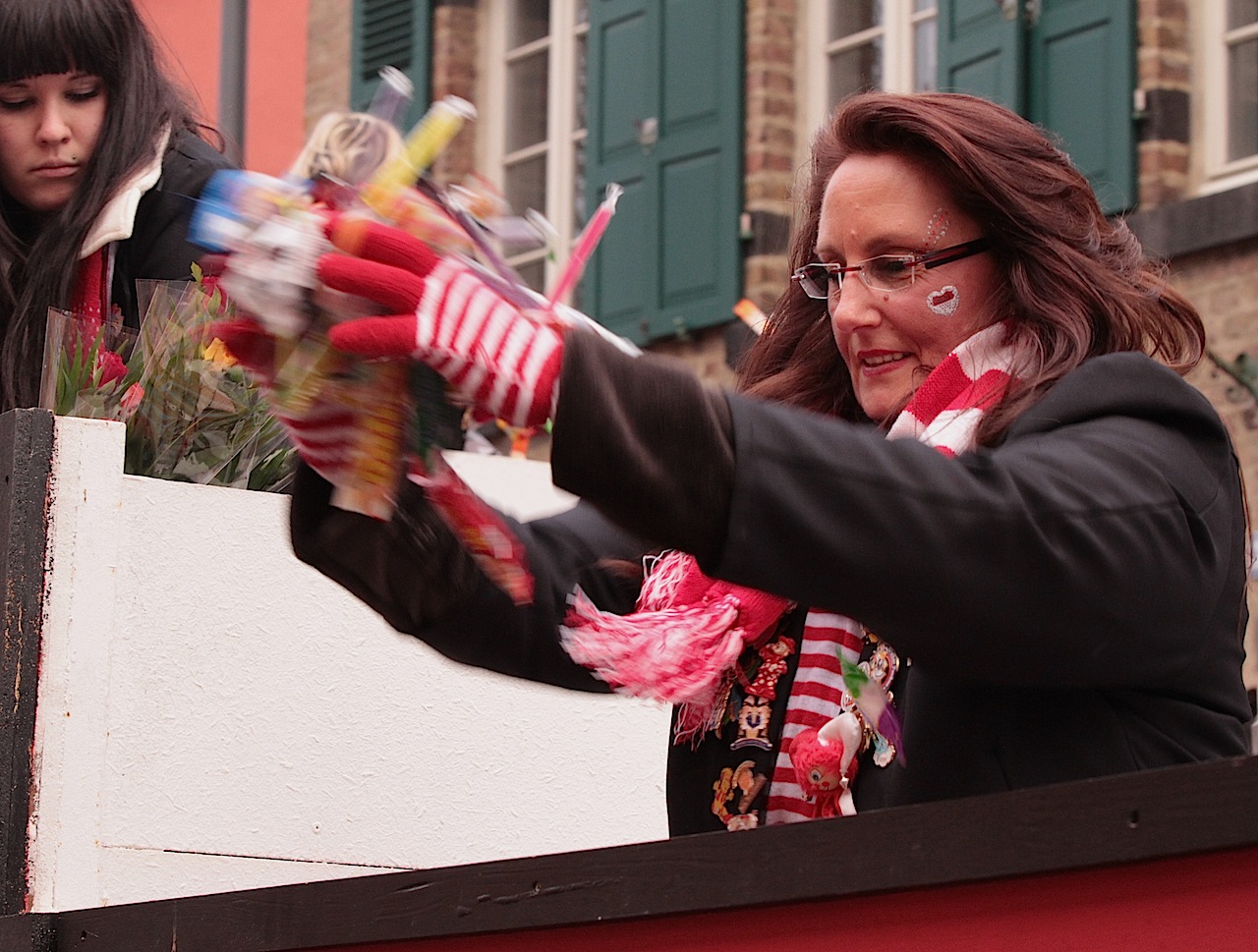
Rosenmontag then, arrives with many a hangover still well embedded while the fancy dress for the new day is carefully decorated to the body. This is the big official day with the floats and parade the main attraction. The route of the parade is a full 6.5km through the main downtown parts of Cologne, while the length of the parade itself is nearly 6km long. Spectators line the entire route for the duration of the parade, which can last up to 4 hours to proceed past a specific spot to gaze with awe at the sights and sounds around and in font of them and of course, to collect sweets. ‘Kamelle, kamelle’ are the cries from begging spectators with the occasional ‘Kölle Alaaf‘ (Cologne, above all) chant to draw the attention to you, because hands full; no buckets full of sweets are thrown into the crowds. Understand me well, its not that every parade participant has a few hands full of sweets to hand out, there are actually motor vans full of sweets in the parade from where bags are continuously distributed to the participants to throw to, and some-times at, the crowds. We arrived home with more than a large shopping bag of sweets.
And then, because its February and still so very cold outside, as soon as the parade passes, you head for the bus to get back home and out of the cold. But there in our own little town of Rondorf we stumble upon the local parade just getting ready to start. Its much smaller, its much more localized, with the local farmer, baker, and church music group etcetera parading their stuff and with much more families with small children lining Hauptstraßse enthusiastically chanting their ‘kamelle, kamelle’ pleas. It seems most of the smaller towns in the Cologne area have their own parades late afternoon.
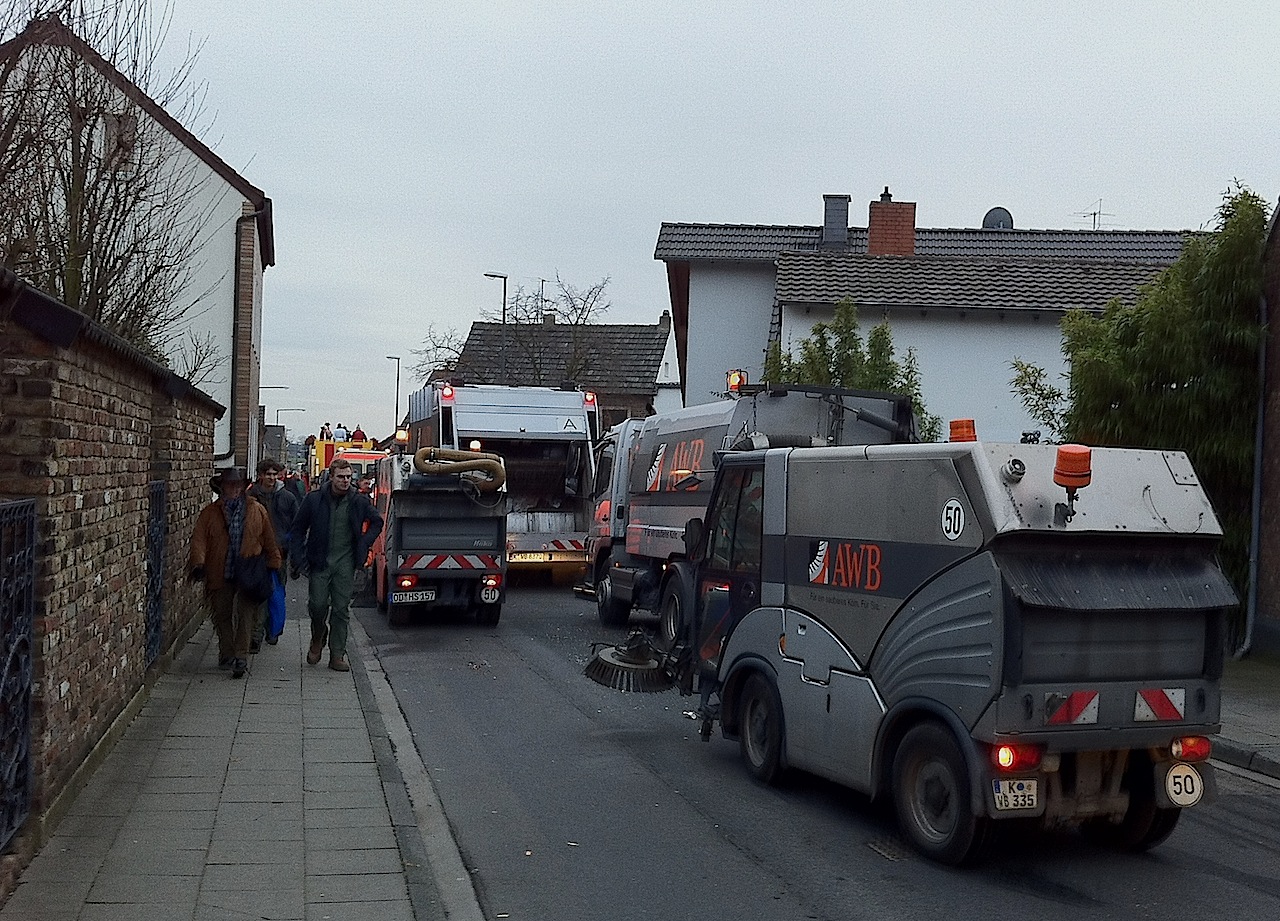
Fittingly to German efficiency, the last float procession is the AWB (it’s the cleaning contractors in Cologne, not the right wingers from SA) with their equipment, cleaning the streets as the procession passes, leaving hardly any traces of the chaos and fun that was had just half an hour previously. Except for this evening’s party somewhere with friends or in a bar, the crazy days are over for another year, and babelaas permitting, tomorrow will be a normal productive day again. And thoughts will probably already wonder towards the planning of next year’s costume to wear.
…the simple words of a father laconically stating the obvious.
When I decided to start this blog, it was about the excitement of a new life, living and traveling in Europe. And most of my posts so far focused exactly on that, so much so that I believe I actually lose readers as each story is about ‘yet another De Wet trip somewhere’. However, living in Europe also has its normality and mundane day-to-day tasks which need to be done to ensure a sane living environment. I do believe most people embarking on expat living realise this and prepare for it, maybe even going to the extreme of taking ironing lessons before packing your bags.
However, it’s not always easy going. Distance in times of sickness is a very difficult thing and though the modern era of Skype, email, flat rate telephony and all the other methods of communication available, it still is no substitute for that personal touch often needed to console emotions.
Johan in Sorgfontein ‘walk with the lions’
And that is what this one is about. Its my tribute to my brother Johan, a 46 year loving father, husband, brother, child and friend who last week lost his fight against cancer, and the emotional dilemmas one experiences when you’re so far from loved ones.
Johan was aware that he had stomach pains for quite a while, and have been at the doctors for a couple of visits. Bacteria, hernia, spicy food were some of the prognoses, but then suddenly in January it was diagnosed as cancer, and quite progressed already! That was the start of a scary and tough, though also in a sense fulfilling 10 months which followed. I have learned in the past 10 months how the grace of God works through adversity to bring comfort and peace. I have also seen how friends and family come closer and closer and the good in people come to the fore when someone is in distress. I have seen how my friends, not having met my brother, stand up in support and going out of their way to comfort us as a family. AND, I have seen how he, Johan, the sick and dying one amongst us became the strong one, keeping his smile and positive attitude and even, on his deathbed comforting and praying for those around his bed.
I got the message three weeks ago, though not explicitly that Johan was dying, but that he was getting very weak. He has lost in excess of 30kg in the past 10 months and had very little strength left. At that point he was taken to hospital again and I had to make a call of visiting him.
My dilemma to myself was that by going to SA to visit him; was I admitting that he was dying and that I must go and greet my younger brother? And by not going and not seeing him I will have to go and attend a funeral without any last words later!
I chose to go and will forever be thankful to my wife, Heleen for convincing me to do so. I had 10 days of stunning time with my brother before he passed away on 22 October 2012. I had the privilege of braaiing with him, even watching an episode of Dallas (figure that!) with him and having deep serious conversations about life’s regrets and opportunities while we even solved the Springbok coache’s problems in those 10 days. Heyneke should now just listen!
And then, yesterday when I phoned home, speaking to my Dad as my Mom was not home, I asked him about the quietness of the house after the two weeks of many feet entering and leaving their house and his answer was simply: ‘yes its quiet. Everyone’s gone home, and ‘Johan is ook weg!’ (Johan too has gone).
So, Johan, I know you’re sitting smiling at our grief in heaven and I know it’s a much better place to be. I also know we will see each other again, and I know how great and comforting God’s grace is. But still it hurts, it hurts with a burning heavy pain in the chest type hurt and we miss you.
I do whish we had more time.
Rest in peace Broer.
Rus in vrede Broer
‘(9) And He said unto me, ‘My grace is sufficient for thee: for my strength is made perfect in weakness. Most gladly therefor will I rather glory in my infirmities, that the power of Christ may rest upon me.(10) Therefore I take pleasure in infirmities, in reproaches, in necessities, in persecutions, in distress for Christ’s sake: for when I am weak, then I am strong.’
‘Once through the Picos, we headed east to Zaragosa as a sleepover before hitting the sights, sounds, sun, siestas and soccer of Barcelona. But that’s another story.’
And this now is that other story.
If you’re visiting Barcelona for the first time, and you’re worried because you don’t speak Spanish, relax, neither does Barcelona. Barça is the main city of Cataluña and as is the case with the Basque country, conflict between Catalan independence seekers and Spain has been going on for many years. Of the 5.7 million Catalans, some 80% are Catalan speakers.
The Arena once was for bull fighting, now its for shopping
So not Spanish are the people of Cataluña that they abolished steer fighting and changed the Barcelona bullring to a Mall, causing a political stir due to the ‘un-Spanish’ sentiment this signified.
Barcelona, with ‘such a beautiful horizon,’ was our destination for the second week where we had a small (read small) apartment booked in the most ideal location in La Barcelonetta. La Barcelonetta is that triangular piece of Barcelona bordered by the harbor, the city and the Mediterranean. The apartment was a mere 50m walk from the ‘playa’ La Barcelonetta, the beach which gained prestige as ‘the best urban beach in the world’ and overall ‘third best beach in the world’ according to the 2005 Travel Channel show World’s Best Beaches. Thus, Heleen secured a prime location, which in a sense proved disadvantageous as well. So good was the ‘beach holiday’ that we did miss out on some other ‘must do’ sights in this magnificent city. Blasé-ly I suppose, I can say that since we have been to Barça previously, it was OK to afford ourselves a more relaxed pace in coping with the humid and high in the 30° days.
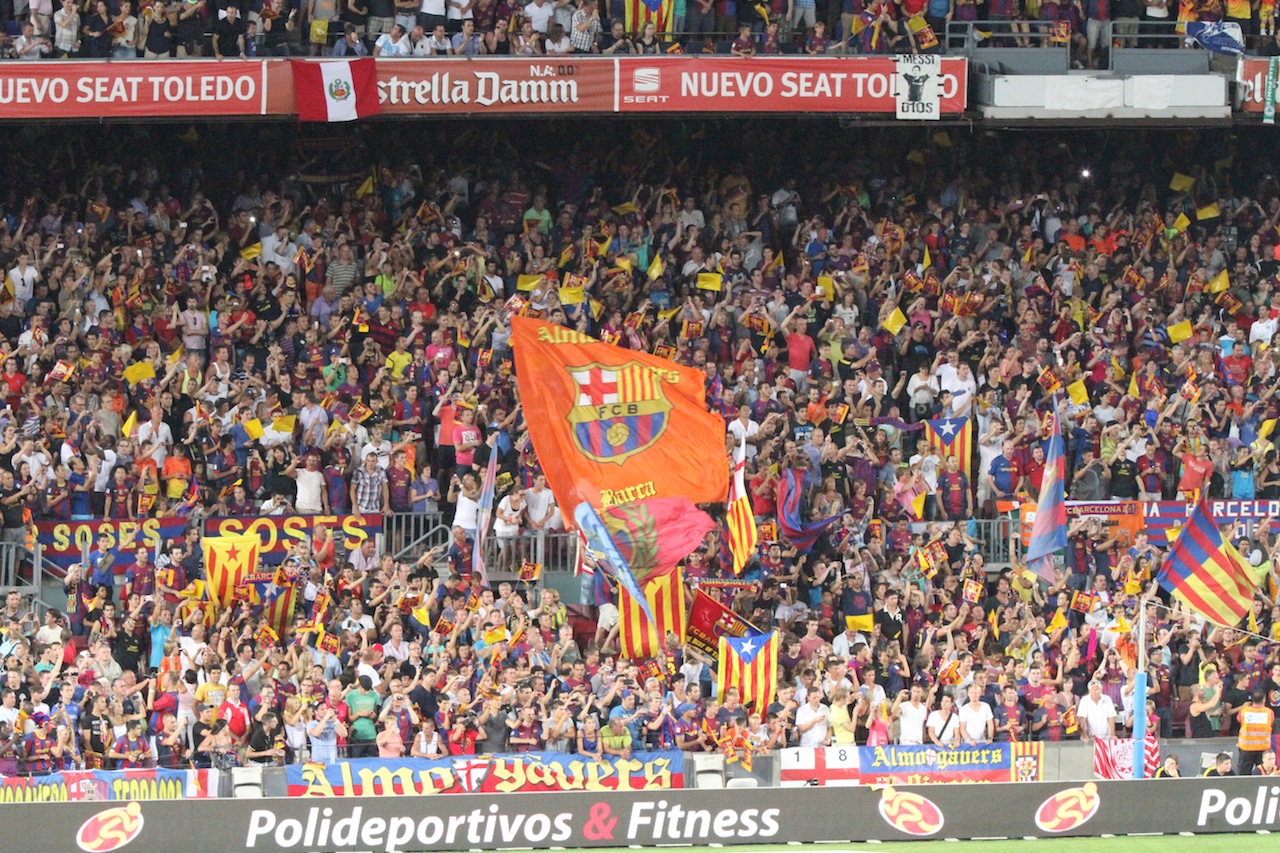
Nowadays in our home, FC Barcelona is probably the biggest attraction when you talk anything Spanish, and thus we were fortunate enough to be able to fit in two Camp Nou matches into our relaxed schedule, one of which was a sell-out ‘el Clasico’ versus Real Madrid. Utilizing the well-known reference books such as Eyewitness, Lonely Planet and others, I realized how hugely underestimated attending games in a venue such as Camp Nou is in terms of tourism value. A visit to the Estadio Camp Nou, including attending a ‘big match’ such as a la liga encounter must rate as one of the highlights available to any tourist visiting Barcelona. My advice is to add this to your bucket list immediately.
Camp Nou fever
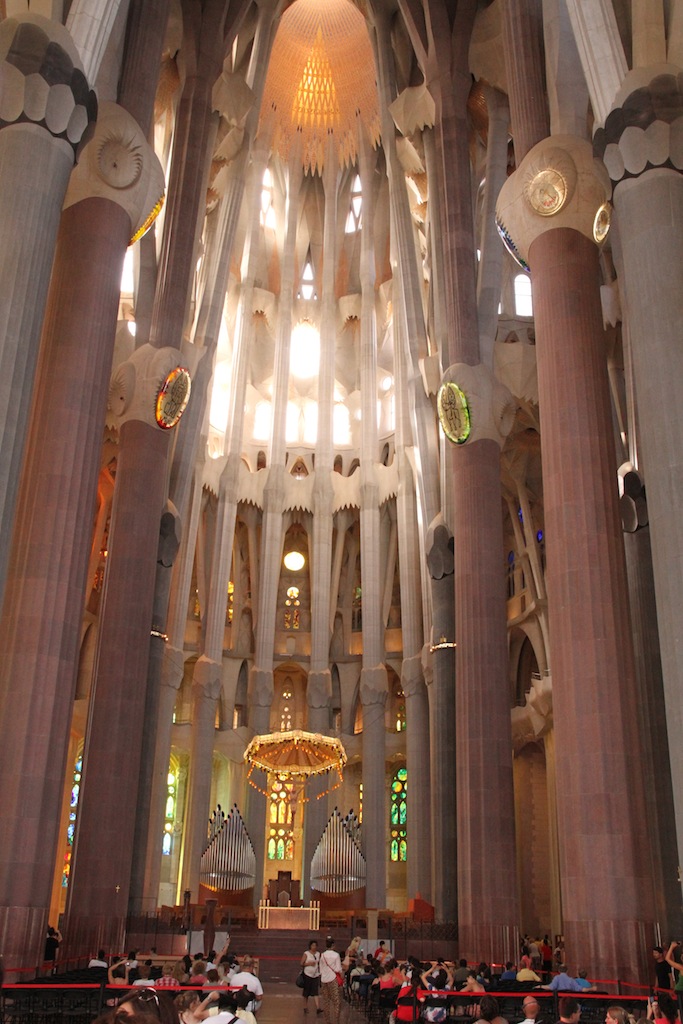
Antonio Gaudi is the name, when visiting Barcelona that simply pop’s up time and time again and for good reason too. Gaudi was the genius architect of so many landmark architectural creations in Barcelona, of which the ‘Templo Expiatorio de la Sagrada Familia’ is probably the most well known of them all. I visited the Sagrada de la Familia for the first time in 2007 and was slightly disappointed then. At that time, the entire inside was still scattered with scaffolding and I could not appreciate the architecture and grandiose of this church in full.
This is truly stunning architecture
Thus, with the five years’ earlier experience as reference, it was with slight hesitation that we took the trouble to actually take the kids to the most famous of Barcelona’s sights. And am I glad that we went? The interior is now finished, with no scaffolding and workman around, and wow!, it is magnificent. Some areas on the outside are, although stunning, grotesque in design and in traditional cathedral frame of mind not what you would expect. But sit down, stare, scan and take it in, and then it makes sense and it awes you. The finished inside is just simply beautiful and my limited writing ability and words can never do justice to it. Of course it’s not traditional. Its Gaudi, for Pete’s sake! Nothing Gaudi is traditional and he did spend about 16 years as a semi recluse in the cathedral while working on it. But it is incredible, huge, beautiful and awe inspiring. Marietha, you should visit it again.
The first stone was laid as far back as 19 March 1882. And the current project plan states that it will only be completed in 2026. It is always unfortunate though, that these monumental places of worship are such tourist attractions with the common tourist behavior and masses spoiling the dedicated atmosphere, which should reign.
Among Gaudi’s many architectural relics is also the Parc Güell. Industrialist and friend of Gaudi, Eusebi Güell had the idea of building an estate (let’s say Midstream like) with 60 stands amongst a natural park environment. He entrusted the design of the park to Gaudi and though the estate never realized and only three plots sold, the park and the Gaudi relics are something from out of this world. Due to the topography of the land, he designed a system of viaducts, all supported by interesting incline columns as to preserve the natural land, but still provide roads, to service the entire park. The location of the park in the mountain overlooking Barcelona makes it a favorite late afternoon destination where people flock to enjoy the views and lazily sit around while people watching.
People watching, needless to say, goes down very well with sipping something, soaking the sun, sometimes even staring and a bit of swimming or splashing, but in this sea never surfing and then siesta. Since we arrived in Europe in October 2011 we never sat still (refer this blog upwards) as we were so keen on simply utilizing the availability of travel in the Europe. This summer week in Barcelona turned out to provide a few good hours of actually relaxing at a slight slower pace, sort of to catch our breath and as the Kalahari Bushmen says ‘to allow your soul to catch-up with you’. It was necessary and hugely rewarding as the Barcelonetta ‘playa’ is scattered with cafès with a good view across the beach.
Sipping something while enjoying the sights and sounds of the beach
Man’s nature when traveling is to squeeze as much as possible into the time available and I often think of how much enjoyment you sacrifice this way. There is a huge trade-off between photos taken in front of things/places and then being ticked as visited versus experiencing things and places by spending time and absorbing sights and sounds. We used the Barcelona leg of the Spain trip successfully to slow down the pace and experience and enjoy more rather then rush and pursue more. So often less is more.
And this, I believe contributed hugely to this Spanish holiday to be one of the highlights of our past 12 months in Europe. And maybe, it will set the (lack of) pace for many more trips like this to come.
That well-known, and more than once used by me, saying ‘traveling broadens the mind’ is just so true that I cannot but use it over and over again. I love it so much when paradigms are shifted, and so much more when it’s my own. What I thought will be a two-week visit to Spain turned out to become a two-week visit to a few of the ‘Spains’, consisting of Aragôn, the Basque country, Navarra and La Rioja, Cantabria, Asturias and Catalonia and no Spain at all! Thus, I will somewhere in the future have to spend time in Spain. One simply cannot fit so much to see, so much history, conflict, culture, restaurants, roads, art, architecture, photographic potential, beaches and people into two weeks.
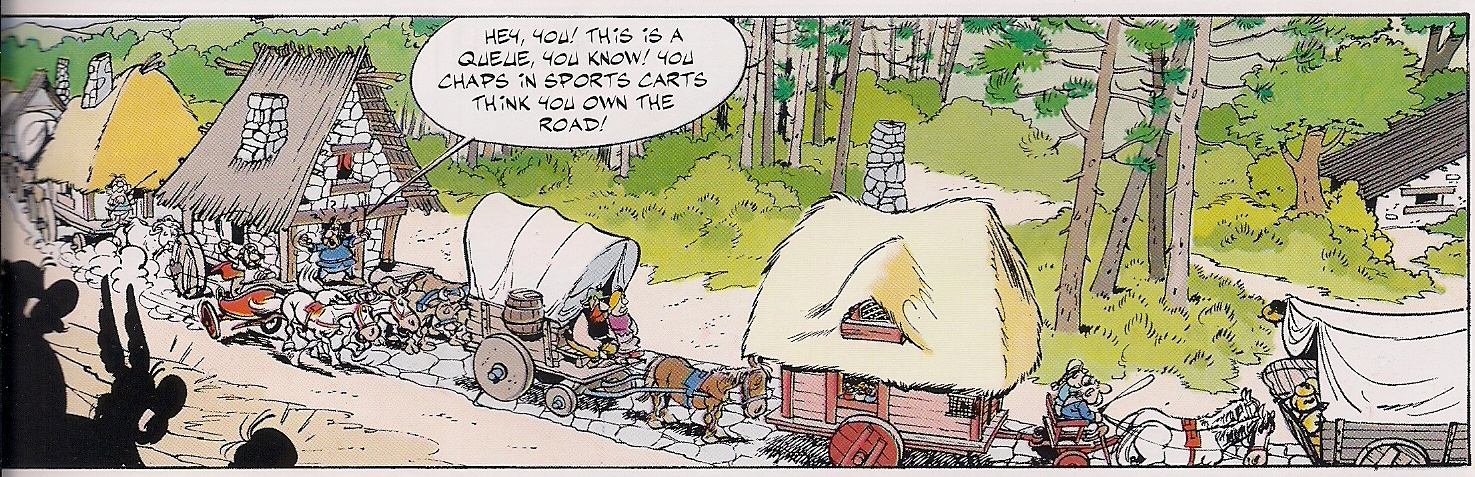
However, let me start at the proper beginning. To do a road-trip, one has to be equipped well, and I have learnt on this trip that the most essential piece of travel equipment to ensure a successful road-trip is an integrated iPod system, though if you allow the wrong family members to influence the playlists too much, you will end-up ‘clubbing’ down the highways in the early hours of the morning in tune with the Pitbulls, Iglesias’ and alike. With roughly 4000 songs just a finger-click away its easy to let ‘die kilometers vlieg verby, with a wicked wicked back-beat’; that is if the traffic conditions allow you. I have also learnt that one of the best reference books on Europe, its history, cultural differences and happenings must be Goschiny and Uderzo’s Asterix and Obelix series.
Traffic is still the same, after all these years
Each and every car owner north of the Pyrenees is heading down south to the beaches of southern France and Spain, as was the case when Asterix and Obelix went to help Huevos y Baçon and Pepe against that rip-off maestro Julius (why does this now have a South African ring to it?)and a 350km drive took us in excess of 6 hours with many occasions the highway coming to a complete standstill. At Bordeaux I decided enough is enough; I have a GPS and ventured onto those scenic small little roads closer to the coast. I don’t know whether its actually faster, but at least we moved and we saw some pretty awesome scenery.
Some-one’s not telling the truth
Spain is not at all a single country. The different regions all have their own and very strong identities and this adds to some serious confusion when visiting them. I mutht thtill figure out when to uthe ‘th’ for the etheth ath in Barthelona, Than Thebathtian, Thergio Ramoth and whether to thank thome-one with a grathias or gracias. Furthermore, I have learnt that ‘ll’ is pronounced ‘jj’ as in David Villa is actually Dahveed Veejja and Seville is pronounced Sêwiejja (take note Chris de Burgh, you’re not saying it right). ‘Actually’ is always pronounced actually and never ever actuajjy, though.
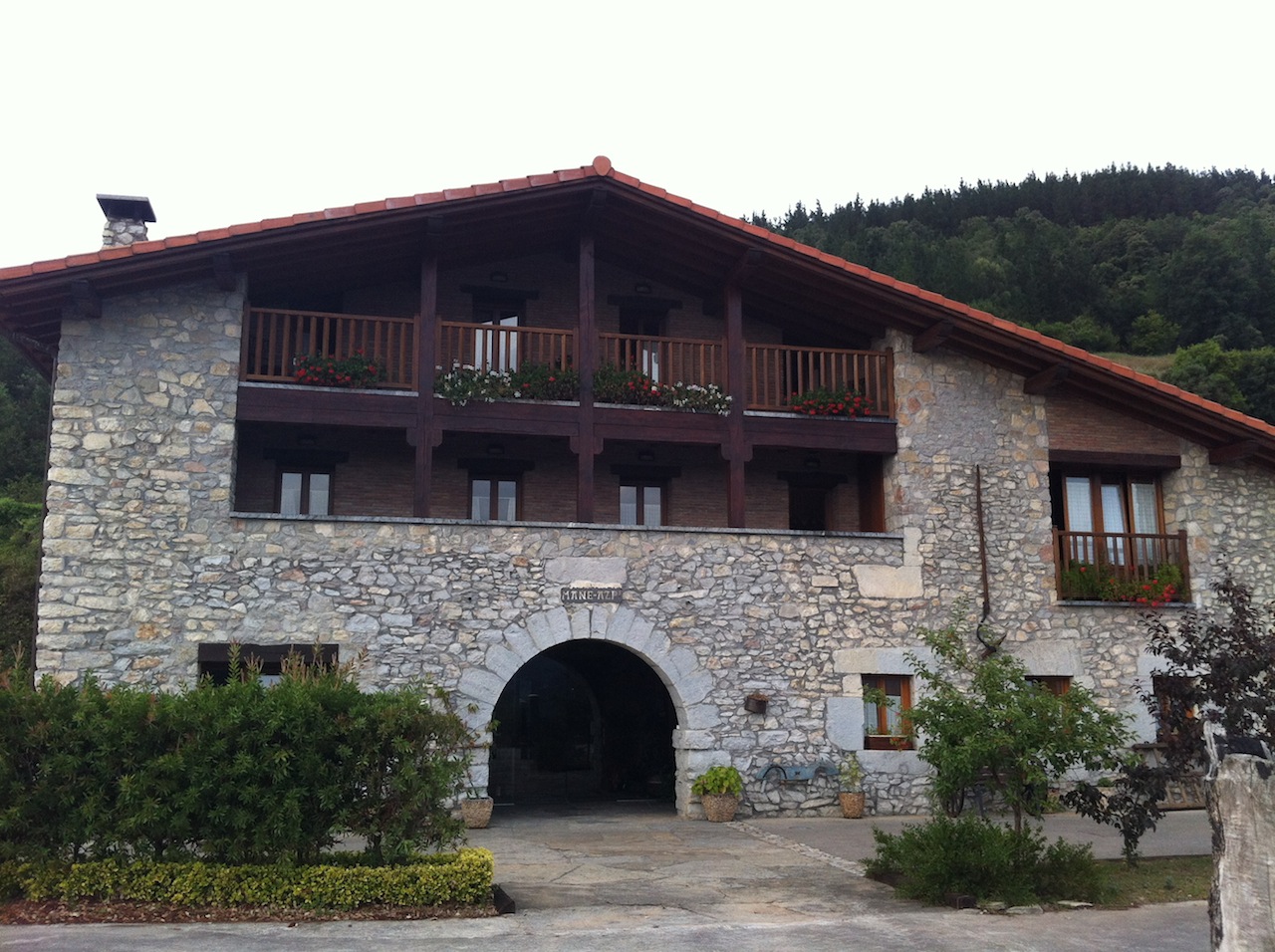
But I’m dwejjing, I mean dwelling, so let me get back to our first destination, a rural retreat in the mountains of the Basque area, where Basque is spoken and not Spanish, and foreigners apparently not often seen, as the shepherd remarked when we had to wait for him on a tiny little mountain back-road to herd his flock of sheep past us, ‘we don’t often see English people around here’, in pretty OK English, I must admit. We were so in awe with the scenery that we completely forgot to take a picture of us being surrounded by sheep. Hotel Rural Mañe proved to be a stunning little Basque country hotel where part of the farmhouse is converted into a beautiful little inn, complete with home cooking and La Rioja wine for dinner. And to cake it all, from the premises they also run a commercial bakery, which means breakfasts too are a delight with various pastries, salamis and jamons for the taking. Furthermore, the friendly and easygoing manager Naiara with their one-year old daughter on the hip and her husband Miguel running in assistance complements the true homely atmosphere and we thoroughly enjoyed our two-day stay.
Hotel Rural Mane
Basque is said to be the oldest language in Europe, not from Latin origin and thus totally different from anything else spoken in Spain. This was very evident even on the road-signs where plenty of ‘x’s’ occurs in the place names, which sometimes even provided some Xhosa feel to the names, though ‘only in my mind.’ The Basque country is an autonomous community within Spain and many towns are indicated by their Basque names on the information signs. The city San Sebastian for example is known as Donostia, which is important to know if you thought you were searching for San Sebastian on the roadside directions. Neighboring the Basque country are the kingdoms of Aragón, Navarre and La Rioja, and in all my travels this was the most pristine example of the medieval kingdoms I have yet seen. Driving through the countryside and observing the castles, houses, monasteries and towns, I could imagine that the movie ‘Ladyhawk’ was taken straight from this scenery. Visiting the exceptional medieval town Olite (pronounced Olite) and its castle with the view across open land towards Ujue (pronounced Ogoeje) in the north, it’s very easy to lose yourself back into the days of King Carlos III aka ‘The Noble’ in the early 15th century who went for broke and built the magnificent castle, with its hanging garden, exotic trees, elegant galleries, and towers. Incidentally, Navarre, Aragón and Basque are the only parts of Spain that was never ruled by the Moors from North Africa. Here they did not ‘just swallow their pride but they fought back’ and retained their own land.
They say you should not live in the past, and thus, just to keep the balance we also stopped by at Durban and enjoyed a calamari lunch. Durban is the restaurant of Javi Martínez, the Spanish international footballer now playing for Bayern Munich (formerly from Athletic Club Bilbao) in the town Ayegui (I don’t know how to pronounce it) who opened the restaurant after the 2010 Soccer World cup and named it ‘Durban’ in honor of his ‘pleasant experience’ there. Durban (KZN) is a nice town if I may say so, I grew up in Durbs, plus this is where Spain beat Germany 1:0 in the semi-final through a Puyol header in the 73rd minute in 2010. I suppose Durban makes more sense in Navarre than Moses Mabhida.
And then you stumble onto and into these gems of destinations that are probably deliberately kept secret for the exclusive use by the locals, such as Donostia (San Sebastian) and its festival. Our idea was to stop, look around, have a light lunch and venture further down the coast towards the west.
Traveling can be extremely thirsty work
One look at the down-town old part of the city made us look for accommodation immediately, and I saw that if you stand back and leave some things to your kids, their natural initiative simply comes to the fore. Stean saw the little inn, and with Cara’s Spanish skills the two of them secured a four bed single room in the middle of the old-town hub of San Sebastian. I was initially worried that we will not be able to change our minds in the room, so small was it, but eventually we managed.
We unintentionally stumbled straight into the heart of the town and it was the week when they have the town festival, probably the best week in the year to be in San Sebastian. That afternoon, as part of the town festival, it was the annual float race in the harbor and bay of the town. The young people of the town build their own floats with crates, planks, blown-up pillow type thingies and similar megafters, then enter the water and try to stay afloat while drinking, rowing and trying to tip the vessel next to you; one mega big town jol!
One big jol …… and even Paul was thereDonostia main beach and bay
Back to our accommodation! They say ‘location, location, location’ are the key indicators when considering accommodation, and this we did. However, we did get a little more than we bargained for. We were the proverbial 5 minutes’ walk from everything important when on vacation; the beaches, the restaurants, the shops, the Spanish ROCK SHOW, (which continued until 01:30), the street parties (that never stopped) as well as the municipal city cleaning services and deliveries who start their days just after 04:00 in the mornings. ‘Location, location, location’ clearly does not have anything in common with ‘sleep, sleep, sleep’! And that was not the end of our surprise for the day. When we went to get the car from the parkade, there was this little note at the ‘casse’ stating that ‘due to the festival and a cycle race, the parkade was closed until 19:00! We were locked in and (un)fortunately had to spend another day in the festive streets of Donostia! More time utilized on sun, beach, sea-kayaking, whale hunting museum and a typical Basque lunch with ‘sardinas’, paella, fish and wine.
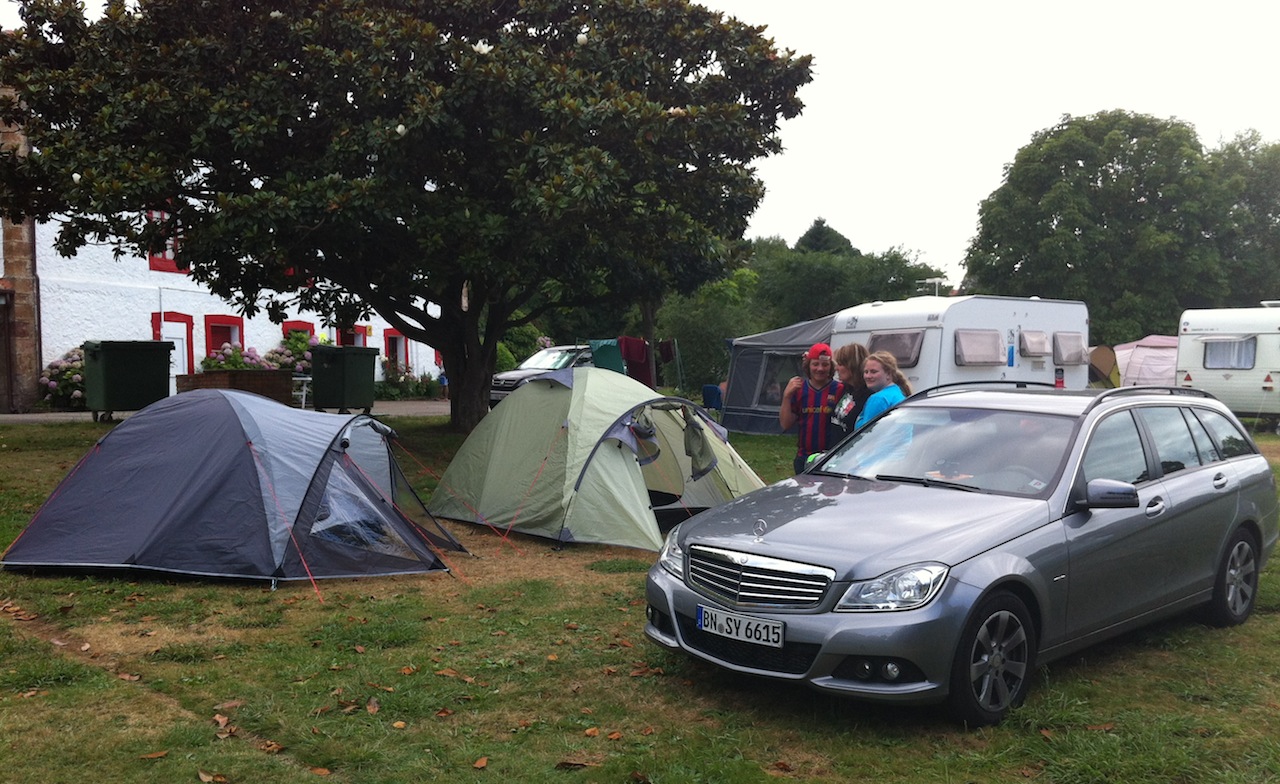
We unpacked our tents, inflated the mattresses and went camping!
Pitching accommodation
Such is the beauty of this part of the world, that if you don’t force yourself to stay in the car and drive, you will not progress more than, say 43km per day. We did stop over in Bilbao to fit a Bilbao Athletic stadium tour into our schedule (its clear how football has become part of our travel criteria). Did you know that to this day the Bilbao club is Athletic (English, since it was the English dock yard workers who established the football club in 1898 and which became Athletic Bilbao in 1903) and not Atletico as is the other similarly name clubs and that Athletic Bilbao still holds the record of beating Barcelona 12:1 (1931). Athletic Club Bilbao still maintains the rule of only playing Basques in their team.
What fascinates me is how this part of Spain is not Spanish at all and when reading and digging deeper, the most interesting political tales comes to the fore. It was noticeable that it was not the Spanish flag flying outside buildings, except for official government institutions, but the Basque ‘national’ flag. Even to this day the separate identities continue to strive and one should not make the mistake to think a Basque or Catalan is a Spaniard. One of the most despicable acts of modern warfare was the bombing of Gernika in the Basque country. On 26 April 1937 German and Italian fighter planes bombed the town of Gernika in a three-hour raid on the town. According to our travel handbook, the Footprint Travel Guide on Northern Spain, it was the market day, which means so many extra people from the surrounding countryside were in the town. And not only were the bombs dropped, but for maximum effect, the fleeing people were machine gunned down. To put this into perspective, remember that this was 1937; it was the Spanish civil war and not yet World War II. General Franco, the leader of the Nationalist forces denied that the bombing ever occurred and claimed that the damage was caused by Basque propagandists. The Basques resisted the advance of Franco’s nationalist forces and Franco offered the Luftwaffe the proving ground of their troops for the war that was to come. Herman Göring, at the Nurmburg Trials had this to say, “I urged him [Adolf Hitler] to give support [to Franco] under all circumstances, firstly, in order to prevent the further spread of communism in that theater and, secondly, to test my young Luftwaffe at this opportunity in this or that technical respect.” Though Germany did officially apologise in 1999 (yes, that’s 62 years after the event), Spain has not said another word about the incident. Pablo Picasso produced a painting by the name Gernika after the incident to commemorate it.
Venturing further west through Cantabria and into Asturias brings even more stunning and rugged coastline with plenty of old-pretty-fishing-town after old-pretty-fishing-town scattering the coastline. The flexibility of two three-man tents and inflatable mattresses we now used for accommodation enabled us to change plans and venues on short notice and it proved to be the perfect travel solution for scenic destinations such as Northern Spain. You see a town, you like a town and you find the camping spot, as easy as that. We ended up for a two night stay in Comilla and then two nights in a ‘nature’s valley’ like Playa de España some 10km out of Gijon resulting in four days of a blissful summer, sun, beach type holiday, reminding of my summer holidays at Scottburgh on the Natal South Coast in years gone by. Both me and my teenage son will obviously profoundly protest and deny any hint whatsoever that we particularly enjoyed the beach holiday that little bit extra due to the very tasteful beach attire of the Spanish girls. It was purely because we are so starved of proper sun and surf after two consecutive winters and 11 months living in northern Europe and not the Spanish beachwear (or lack there-of).
The difference of camping in Europe is that there’s not a braai in progress in front of each caravan at night,
Delicious
but rather pedestrians roaming the streets scanning little restaurants, their Asturian paella and stews (which for some bizarre reason I missed out on), jamon iberica, sardines and other seafood delicacies. The looks on the kids’ faces were not always that impressed when a huge pan with crab and other seawater kreepy crawlies landed on our table amongst the huge quantities of rice to complete the paella.
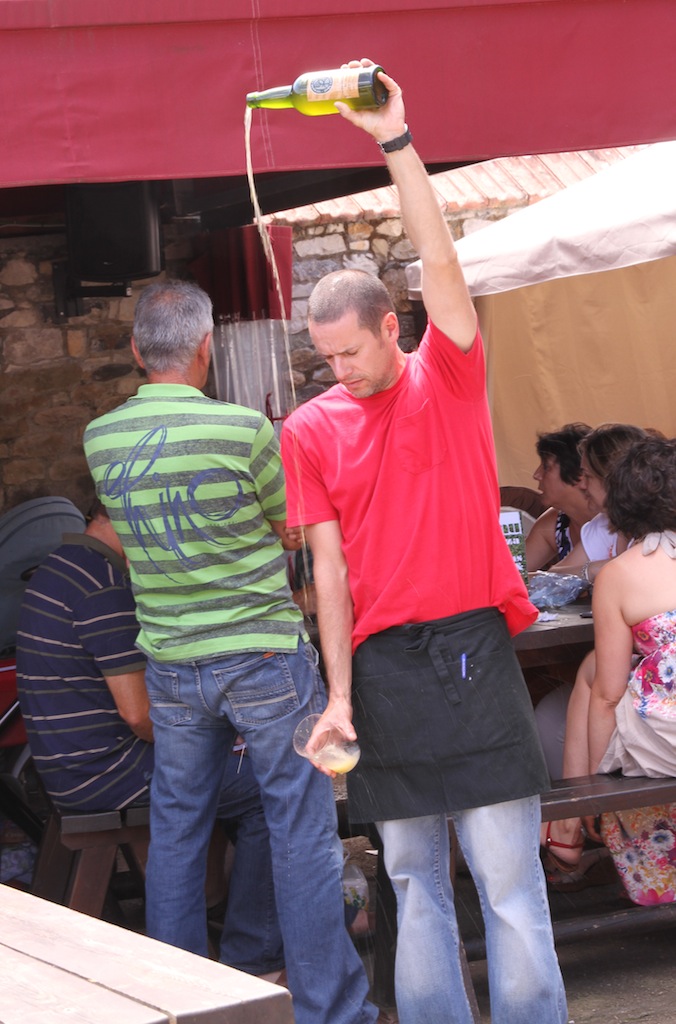
Not just for show, there’s method in this madness
Interestingly in the Asturias is that the main drink is cidre and not beer or wine. It has its own ceremony when ordered. Asturian cidre is ordered by the bottle and then decantered in a very specific semi show-off way, to the uninformed onlooker, that is. The waiter lifts the green bottle as high as possible with the one hand and then pours into the glass held as low as possible in the other hand, without looking at the glass. They do spill, and you have to mind your feet not to get them covered in cidre, but that’s just part of the ritual. The idea is that the height of the drop must create bubbles, which are an essential part of the drinking process. The drinker has a short little window of opportunity where the bubbles remain in the glass, and it must be drunk within this period.
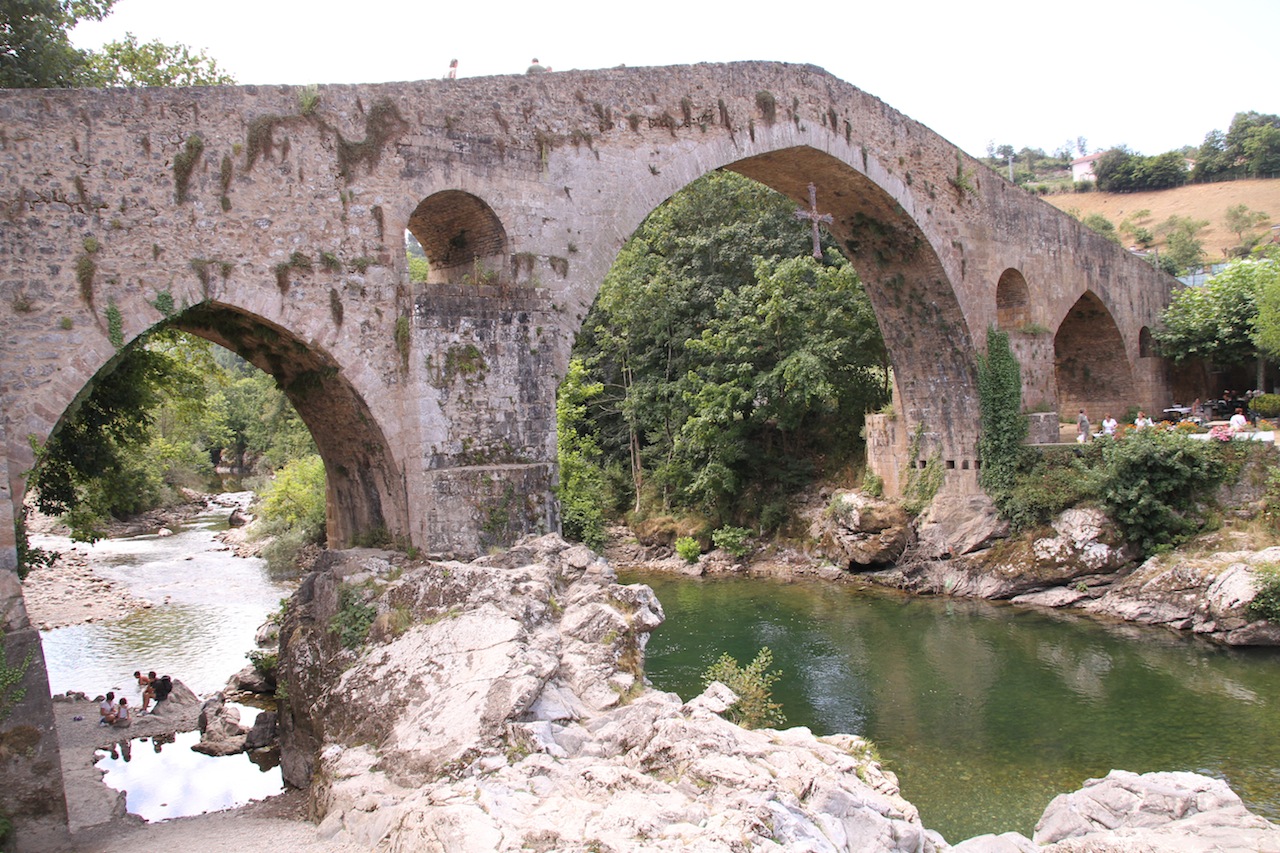
As Chris de Burgh so eloquently describes in The Storyman when he sings ‘take me back to the places I’ve never seen’I can also plea to be taken back to northern Spain as I have missed so much in Cantabria, Asturas, Navarre, Aragon, La Rioja and Basque. A week is far too short. We did, for example drive through the Cantabrian Picos (picos de Europa), but it is one of those destinations where you should have the time to venture off-road, up the mountains and into the valleys. Though its in the middle if modern day Spain, there are still Cantabrian brown bears and wolves roaming the remote peaks. The Picos de Europa is a magnificent mountain range roughly 20km inland and apparently derives its name from the fact that it was the first sight of Europe for those early day sailors returning from their pleasure cruises in the Caribbean or around Africa.
The stunning Picos de Europa
Once through the Picos, we headed east to Zaragosa as a sleepover before hitting the sights, sounds, sun and soccer of Barcelona. But that’s another story.
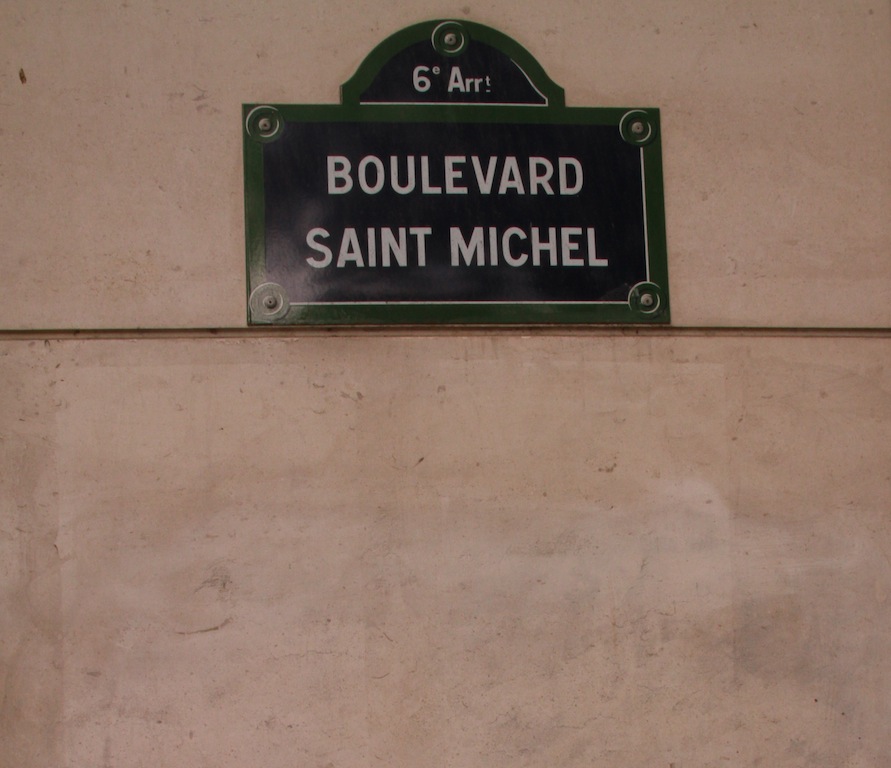
Could it be as clichéd as ‘to a fancy apartment, in the Boulevard St Michel?’
The Boulevard Saint Michel
Yes, for sure, that’s exactly what Heleen organized for us as a celebratory weekend away after we returned from a three-week visit to South Africa. How cool is that? to go away to celebrate that you’ve just returned!
‘Tell me the thoughts that surround you’
I’m still in awe that, for the same effort and distance that we used to apply back in South Africa to enjoy a weekend away to say, Bloemfontein (for something special, I must admit such as the England vs Germany 2010 Worldcup soccer game) I can now see Paris, Berlin, Prague, Munich or Amsterdam.
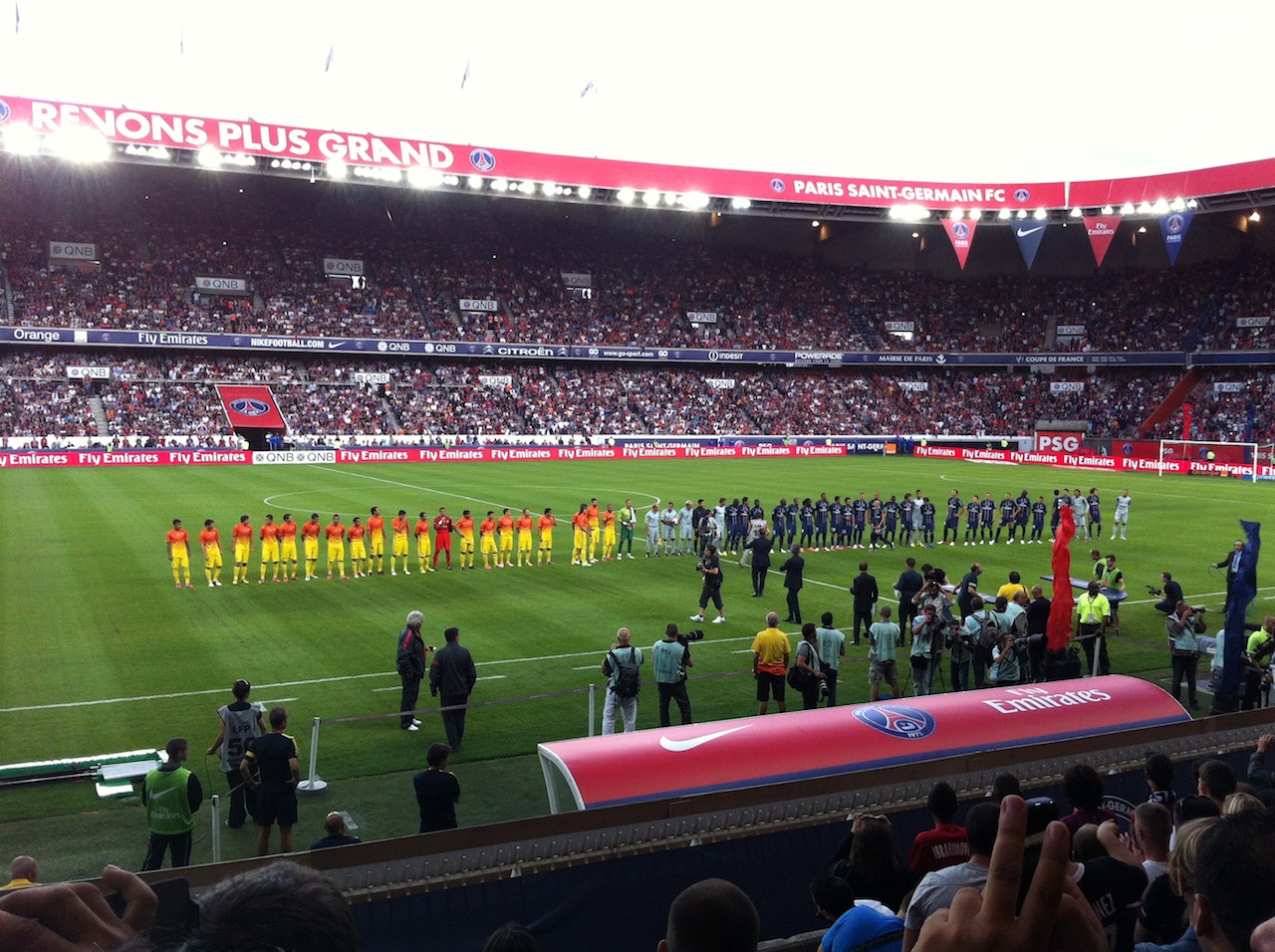
Heleen found us a ‘fancy apartment on the Boulevard St Michel’, as well as pre-booked entry to the Eiffel Tower and tickets for the pre-season game between Paris Saint Germain and Barcelona at the Parc des Princess. Just the return to Parc des Princes after our previous visit in 1994 was a lovely sentimental experience, though that day it was 5 Nations rugby and the Irish being hammered.
Parc des Princes, line-up before kick-off
This time around it was soccer, summer and most of the great names of Barça graced the pitch, as well PSG’s newly signed Zlatan Ibrahimovic. Attending sports events in Europe poses great new insights into how perceptions may often skew reality. The Parisians showed great ‘gees’ (South Africanism meaning ‘spirit’) with plenty of interactive singing and chanting between the two stands at opposite ends of the pitch, as well as great supporting song. However, I can proudly state that Europe is still miles behind South Africa as far as no-smoking rules and non-smoking courtesy goes and though these guys often have reason to ‘look down’ on Africa, this is definitely one instance where they can learn a lot from Africa.
‘When you go on your summer vacation’
Paris in high summer is bustling and queues at the major tourist venues are obviously intimidating. With a little bit of homework and the Internet, one can pre-book entry to the Eiffel Tower for a specific timeslot and this we did. Amongst the irritated looks from the people standing in the standard queues taking the shortcut entry initially poised a slight feeling of moving ‘in high places’ until the ‘high places’ struck me straight in the guts.
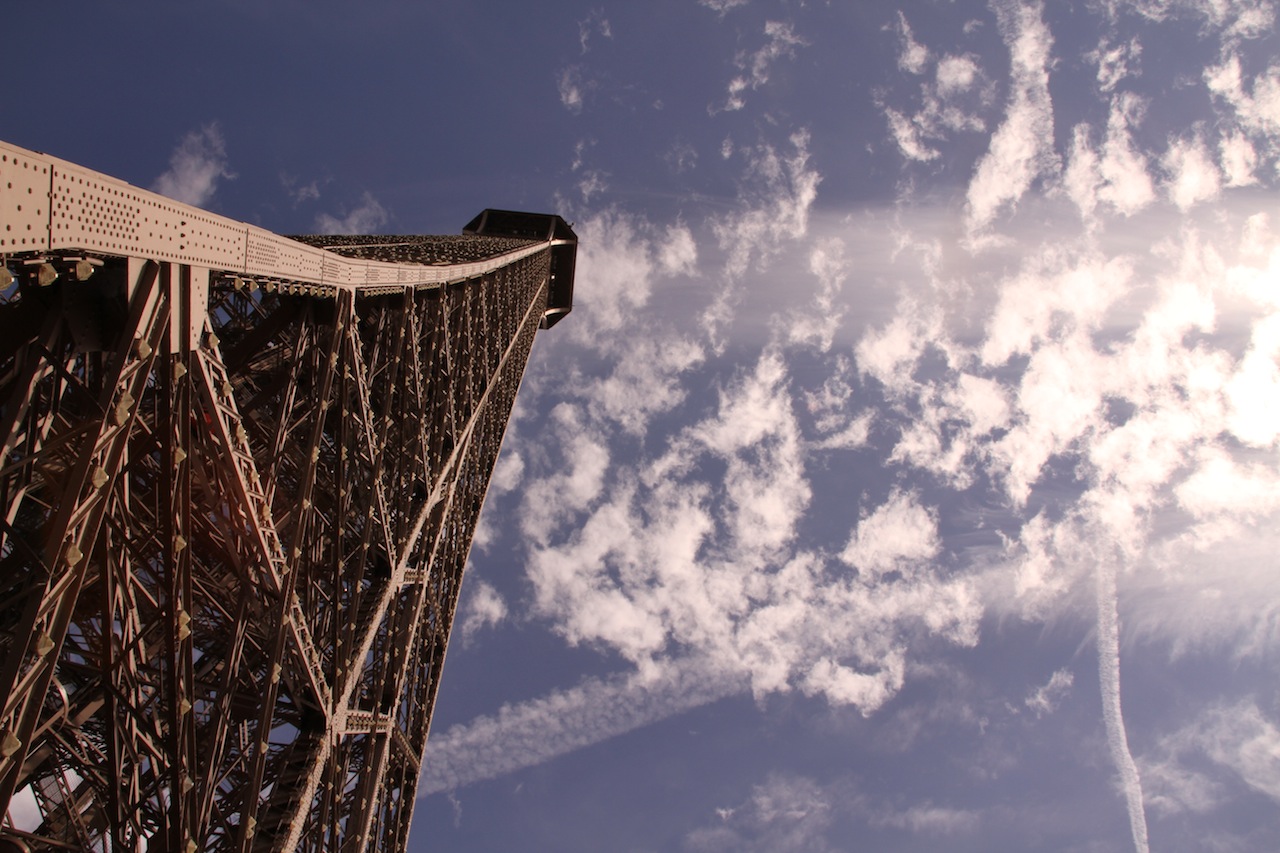
Looking up isn’t half as scary as looking down
I’m afraid of heights! I had to bail out on level 2, 115m into the air while the brave three of my family headed all the way up to level 3, 274m from the ground level. I think I’ll attempt Level 3 in the winter, as the tower shrinks 15 cm in winter! I used the opportunity to take my eyes off the height by focusing them through the camera lens with satisfactory results, as well as into a strong Café au Lait to sooth the nerves.
Did you know that there are 2,500,000 rivets in the Eiffel Tower, its 320m high, weighs 7,000 tons and has 1710 steps. It was designed by Gustave Eiffel (1832-1923), a French engineer and was completed in 1889 for the Paris world exhibition. It was built in two years by 132 workers and 50 engineers and was sold twice for scrap by a con-artist in 1925. When it was completed in 1889, it was the tallest building in the world.
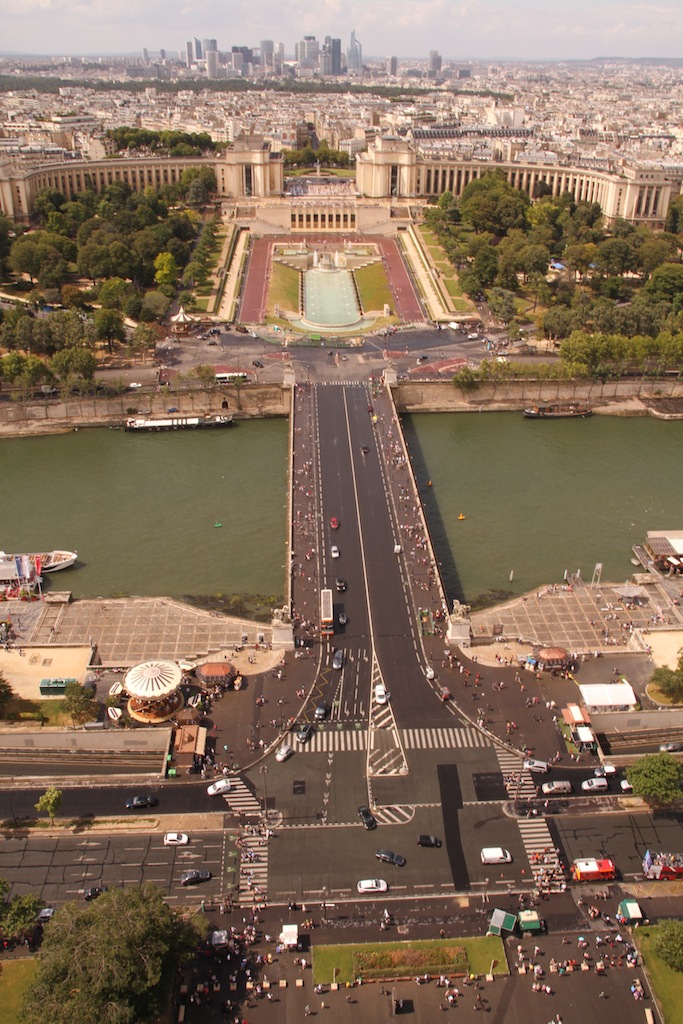
The view from Level 2 towards the TrocaderoAnd the view to the other side
The other notorious Paris queue is that of the Louvre, but for the informed there are short cuts as well. While most people flock to the famous and controversial glass pyramid main entrance, there are no-queue-at-all side entries as well. I know, not being an art fundi, that the idea of visiting an art museum can seem to be a waste of people-watching-while-having-a-glass-of-wine-time, especially if it means crowds of other people will compete for space. However, I have found that there is great personal satisfaction in wondering the corridors of renowned museums such as the Louvre, staring down the works of greats such as Raphael, da Vinci and many others and simply lose yourself in the paint brush strokes or perfect chiseled sculptures which are obviously in abundance.
One should never become blasé about traveling and should tick those mainstream tourist destinations when they’re on your doorstep. It should be just as an important item on your bucket list as those exotic, adventurous, far-away-from-mainstream items we all seem to pursue
A view from the Louvre towards Eiffel
‘with your carefully designed topless swimsuit’
Europeans love the sun.
Beach scene on the Rover Seine
The banks of the Seine in summer is a very popular venue for leisurely sitting around and enjoying the sun, to such an extreme extent that they have actually established a beach, complete with sand, deck chairs and a beach bar, on the concrete river bank. Having grown up in Durban, with its many sandy beaches, these man-made beaches in Europe at first seemed very sad and pathetic to me, but having experienced the weather and city living in Europe for nearly 10 months, I start to understand the method in the madness.
Enjoying the sun in Jardin de Luxembourg
‘I want to look inside your head, yes I do’
Knight Ulrich von Becks, our wirehaired dachshund is rapidly becoming a very well traveled dog with cities such as Amsterdam, Berlin, Munich and Firenze already behind his name.
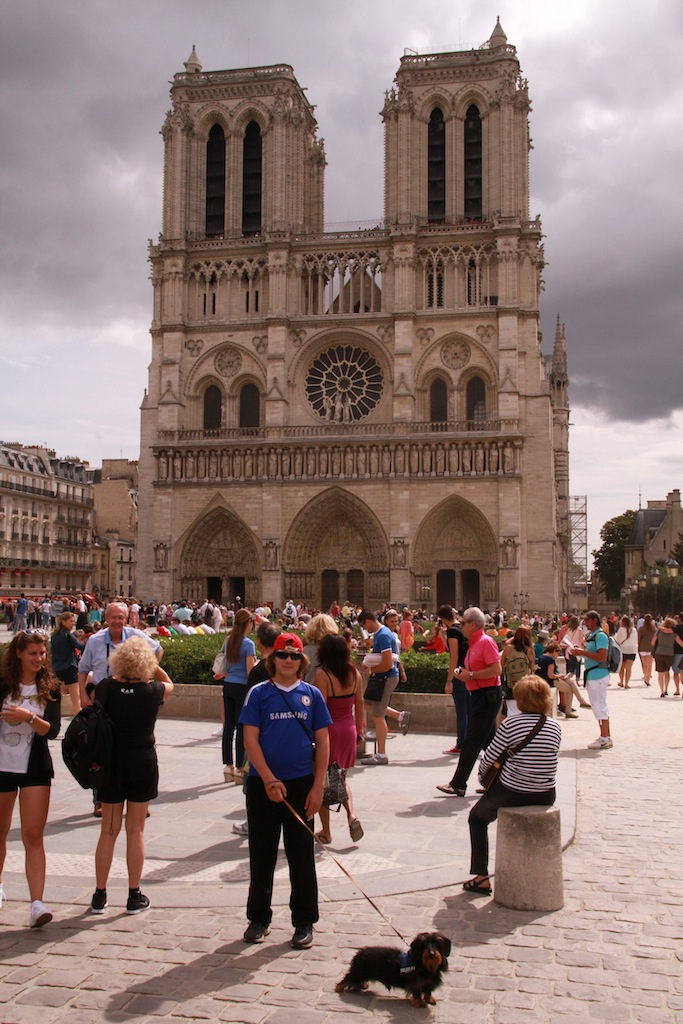
Becks at the Notre Dame des Paris
He accompanied us to Paris this weekend and though Quasimodo was not at home when we visited the Notre Dame, Becks did enjoy many of the other sites and eateries. Traveling with dogs is fairly common in Europe and restaurants have no problem at all to allow dogs; most even have permanent water bowls for the four-legged customers. Where South Africa is one up on Europe as far as non-smoking goes, this certainly is an area where Europe is miles ahead. I must admit that I have on more than one occasion wished that I could read Becks’ mind while we drag him along on a river cruise, cathedral or into another street café.
‘and you sip your Napoleon brandy’
I have often referred to eating as part of the travel experience. I remember ‘where we came from’ when we were younger and travel was just much less affordable than now, 20 years down the line.
Fondue Bourguignonne and Fondaue Savoyarde
In those days we use to live mostly on picnic dining in parks with baguettes and take away beer, while saving up for that one treat of sitting down for a ‘plat de jour’. We are not really into the Napoleon brandy style when traveling, as café dining and local wine in my mind makes up a large portion of the explore component of travel. I do enjoy the ‘plat de jour’ (menu of the day) concept as these mostly include home cooked style dishes such as stews of which I am a huge fan. On Friday evening we found a stunning little French restaurant specializing in fondues in Rue Gregoire de Tours where we shared the Fondue Bourguignonne (meat) and Fondue Savoyarde (cheese) while Heleen preferred the lamb ‘côtelettes’ in the company of the delightful Greek lady restaurateur who shared her lovely and hugely amusing animated views on topics from European politics and economy to German impersonation with us.
‘and remember just who you are’
And then its Sunday, the weekend is rushing to its end and we need to start thinking of returning home. It will be a week at home before our summer vacation arrives. A summer vacation of two weeks driving down to Spain’s northern areas with focus on inviting names such as Cantabria, The Asturias, La Rioja, Basque Country, Navarre, Cataluña and Aragon. We need the week to fresh out for the next travel leg of the kids’ summer extended break.







































 aldiepaaie