South Africa and The Netherlands – Willem van Oranje, Voortrekkers, and me

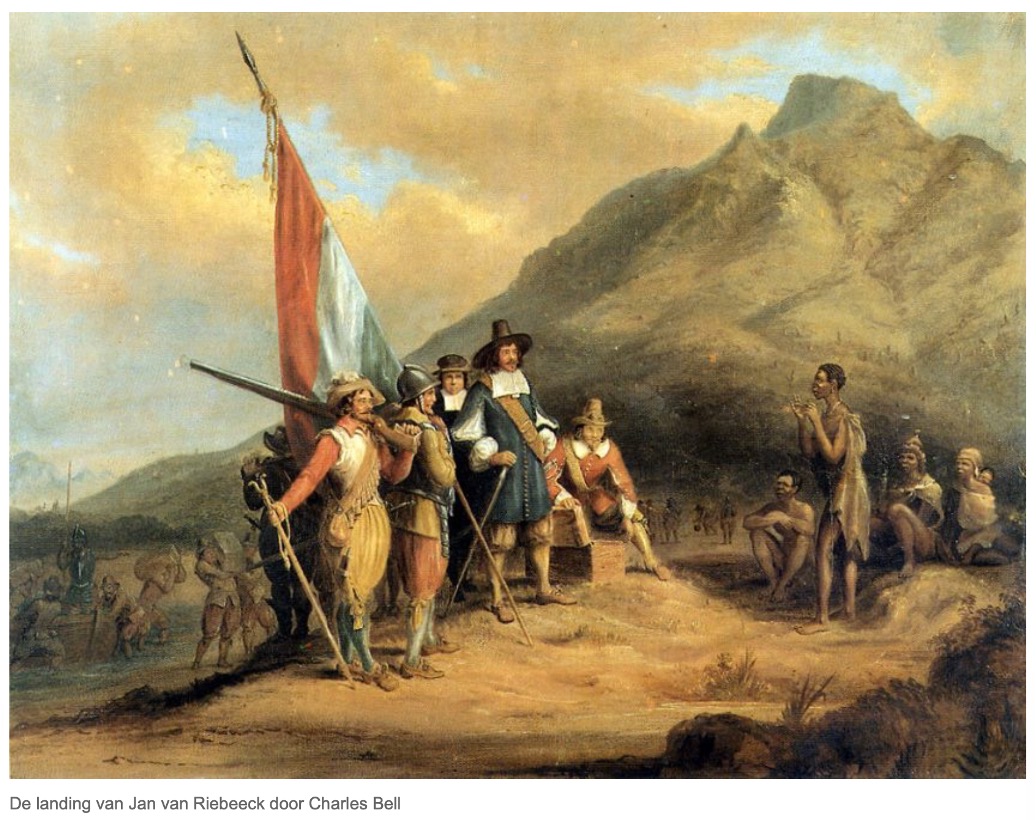
It’s commonly known that on 6 April 1652, Jan van Riebeeck landed at the Cape of Good Hope, or if you’re thát kind of person, aka the Cape of Storms. Johan Anthoniszoon ‘Jan’ van Riebeeck was a Dutch navigator and colonial administrator in service of the Dutch East India Company, the VOC. 

It’s probably not that commonly known that now for a few days a week I stay in Delft, in the Netherlands. Other than the strolling through the town, enjoying the architecture, the canals, dodging the cyclists and frequenting much too frequently the many street cafes who gladly serve a wide variety of Dutch, Belgian and French beers, the mere reality of the South African historic links to this part of the world provides me with a lot of pleasure. 
I received my bachelor’s degree in 1987 from the University of the Orange Free State. (This irrelevant fact becomes relevant later on, keep reading). Nowadays it’s just the Free State, the Orange have faded away in the post-modern South Africa. The Boer Trekkers, (Voortrekkers), crossed the Orange River in the 1836 ‘Groot Trek’ to settle in a new area, which became one of two so-called Boer Republics. The Voortrekkers were basically the Dutch speaking farmers and ‘Vryburgers’ (free citizens) who were disgruntled with the system of tender fraud and nepotism practiced by the government in the Cape when it came to awarding trading agreements and supply contracts for fresh produce and some barrel aged products to the many passing ships. The Voortrekkers decided to find greener pastures and headed north with all their earthly belongings loaded onto ox-wagons, probably humming Bok van Blerk’s not yet composed ‘dis tyd om te trek’ in their beards, while spitting the sap from their chewing tobacco with disgust on the Dutch Cape soil. 

57 Years earlier, in 1779, one Robert Jacob Gordon, a Dutch explorer of Scottish descent, found and named the Orange River in honour of the Dutch ruling Family; Willem V van Oranje at that stage. This Robert Jacob Gordon was truly an interesting man, as among many other achievements of his, he introduced merino sheep to South Africa, and he spoke French, Dutch, English, Xhosa and Khoekhoe, the Khoisan language.

Willem the Silent, (aka Willem van Oranje) was born in the Nassau Castle to the Count of Nassau-Dillenburg, (in modern day Germany near Koblenz, and a mere 70km from where I stay in Bad Honnef, when I’m not in Delft) on 24 April 1533. Born into the House of Nassau, the 11-year-old Willem inherited the principality of Orange from his cousin René of Chalon in 1544. Surrounded by France, Orange was a sovereign territory of about 12 by 25 kilometres, near Avignon in the Rhone basin. Willem van Oranje is thereby the founder of the Oranje-Nassau branch and the ancestor of the monarchy of the Netherlands.

Prins Willem served the Habsburg dynasty as a member of the court of Parma, bringing Italy into this story as well, but he became increasingly unhappy with the centralisation of power away from the local estates. Furthermore, he was opposed to the Spanish persecution of the Dutch protestants, and the the Spanish king, King Philip II’s way of evangelising with the sword.

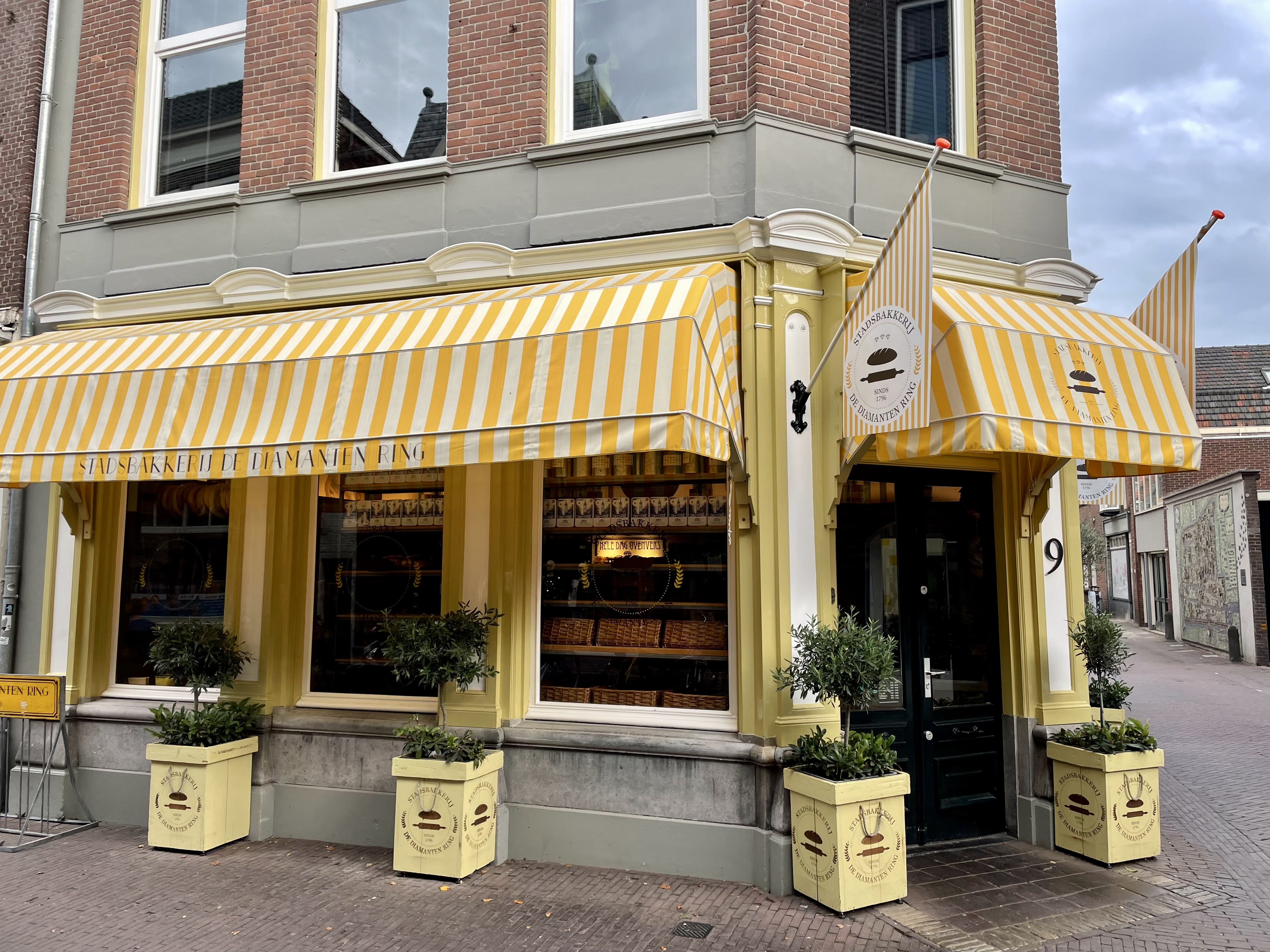
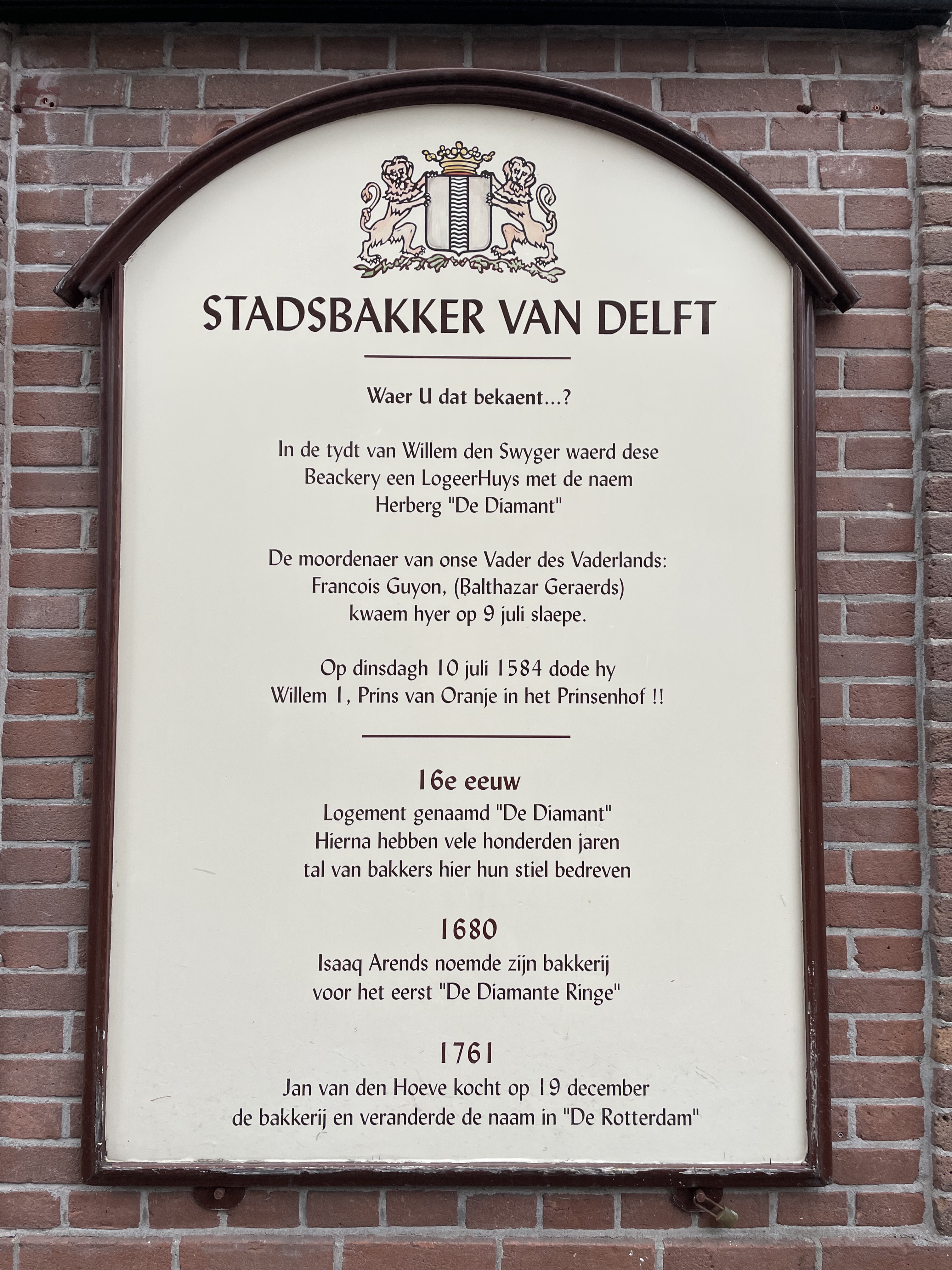
Willem joined and then led the uprising and turned on his previous masters leading the Dutch in this revolt. Willem was subsequently declared an outlaw in 1580 by the Spanish King. He was assassinated by a Spanish assassin Belthasar Gèrard on the steps of his residence in Delft in 1584 and his remains buried in the tombs of the Nieuwe Kerk on the market square. Prins Willem van Oranje is generally seen as the father of the independent Netherlands. My daily walks take me past Prinsenhof, the residence of Willem van Oranje, passing the Stadsbakkerij which was the inn where the assassin Belthasar stayed on his murder mission and over the Marktplein in front of the breath-taking Nieuwe Kerk. 
When Jan landed at the Cape of Good Hope 68 years later, and built his castle, the five bastions, Oranje, Nassau, Leerdam, Buuren and Katzenellenbogen, were named after Willem.

‘Foreshore’ a last little bit of castle trivia; did you know that the Kasteel de Goede Hoop was originally on the water’s edge, but land was reclaimed in the so-called Foreshore Plan in the early 1900s, which ‘moved’ the castle inland by about 1 kilometer?

While I’m sitting in the quaint Eetcafé de Ruif staring over the old canal in Vrouwenrecht (street), I’m reminacing over my Texels ‘Skuimkoppe’ beer (genuine, that’s the beautiful name). Its 5 April, and tomorrow its 370 years ago that Jan van Riebeeck landed at the Cape of Storms aka Cape of Good Hope. I suppose it depends whether you’re a glass half empty or a glass half full type of person which name you use the most often. 

Jan left for the Cape of Good Hope from Texel island on 24 Dec 1651 and set foot to shore in Vals Bay on 6 April 1652. Jan grew up in Schiedam, a town just outside Rotterdam through which I commute daily. He joined the Vereenigde Oost-Indische Compagnie (VOC) in 1639, and I can just presume that he either worked at or at least visited the company’s Delft offices many times. 850m from where I’m sitting is the Oost Indiëplaats and the old offices of the Dutch East Indië Company’s Delft offices. The VOC is still believed to be the biggest company to have ever existed.

Some further info and reminiscing: The VOC (Vereenigde Oostindische Compagnie) became so big that they, as a listed company had their own ‘military’ fleet to protect their trade. As a company, they even declared war on governments of countries. However, they became so big that the costs to protect their trade actually liquidated them in the end. 

I have researched my family tree, and I know that my great great (not sure how many greats are required here) grandfather joined the VOC as a ‘dragonder’ which is basically a soldier, and he landed in the Cape in 1796, just three years before the VOC went bankrupt. I like to think his (huge) salary is therefore partly to blame for this financial downfall of the largest company ever. 

So my question is; what did ‘oupa’ spend my inheritance on, cause I ‘ain’t seen nothing yet?’ 

The Battle of my Bulge, and the Hohes Venn

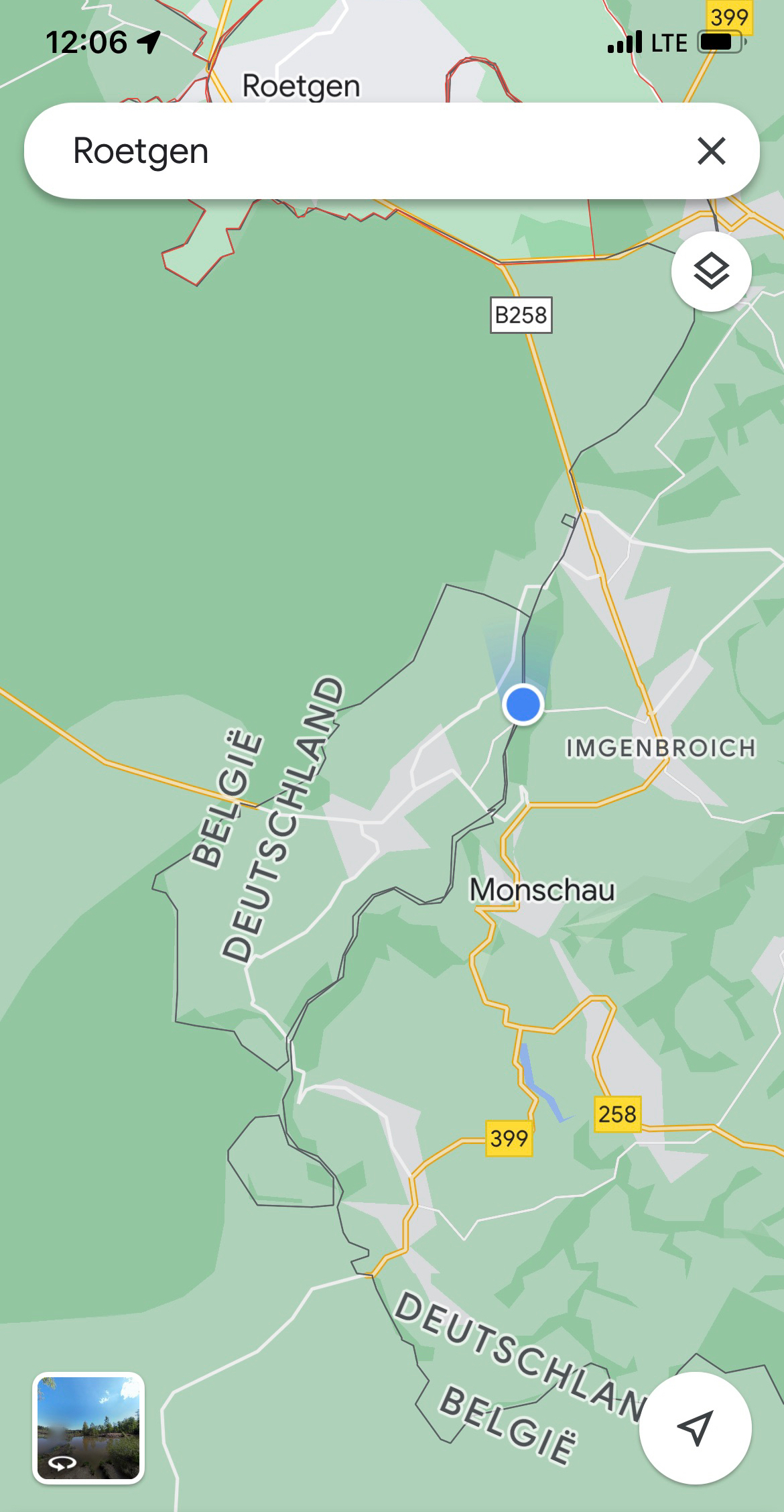
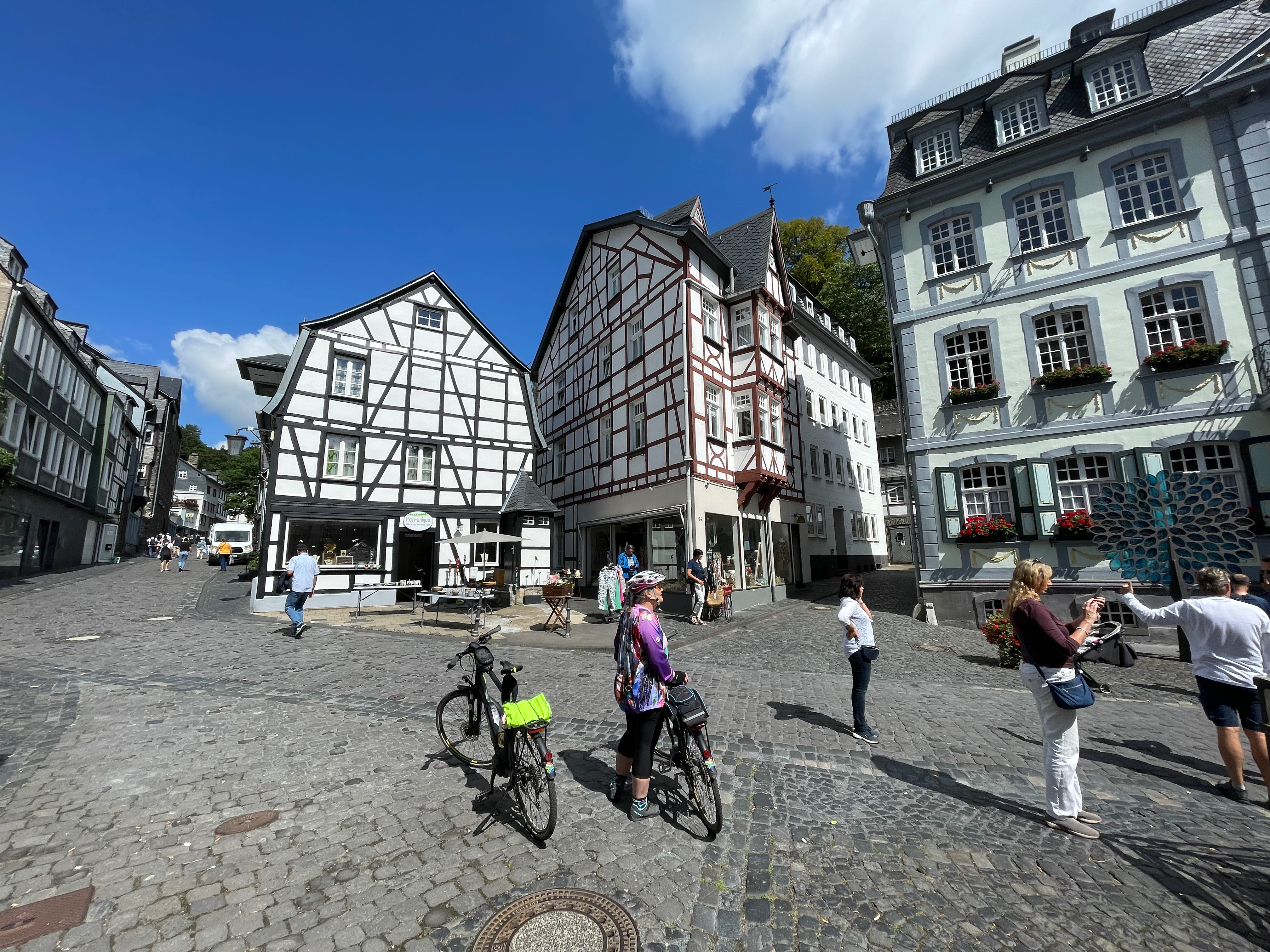
Though most of Europe is nowadays a union, their individual country borders are still very important. Trust me, I have witnessed it this weekend while camping in the picturesque Monschau area of the Eifel. A Dutch guy parked his caravan with the entire a-frame encroaching into the neighbouring German lady’s camping site, and she had none of that (understandably). After an amusing (for me), but serious altercation, and campsite management intervention, the Dutch guy was defeated, and with a lot of ‘brom-brom-brom’ had to swing his caravan by 90°. Only then peace and quiet once again dawned on this little piece of European Union. 

There’s a fascinating piece of borderline between Belgium and The Netherlands at Baarle-Nassau. Baarle-Nassau is closely linked, with complicated borders, to the Belgian exclaves of Baarle-Gertog. Baarle-Hertog consists of 26 separate parcels of land. Apart from the main parcel, known as Zondereigen and located north of the Belgian town of Merksplas, there are 22 Belgian exclaves in the Netherlands and three other parcels on the Dutch-Belgian border. There are also six Dutch exclaves located within the largest Belgian exclave, one within the second largest, and an eighth within Zondereigen. The smallest Belgian parcel, locally named De Loversche Akkers, measures 2,469 square metres – or if it actually is square, it means 49.69m x 49.69m! In political geography, an enclave is a piece of land that is surrounded by a foreign territory. 

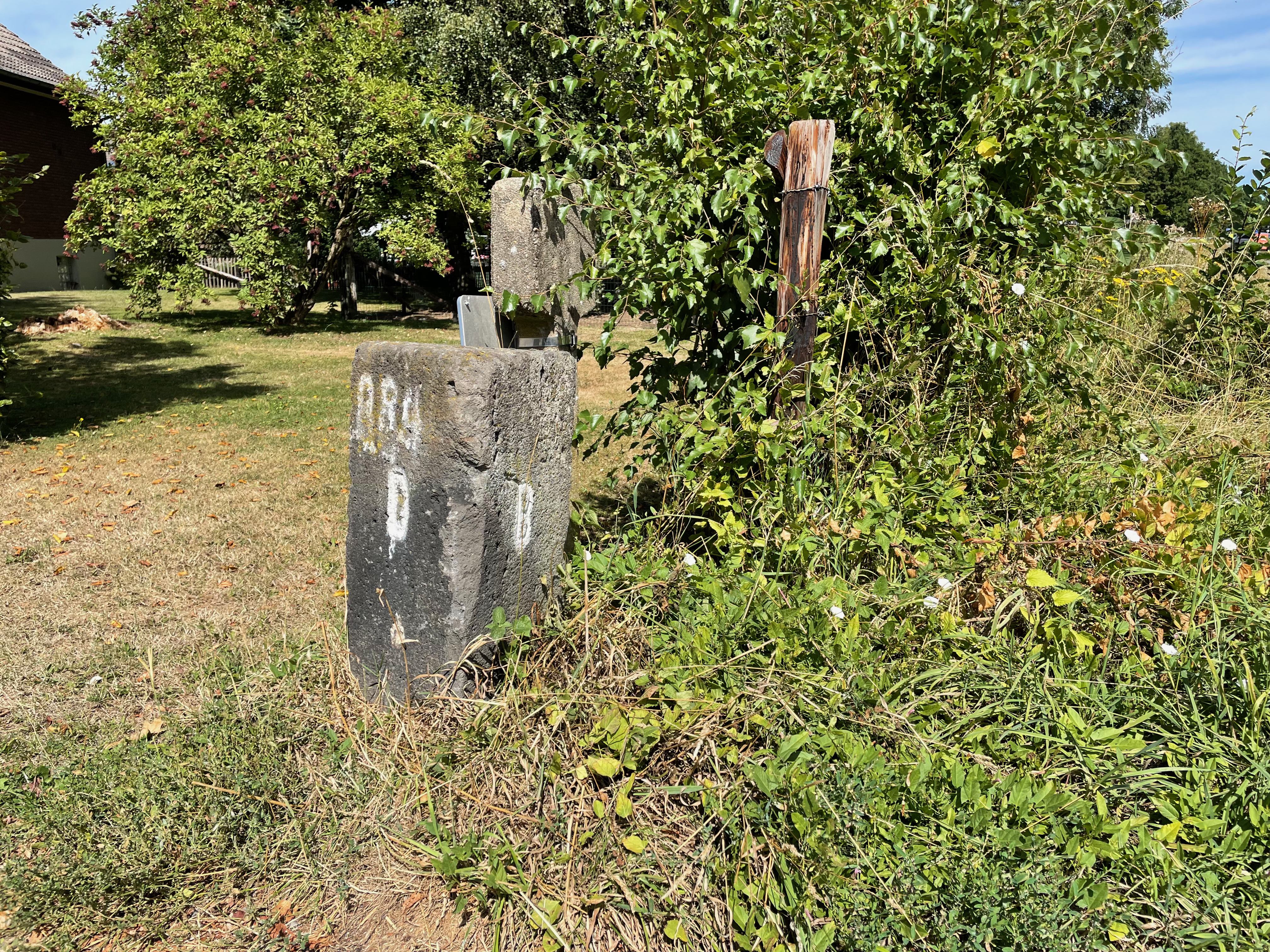
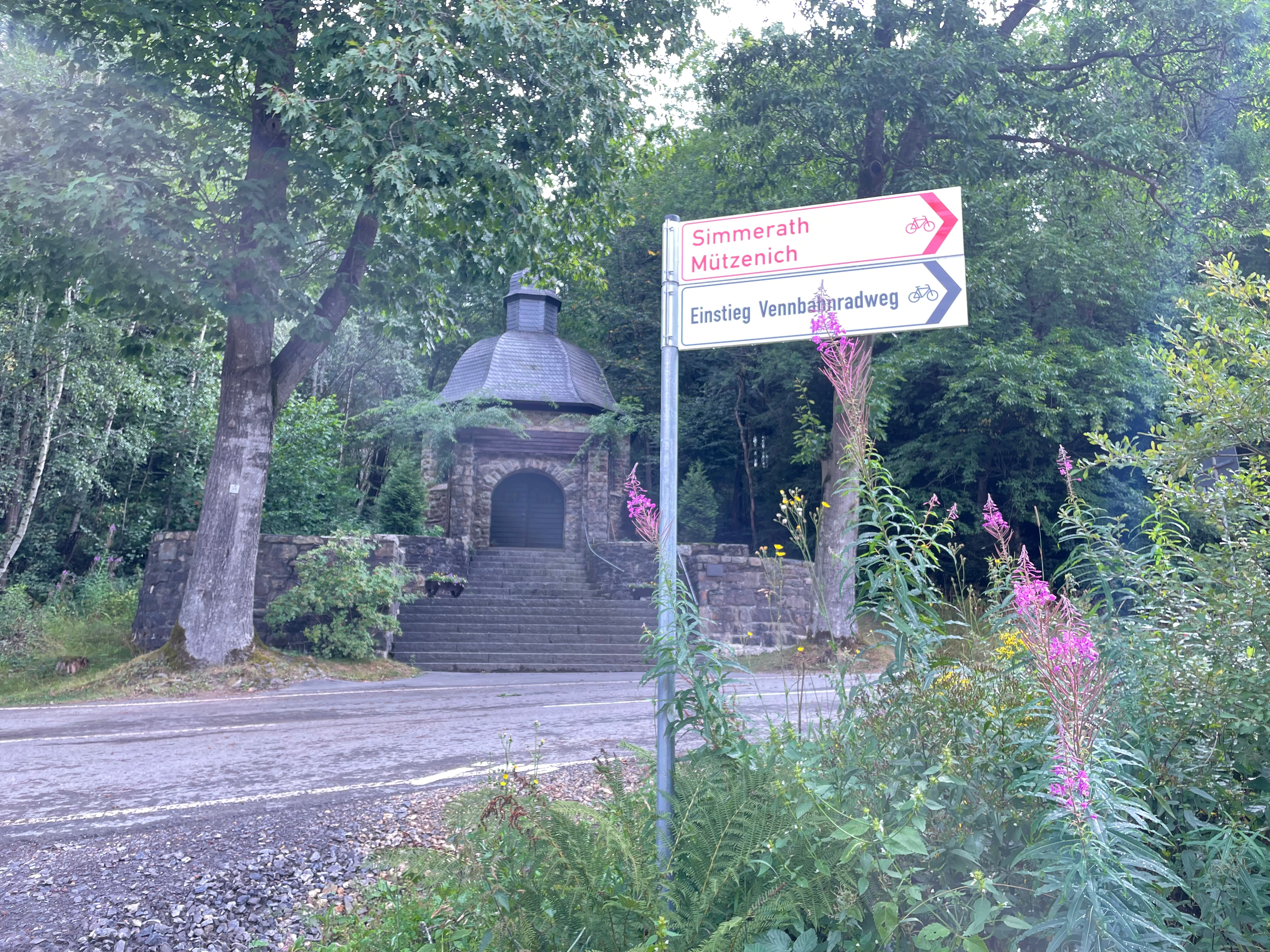
On the German Belgian border, where Heleen and I spent three wonderful days of cycling, there are similar, though not as complicated, borderlines. I have previously written about the delightful Vennbahn cycle route and these enclaves, so apologies for the repeat, but it’s such a delightful cycling area, please bear with me.

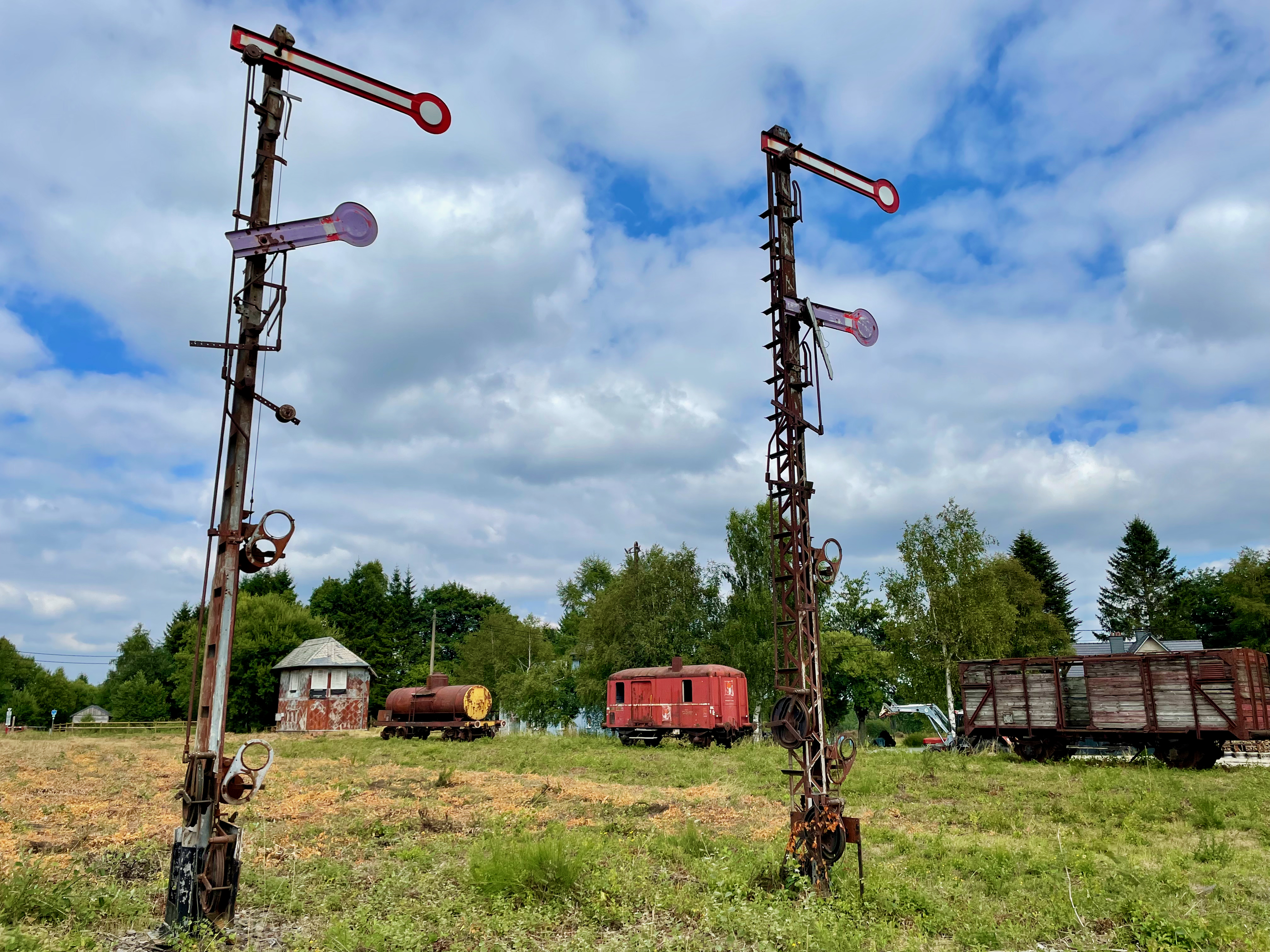
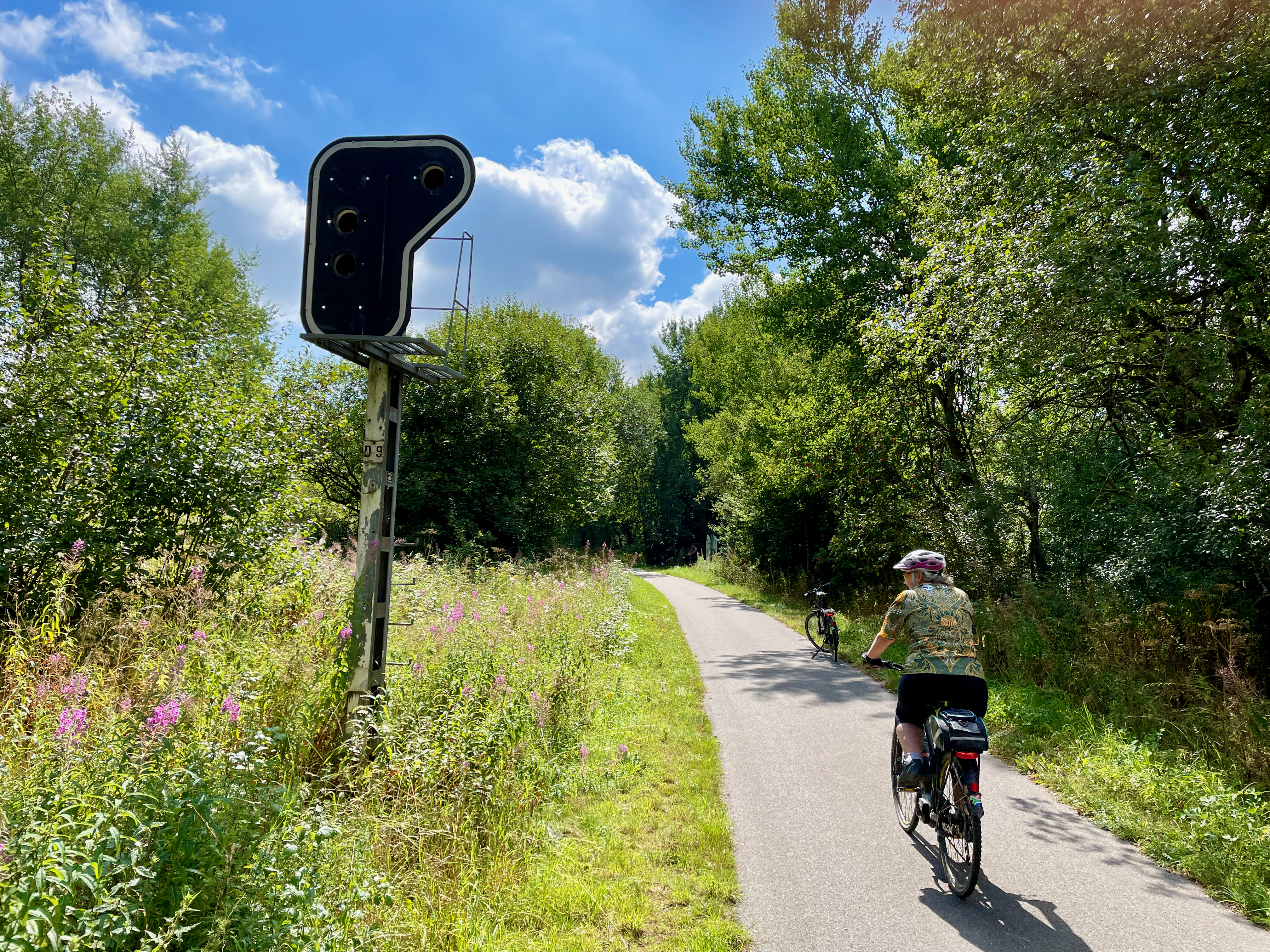
The Vennbahn or Venn Railway route has been Belgian territory since 1919, under the Versailles Treaty. It was originally built by the Prussian Government to primarily transport coal and iron, roughly between Aachen and the north of Luxembourg. When the Treaty became permanent in 1922, it meant that five enclaves of German territory (originally six) were formed, with the ‘bahn’ (railway track) a thin line of just a few meters of Belgium with Germany on both sides. The smallest German exclave, Rückschlag, consists of a house and a garden, some 155m x 100m according to my rough Google Earth measurements. I think I love cycling the Vennnahn cycle route for the feel and history of it because of the stunning railway remnants still visible; from old station platforms, railway signal posts and stop lights to the old station buildings. Maybe I love it for our daily stop at Kalterherberg station’s Waffelhaus for a cappuccino and sometimes a Belgian waffle, which really is so much better than any other waffle in the world; except maybe the Scottburgh Wimpy in the early 80’s?

A practical benefit of the open borders nowadays – on Sunday we stopped in Roetgen at a small supermarket to by an onion and iced coffees. The ‘left’ side of the road was in Belgium, where shops are open on Sundays, while across the road on the ‘right’ side, the shops were closed, because in Germany, the shops are closed on Sundays. We had onion on our burgers that evening, and ‘woema’ in our tanks for the Hautes Fagnes climbs ahead.

The area of Belgium is known as the Hohes Fenn, or Higland Moorland. The highland moor, which acts as a natural water reservoir, is the source of half a dozen rivers, including the Rur, Olef, Warche, Schwalm and Our. 

The area where we cycled our 170km falls lock stock and barrel in the so-called Battle of the Bulge. The terrain is not all friendly and I indeed did battle with my bulge as well, but then decided I’ll only lose it if I stop those beer and waffle stops! Why would I cycle then?

The Battle of the Bulge was sort of Hitler’s last serious offense to try and prevent Antwerp as harbour to the Allies, before he hit the road, blew up the Bridge at Remagen as part of his retreat and took refuge in a bunker in Berlin for a while (not historically accurate, but you get my drift). However, it wasn’t all plain sailing for the American forces in this mountainous area. ‘The Hürtgen Forest occupies a rugged area between the Rur River and Aachen. This Rur is not the same river as the other Ruhr. The other Ruhr River has a ‘h’ in it, and is the water vein of that German industrial area which we all learned about in standard 4 geography. But this Rur is actually the same river as the Dutch Roer, and which flows into the Maas River at the stunning town of Roermond. In the autumn and early winter of 1944, the weather was cold, wet, and cloudy, and often prevented air support. Apart from the poor weather, the dense forest and rough terrain also prevented proper use of Allied air superiority, which had great difficulties in spotting any targets. The dense conifer forest is broken by few roads, tracks, and firebreaks; vehicular movement is restricted. Conditions on the ground became a muddy morass, further impeding vehicular traffic, especially heavy vehicles such as tanks’ (Wikipedia)

Its in similar terrain, bordering the Hürtgen forest in the Parc Naturel Hautes Fagnes or Hohes Venn where I battled my bulge, but on impeccable infrastructure. It remains, for me as a South African, incredible to be in fairly remote and secluded parts of these European forests, just to see a young lady strolling her Sunday stroll alone, and on two-meter-wide tarmac cycle roads for many kilometres, nogal.

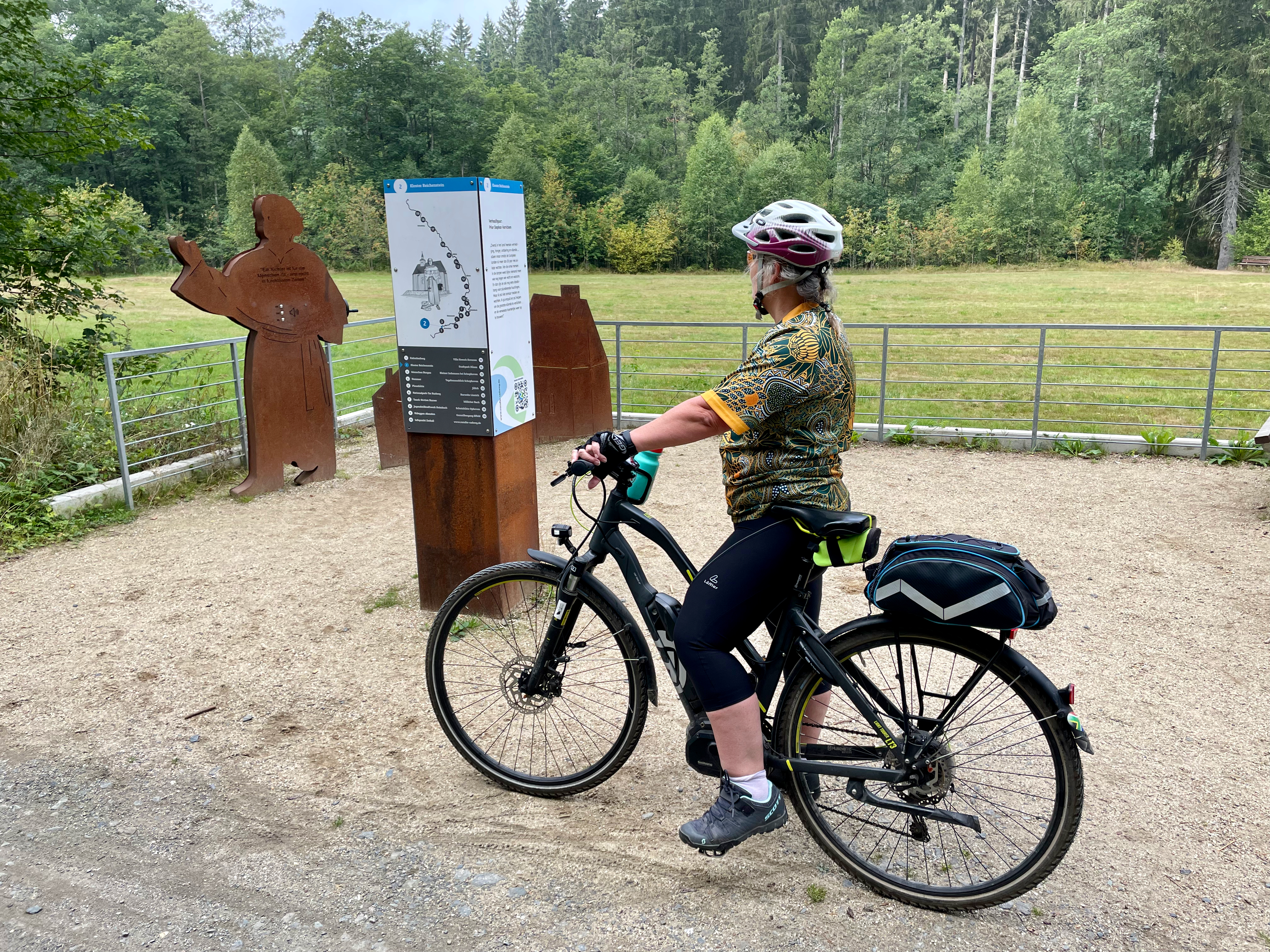
In the hilly forest of our daily start, is the interesting Kloster Reichenstein, which is currently being restored and where monks will soon again reside. In 1639, in the middle of the 30 year war, Stepfan Horrichem was put in charge of the Reichenstein Monastery as prior. Horrichem dedicated himself with full commitment to the consolation and assistance of the suffering population. Sometimes disguised as a farmer, he went from farm to farm and village to village to protect himself from infringement. In doing so, he earned respect, prestige and even admiration from the needy population. Next to the forest road, is a remembrance plague to Prior Horrichem, which unfortunately reminds us of the many many conflicts of Europe, as we actually see in the Ukraine at the moment.

You don’t have to be a cyclist, nor a camper, to visit and explore and enjoy this amazing part of Germany and Belgium, but to spend time in some of these slightly more remote nature-based camp sites in Europe, is highly recommended. The beautiful clean rivers, lush forests and green farmland hills all convert into real and peaceful scenic beauty. 

Road trip South Africa

Part 2 : Into the wilderness

We’ve set up camp in Wilderness for 10 days, and those 10 days were filled with mini road trips, as this is prime sight-seeing country, where mountains, forests, lakes, rivers and the ocean meet. This is where birds, rural coffeeshops, world-class restaurants, scenic dirt roads, mountain fynbos, Knysna Yellowwood forests all shout out for the traveller’s attention and where my daily ‘braaivleis vuur’ beckons to give flavour to those lamb chops Appie so lovingly packed.

As many of my Bonn based non-South African friends will probably confirm by now, having good quality meat and a decent ‘braai’ is very high on my list of quality time and soul finding activities. It’s not without good reason that the licking flames of a wood fire is often referred to as the bush television. As part of my initial trip planning I contacted Appie, a farmer and owner of Boeteka Padstal (32°30”08.83’S and 22°33”41.09’E) 18km outside of Beaufort West on the N12 towards Oudtshoorn and I ordered half a Karoo lamb, cut and prepared to my order, plus some prime T-bone steaks, boerewors and a Kudu fillet for a special planned dinner. ‘Baie dankie Appie, ons het soos konings ge-eet’. Check my next post which will include some time in Addo National Park, for feedback on Appie’s Kudu fillet recipe.

Ten days in Wilderness promised to be pure bliss, and yes it is such an incredible blissful place, it is actually spelt with a capital W. Wilderness or wildlands, according to Wikipedia are natural environments on earth that have not been significantly modified by human activity. This is not quite true. The Wilderness we were based at is the quaint anchor (pun intended) town in the Garden Route which nowadays provide abundant modernised human modifications such as restaurants and cafés. Wilderness is even more a prime destination for it’s natural splendour of forests, lakes, mountains, birdlife and ocean. Within an easy day’s travel, you have access to diverse environments, which includes the awesome Swartbergpas, Meiringspoort and Klein Karoo to the north and the Knysna forest, town and lagoon to the east, plus the lakes and Sedgefield with its weekly Farmer’s Market in between.

Please play the video

The Sedgefield market, though crowded and busy, is always a charming stop where I love to stroll, explore, smell, hear, see, taste and experience the variety of delights it has to offer. Here you can enjoy many wonderful products from fresh farm produce to samoosas, vetkoek, coffee, beer to biltong, (even) bratwurst, pannekoek and sweets while enjoying either the local Cape music, the new street children choir or the local hippy singing all the cool blues, rock and country from days gone by. The Sedgefield ‘markie’ does have one major disadvantage though. I tend to get stuck there enjoying the music sometimes to the annoyance of the rest of my travel party. It’s also an added pleasure when you bump into an old friend whom you’ve last seen in 2011, before moving abroad, ‘nè Lydia?’

Continue reading “Road trip South Africa”

Summer in the sombre ‘The Somme’

Everybody has that one favourite T-shirt. Maybe you don’t even wear it anymore, for whatever reason. Maybe it is simply too worn-out or it has shrunk too much under your ageing belly, but you don’t have the heart to get rid of it. I have one too and mine has a quote, accompanied by the face of Nelson Mandela, stating


‘History depends on who wrote it’.


History may have two sides, but sometimes that history is simply so dark, so gruesome, that the different sides to the stories become irrelevant and the horror of the history is the only thing that stands out.

We loaded the grandparents and headed off to such an area, The Somme Valley in North Western France where that infamous battle raged from July 1 to November 1, 1916.

On 11 November this year, at 11:00 it will be the 100th celebration of the end of World War 1. That is the time and date when the armistice was signed between the Allied Forces and Germany – ‘on the 11thhour of the 11thday of the 11thmonth, 1918’.

We started with our round-trip by staying over in the Belgium beach town of Middelkerke. Though we enjoyed pleasant walks on the flat sandy beach with a backdrop of ugly Amanzimtoti style high-rise blocks of flats, I was aching to get into the hinterland and explore some battlefields. We found charming glamping tents on a pig farm Het Zeugekot (saying it like this sounds much less charming than it was), in Belgium near the small town of Beveren (Roesbrugge-Haringe), which was our base for a few days while we explored some battle sights, and the two charming charming cities of Ghent and Ypres. Be careful with some of these European landlords though. We unfortunately left the tent flaps open, as it was a sweltering heat wave of 39° C, and we weren’t back at the tent before a beautiful thunderstorm broke out. The storm did result in a couch cushion getting wet and needing a wash, but that little wash cost us the full deposit – a €150 wash that was!

IMG_7136
Middelkerke beach and ugly Amanzimtoti like blocks of flats

Ypres (or Ieper in Flemish – it is located in West Flanders and called sarcastically ‘Wiper’ by the English during the War) was heavily involved in World War I as the Battle of Ypres seethed here. War cemeteries and even trenches IMG_6409can be seen and visited all over this area. In the town itself I was mesmerised by the ‘Menin Gate War Memorial to the Missing’. Its a war memorial ‘gate’ where every evening at 20:00 the ‘last post’ is sounded as a gratitude from the people of Ypres to those who sacrificed their lives in battle. Its large Hall of Memory contains names on stone panels of 54,395 Commonwealth soldiers who died in the Salient but whose bodies have never been identified or found – simply missing.

Continue reading “Summer in the sombre ‘The Somme’”

Ireland’s call

‘Has anybody here seen Kelly?

K-E-double L – Y

Has anybody here seen Kelly?

Kelly with the Irish smile.

He’s as bad as old Antonio

Left me on my ownio –

Has anybody here seen Kelly?

Kelly from the Em’rald Isle’


It is one of those songs, which I cannot read the words without singing the tune. I still have the record (LP) ‘Come along and sing along’ with Charles Berman and company

Charles Berman
This LP gave me hours of pleasure growing up

which I’ve listened uncountable times as a kid growing up in Yellowwood Park, Durban. In my head this Em’rald Isle they mentioned was some exotic sunny island with coconut palms, white sandy beaches and hours of leisure in the sun. I simply had to one day visit it! It was with a big ‘Ahh, they talk about Ireland’ that I later learned what the Em’rald Island actually was, but it never tempered my curiosity to one-day travel over this island.

Nowadays the musical reference to Ireland is probably more Ed’s Galway Girl, and that too is a great song, rather than Kelly.

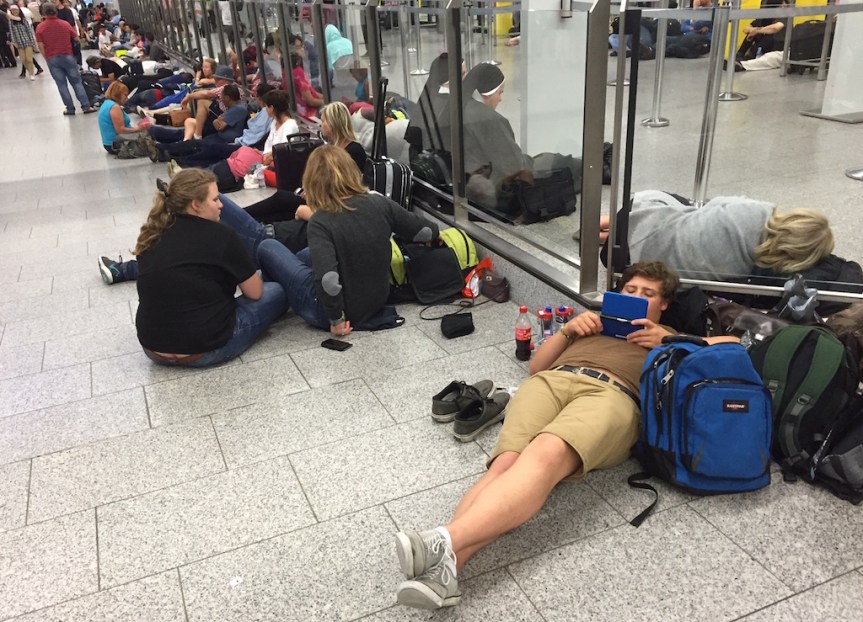
If I still had a slight expectation of sunny beaches and leisurely hours enjoying those sunny beaches in my head in anticipation of our 10 day Ireland trip, I was rudely jerked into reality when we received the message from Ryan Air about 36 hours before our flight informing us our flight was cancelled! Not delayed, sommer completely cancelled, gone, finish ‘en klaar’. Europe was caught in a week of serious snow and bad weather and Dublin airport was closed for a few days. After frantically phoning around and surfing around (the web kind, not the anticipated sunny waves kind of surfing), Cara was able to get us a 22:00 flight, for the Sunday evening! We were supposed to fly Thursday but had to wait until Sunday night. Before you think of my Ugly Story post and that infamous Lufthansa flight LH572, this was different and we accepted it as such, while keeping our eyes peeled to weather forecasts and news bulletins of the European weather scene. Oh, by the way, after 22 months, Lufthansa refunded us a few euros per ticket, of which the lawyers took nearly half.

We landed in Dublin at 23:30 Sunday night, picked up our rental car, grabbed a serious coffee or two or six, and headed into the snowy, misty darkness of the M4 and the 215km I had to drive to get to our Galway accommodation.

It was a good call to drive through to Galway that night, because we woke the next morning at our destination, with a view across the bay, and a little grocery store stocking real bacon, eggs and cheddar among a few other necessities just around the corner. English breakfasts instead of continental in itself is sufficient reason for visiting Ireland.

1.Waterval
Trickling waterfall in country side using iPhone and long exposure

Continue reading “Ireland’s call”

Flight LH572 July 22, 2016 : An ugly story

When I blog on my travel, I prefer to focus on the good stuff, because travel writing is a good thing, it’s a learning experience and its about sharing motivation with others to pack their bags and find new places, meet new people, eat new food and create new stories. My Blog post number 39 however, is a sour, ugly one. I met people I would rather not. I don’t like it, and I am hesitant to post it. It’s a story of travel going wrong, which does happen, and giving me an eye-opener on how ugly and incompetent problem-solving by a world-renowned corporation can be.

I’m sitting in the Vienna airport with a cold beer waiting for my connecting flight to Doha after what was probably my worst ever weekend of traveling in my life and I’m struggling how to approach this blogging task. In my head I hear the good lesson I learnt from Dr. Humphrey Mathe over and over again. ‘When you have a difficult assignment to write about’, he taught me, ‘write it after time has passed, then let it sit for a few hours, then read it twice, and then re-write it so that you don’t include too much emotion’. Its wise words, and I’ll try, but its also an incident I would like to report on exactly how I experienced it. (this previous paragraph I wrote in July 2016, while still in the emotion of the incident. I let it simmer until today, but it still bugs me).

Continue reading “Flight LH572 July 22, 2016 : An ugly story”

Behind the Iron Curtain (in 2015)

Please click the photos to enlarge and please have a look at the video clip at the end

I do know its been nearly 26 years since this ugly curtain was drawn, but still there is some odd nostalgia to venture behind it, observe the interesting languages, food and diversity, discover the great cities and cringe at the stomach-turning history. Once you’ve seen Auschwitz, realized the terror of the communist cold war on the East European people, the modern day slavery inflicted on nations such as Hungary and slept in the Plitvicka (there should be a upside down caret on that ‘c’ but I have no idea how to type that!) where as recently as 20 years ago the Serbs and Croats were still fighting a fierce civil war, you realize that the human race is evil, really evil. Chris de Burhg says it: ‘I fail to see the wisdom of a war’.

I decided to acknowledge and see this history for myself, and Heleen and I planned our trip. Before you stop reading because ‘you’re not in the mood for a somber dark blog post’, let me entice you with the confirmation that what we have seen and how these former grey dark places have lifted themselves and created wonderful new destinations with breath-taking tourist destinations is the real wow of what we’ve discovered. I believe everyone should visit Eastern Europe.

Prague
Prague

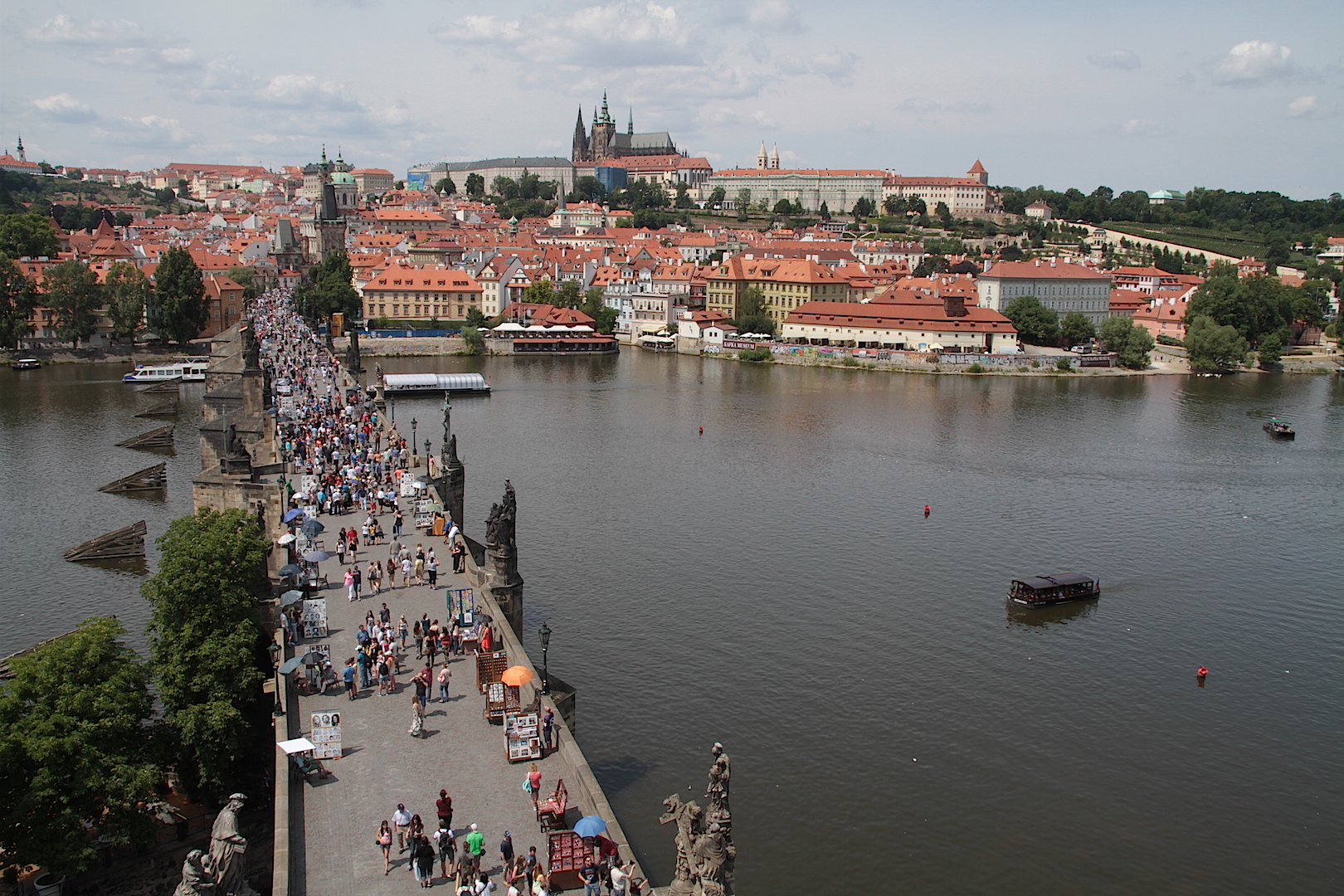
Prague is a majestic old grand city and is often called the Paris of the east. Indeed it is a beautiful city, with a buzz of activity, street music, restored vintage cars as sight seeing opportunities and the exceptional architecture to challenge millions of camera lenses, mobile phones and even tablets; the most awful of tourist camera equipment available! We took a city tour in a 1929 Praga 10 seater car that proved to be an excellent choice. Feeling like the queen (and having to concentrate not to lift the hand in her familiar wave to the crowds) we were entertained through the streets of Prague including the old town, the bridges and the castle hill. We hooked up with friends from South Africa who nowadays stay in Prague and imagined ourselves rubbing shoulders for breakfast with the likes of Albert Einstein and Franz Kafka in the famous restaurant Louvre where both these gentlemen used to ‘hang out’.

The Prague bridge and castle

But Prague was still very west and I urged to go deeper and, with a lunch stop over in beautiful Kutna Hora and a fabulous one-night stopover in the rural Czech town Házovice we headed to Krakow, Poland.

On our way, though, was Auschwitz.

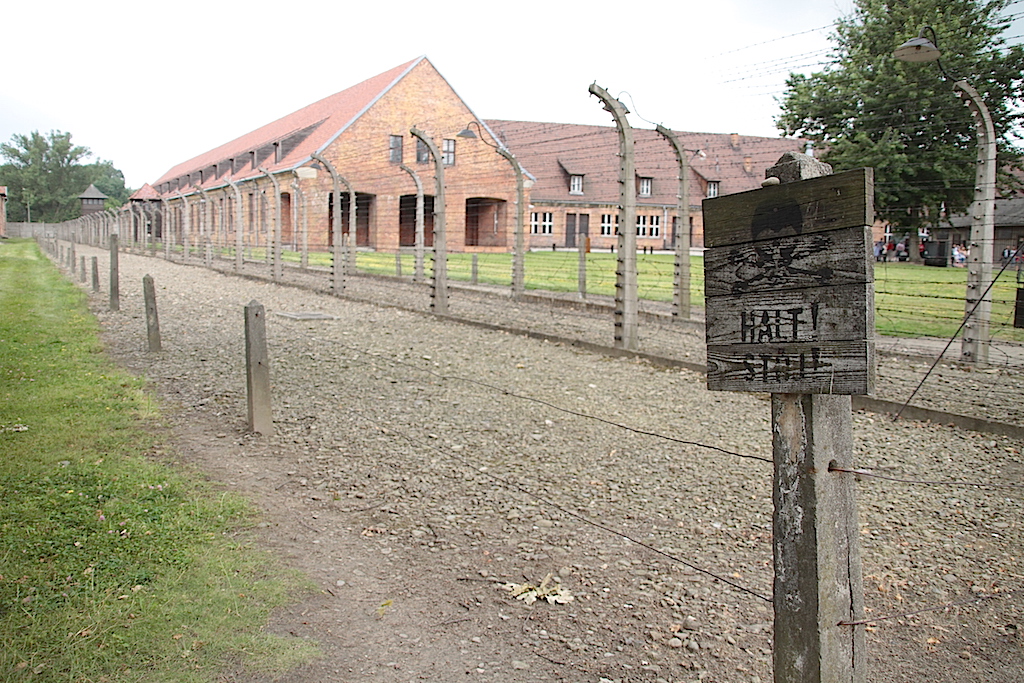
This is the most horrific place I have ever seen. I cannot even try to write something about it. What strikes me about this history, and then the more recent war areas we’ve traveled through, is that it’s not ancient. It’s not Vlad the Impaler in the dark ages, or Atilla the Hun. It’s in our day and age. Some of the people involved and responsible for inconceivable atrocities are still living amongst us. In Auschwitz itself, the number varies on how many people were actually murdered there. Polish governments itself reduced their official number down from the originally broadcasted 4m to what seems to be the official number now of around 1.1 million. It’s much less, but by no means any less atrocious. Think about the numbers: 1.1 million people in 5 years. That’s 220,000 people per year being murdered or even more exasperating 603 innocent people per day. These were not soldiers shooting back, these were merely people different from the oppressing Nazi’s! It is incomprehensible! Nonetheless, in my view, and despite its horror, Auschwitz should be visited for the sake of improving the future.

Auschwitz
Auschwitz

Auschwitz
Auschwitz

Auschwitz
Auschwitz

Krakow is one funky, beautiful and definitely worthwhile city to visit. During the rule of King Krakus, very much as in the times of Lord Farquart (remember him?) I presume, the farmers in the vicinity of Wawel Hill got so fed-up with the weekly sacrifice of a cow to the local dragon that they ‘poisoned’ him by feeding him a cow skin filled with smoldering sulfur! With the dragon’s rule up in flames, Krakus built his castle in Wawel Hill and voila, Krakow was founded. Or at least, that’s according to some legends.

As with most of Europe, history is filled with violence, war en terror. Krakow is no exception. Krakow as city was spared during WW2, mostly because it served as a major Nazi base and formed the capital of this region. Soon after they, the Nazis decided that they will rid Krakow of all Jews and decided they were not willing to live near the Jews. Initially many Jews were deported, but then the Krakow Ghetto was established. Walled in as part of the city, this was where all Jews had to live in horrendous conditions. To visit the Jewish Ghetto Square and reflect on what happened was a truly thought provoking experience. I think I am loosing all respect in the human race. On the square is a memorial consisting of monumental chairs to signify the habit of the Nazis to enter Jewish apartments and throwing all the furniture out of the window. I immediately remembered why I couldn’t finish watching the film, The Pianist. I simply stopped watching the film when a crippled man in a wheel chair was unceremoniously thrown from the building! But there are always heroes as well, and part of our battery driven 8-seater golf cart tour was a quick visit to the factory of Oscar Schindler.

However, strolling the streets of the magnificent Kazimierz or Jewish Quarters, as well as the Old Town and its magnificent Rynek Glówny, Europe’s largest medieval square (which was grotesquely named Adolf Hitler Platz during the War) gave me new hope. Despite the past and the deliberate destruction of culture and beliefs by a psychotic group, the evidence is there that the people of Krakow have built a funky, modern and stylish city with medieval architecture well intact but complimented with modern cafés, bars and restaurants. It is a pleasure to wander through this fascinating city. A visit to Krakow should be on everyone’s bucket list.

Banskà Stiavnica
Banskà Stiavnica

En route to Budapest and further south, we ventured off the beaten track through the incredibly scenic Štiavnica Mountains and explored the World heritage town Banská Štiavnica in the middle of an ancient caldera (collapsed volcano). I was here much more for the political fascinating (though sometimes truly mind blowing) history, architecture and ‘feel’ than for archeology though. And that ‘feel’ we fortunately did get. In Banská we had the privilege to see the real ‘old world charm’ of the East Block. I am struggling to accurately put in words what I mean when referring to this as charm though, as I have no doubt whatsoever that living under the communist regimes up to the end 80’s was no pleasure. Life was hard, mundane and without any luxury while architecture was unimaginative, square, grey and cold. But for me, now that life has changed for the locals, to wander through towns and apartment blocks in this town I could feel that ghastly reminisce of how isolated and living with eye-patches people were forced to live. Even in 2015 we were stared at strolling down the streets. I could see the curiosity in the eyes of an old man, wearing a vest as shirt, when we passed him, cheerfully and excited chatting in Afrikaans. I wondered if he has ever heard of a country called South Africa. But I more wandered what this man has seen in his approximate 80 years.

Adding to the sheer enjoyment was the limited English and even German understanding in restaurants and shops. Struggling to communicate in an odd manner adds to the enjoyment of travel, as it enhances that feeling of exploring, discovering and achieving, which are the essentials of great traveling.

Budapest, the Széchenyi Chain Bridge

There have been many conflicts in Budapest, which as a single city is actually quite new. Originally founded by Celts before the Romans ruled Budapest it is a city with a long and intriguing history. Its name stems from the two Bulgarian fortresses Buda and Pest situated on each side of the Danube River and which only merged as recent as 1870 into one city.

My first visit to Budapest was in January 1994, just five years after the Iron Curtain was lifted. I remember so well how fascinated I was with this absolutely stunning city with its distinctive ‘behind the curtain’ feel to it. I remember Katie Surek (our land lady at that time) complimenting us on our nice clothes (jeans, sweaters and sneakers) and charging us just 8 US dollars per night for accommodation. I remember exactly that feeling of being the only foreigner in the city, everybody staring at us while having magnificent coffee and cake in the classy Gerbeaud Coffee House on Vörösmarty Ter, or strolling the Vaci Utca, Andràssy Utca and the Hösòk Ter (Heroes Square). Said Katie, ‘people came with buses to the city to window-shop when the first Nike store opened in Vaci Utca. The West has arrived and Hungarians could express their individuality by being one self, by working for yourself and achieving for yourself!’

In the harsh winter of 1944 despite the fact he did not have a Jewish name and had married into a catholic family Miklós was rounded up along with others from the ghetto by the ruling Arrow Cross Party for Jewish activities. Like many before him and many more after him he was forced to strip naked on the banks of the Danube and face the river; a firing squad then shot the prisoners at close range in the back so that they fell into the river to be washed away. This was a common practice that occurred during 1944-1945. Sculptors Gyula Pauer and Can Togay have created a moving memorial to these Holocaust atrocities that sits in front of the magnificent Parliament building on the edge of the river. What visitors will see are 60 pairs of rusted period shoes cast out of iron. Different sizes and styles reflect how nobody was spared from the brutality of the Arrow Cross militia (the shoes depict children, women, businessmen, sportsmen etc.).
In the harsh winter of 1944 despite the fact he did not have a Jewish name and had married into a catholic family Miklós was rounded up along with others from the ghetto by the ruling Arrow Cross Party for Jewish activities. Like many before him and many more after him he was forced to strip naked on the banks of the Danube and face the river; a firing squad then shot the prisoners at close range in the back so that they fell into the river to be washed away. This was a common practice that occurred during 1944-1945.
Sculptors Gyula Pauer and Can Togay have created a moving memorial to these Holocaust atrocities that sits in front of the magnificent Parliament building on the edge of the river. What visitors will see are 60 pairs of rusted period shoes cast out of iron. Different sizes and styles reflect how nobody was spared from the brutality of the Arrow Cross militia (the shoes depict children, women, businessmen, sportsmen etc.).

Now, 21 years later, the spectacular city is proof that these capitalistic, ideals and motivation paid off handsomely. Budapest has become a trendy vibrating place with cafes, bars and restaurants galore, while still maintaining that old character and heritage. Budapest now seem to be a happy place as opposed to those dark, dark years of communist rule and modern day ‘slavery’.

The Budapest bridge and castle at night

At 60 Andrassy Utca is the Terror Museum, which was unfortunately closed on the Monday I was there. They do however have an excellent display outside saying just enough to make sure I will go back and visit the museum on an open day. One such is the story of one Andràs Toma, the Hungarian soldier who was captured and put in a labour camp in 1944 by the Russian Red Army. Toma was captured on January 11, near Auschwitz and was taken to Boksitogorsk, or as the Russians call it Бокситогорск near St. Petersburgh. Toma picked up some illness and was transferred to another camp, Bistrjag (pronounced Bistrjag), some 1,000km further east and in 1947 transferred to a psychiatric hospital in Kotelnisch. Psychiatric patients were not labour camp prisoners and therefore András’ records were deleted. He was declared dead in 1954 and thus was ‘lost’. A linguist recognized his accent as being Hungarian and not Russian and his case was followed up. He was brought back to Hungary in 2000 after spending 54 years in a Russian Psychiatric hospital and with DNA tests he was reunited with his family. Since his military service was continuous, the Hungarian government paid him out all his back pay. Andràs Toma (who became Tamas) was probably the last WW2 POW to be returned home. Life’s a journey, they say.

The Terror Museum in Budapest

Photos of victims who never returned

If WW2 and Cold War is regarded as old school, our next destination entered areas of extreme scenic beauty and much more recent violent conflict. We headed to Croatia, which will be the topic of my next Blog post. For now I’ll leave

‘My house in Budapest

My hidden treasure chest,

Golden grand piano

My beautiful Castillo’

For mountain lakes, Dalmation beaches, islands, boat cruises and gripping historic learning.
A day at the museum

Ja well, to say the truth, two days at a couple of museums, but wow, what interesting stories, photos and places! Some of them seriously scary and entirely screwed up though!

 Berlyn1

Berlin’s history is not for the faint hearted. But nowadays, it is truly a magnificent city and I love going to Berlin. As a matter of fact, it must be my favourite city in all of Germany because of its vibrant new world feeling combined with that old world cold war inquisitiveness. And when you think further back, it obviously has a sickening place in history too, but to be able to wonder the exact same streets now and shake your head in misbelief on what has happened here in the recent past is simply a marvelous traveling experience.

Modern day Berlin is a vibrant beautiful city, working hard to forget its past

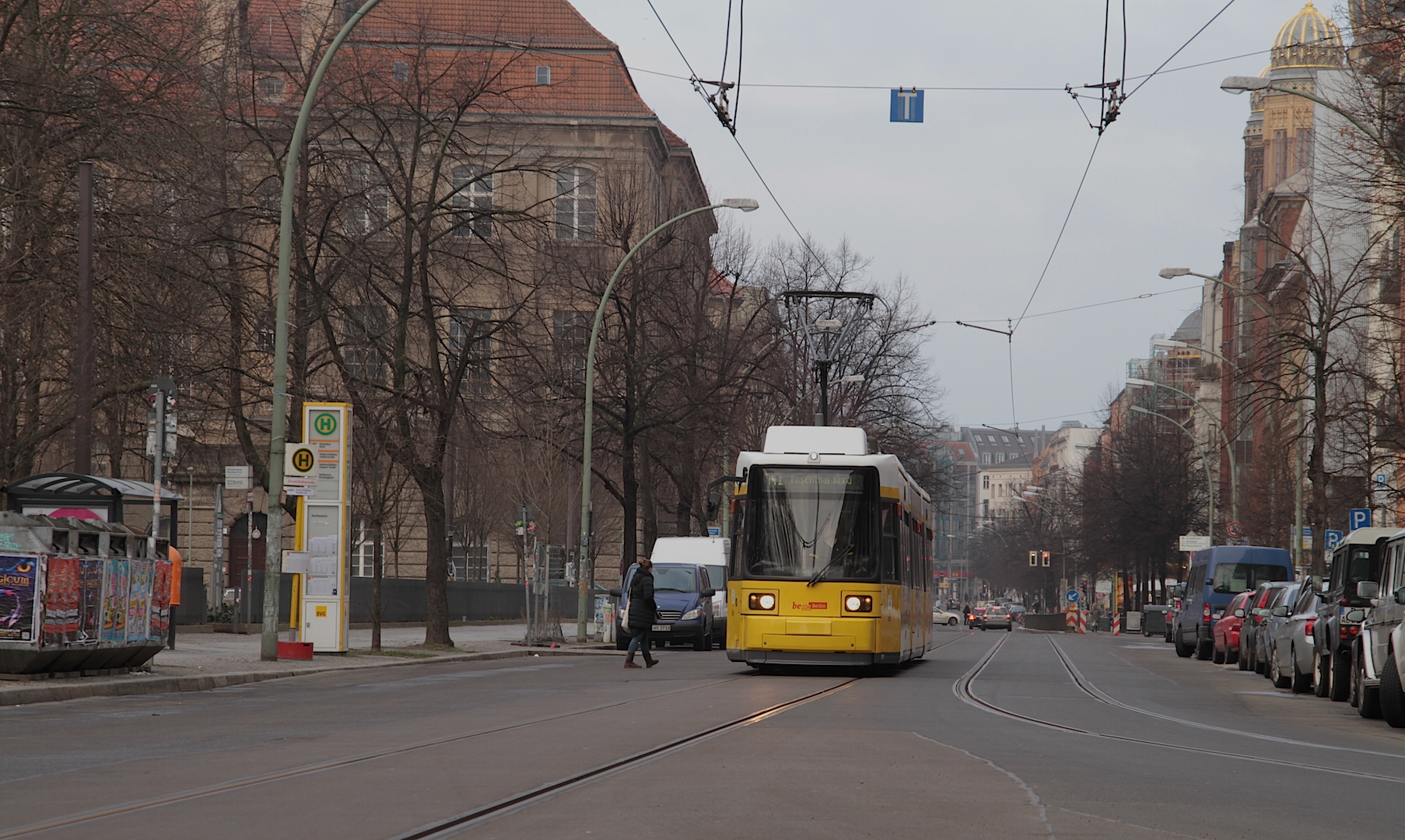
 And furthermore, I love to visit sites that featured in movies. When Jason Bourne ‘kidnapped’ Nicky on Alexanderplatz in The Bourne Supremacy, I new exactly where that was and how those trams operated. Thus, I decided to start my two-day museum visit in Berlin with coffee and croissant in Coffee Fellows on Alexanderplatz.Berlyn2

I need to qualify before saying anything further that I am no political analyst, I am no historian, I am no fundi on war nor spying, and I am not a psychologist. I will simply blog my experience and sentiment. I am, however so curiously intrigued by the German history and why certain things happened the way they did. Thus, even though I have visited the DDR museum previously and I decided that I don’t have to go there again, I simply strolled there on auto pilot and found myself wandering through this fascinating museum once more contemplating the irony why the socialist state called themselves the Deutsche Demokratische Republik (or German Democratic Republic – GDR). Can it be that these guys actually had a very deep deep hidden sick sense of humour? They were so democratic (and honest) that Walter Ulbricht (the Chairman of the GDR Council of the State) on June 15, 1961 answered a journalist who asked if they were planning to ‘erect a state border’ at Brandenburg Gate with a ‘Nobody intends to put up a wall’.

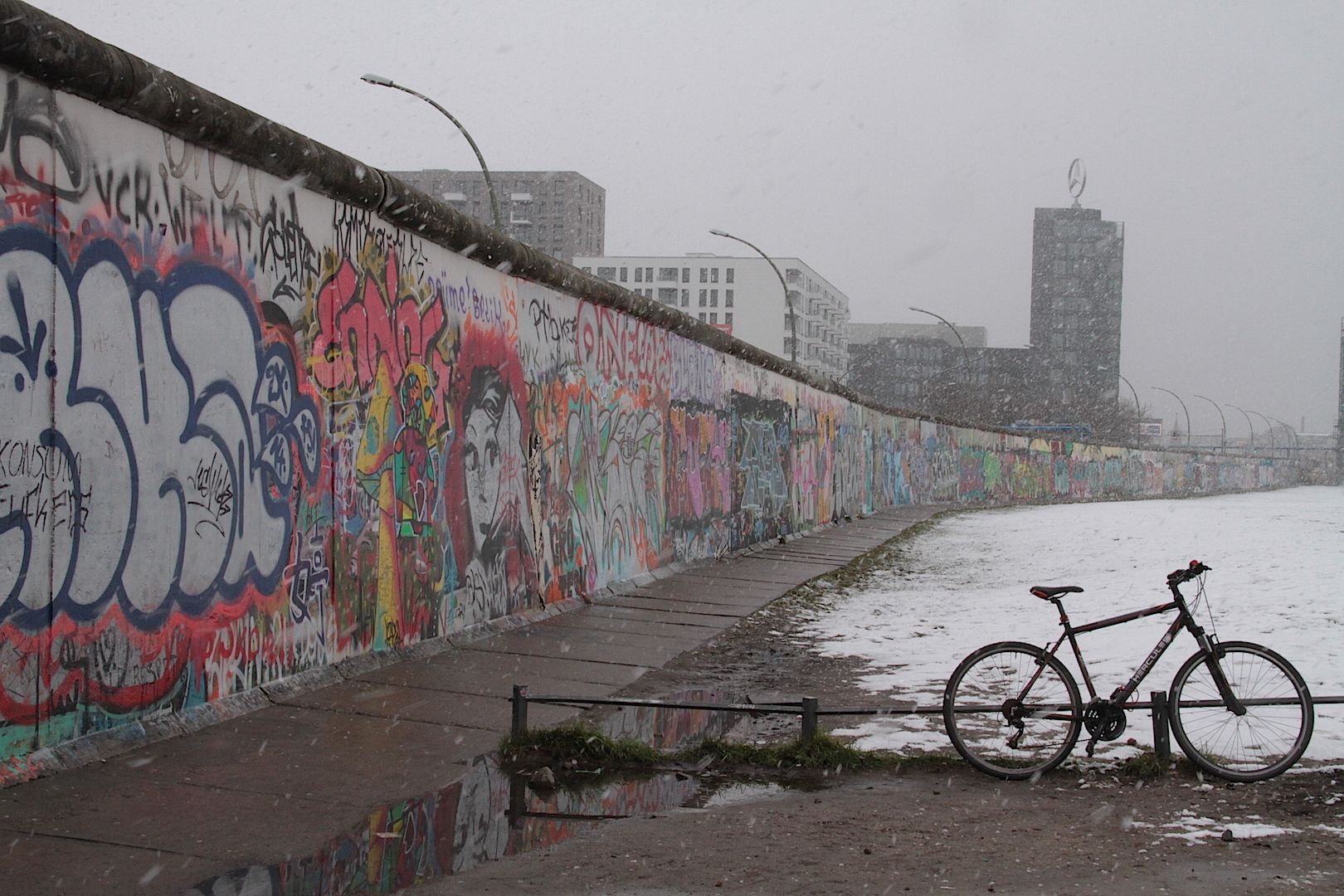
The Berlin Wall divided the city for 28 years

On the peaceful Sunday morning of August 13, 1961 the barbed wire were strung and the East Germans were erecting barriers. Walter Ulbricht signed the approval on August 12, 1961. That was the wiring that ended up in a full border around West Berlin consisting of a wall on its eastern border and fences along the northern, western and southern borders. In total, by 1989, this western island city was fenced in by:

  • 106 kilometers of concrete plates
  • 5 kilometers of metal fence
  • 105 kilometers of anti-vehicle ditches
  • 127 kilometers of sensor fence
  • 124 kilometers of patrol paths
  • 302 watch towers
  • 20 bunkers and
  • 259 dog runs

The main reason was the many GDR citizens who exercised their democratic right to relocate to the west (in 1960 about 360,000) reaching a climax in 1961 of 19,100 in June, 30,400 in July and 47,400 in the first half of August. Exercising one’s democratic rights under the German Democratic Republic’s autocratic powers was just to freethinking for their liking and image!

GDR philosophy
GDR philosophy

So, while the DDR museum enlightens one regarding life in East Germany for the period between WW2 and the fall of the Wall on 9 November 1989, the Deutsches Historisches Museum on the other side of the Berliner Dom tells the entire German history of the past 1500 years. Here you can follow history’s path through the political changes, the church reformation in the 1500’s, the language development and that interesting phenomenon and the pursuance thereof called ‘hegemony’.

HegemonyThis ‘big word’ features in the history of Germany, and Europe many times and coming from South Africa, I just shook my head in disbelief while wandering through the timelines and the resultant conflicts and shear scale of some of these conflicts. The first genocide mentioned in the Deutsches Historisches Museum is actually very close to home where it is mentioned that between 1904 and 1907 under the ‘Deutsch Südwest Afrika’ colonial regime (present day Namibia) eighty percent of the Herero population and 50 percent of the Nama population were killed in a brutal and deliberate scorched earth campaign. The drive was under the German General Lothar von Trotha and its estimated that between 24,000 and 100,000 Hereo and 10,000 Nama were massacred. According to Wikipedia, a copy of Trotha’s extermination order can be seen in the Botswana National Archives where it states ‘every Hereo, with or without a gun, with or without cattle, will be shot. I will no longer accept women or children, I will drive them back to their people (to die in the desert) or let them be shot at’. These mass killings were named as the first example of a 20th century genocide.

What is wrong with the human race?

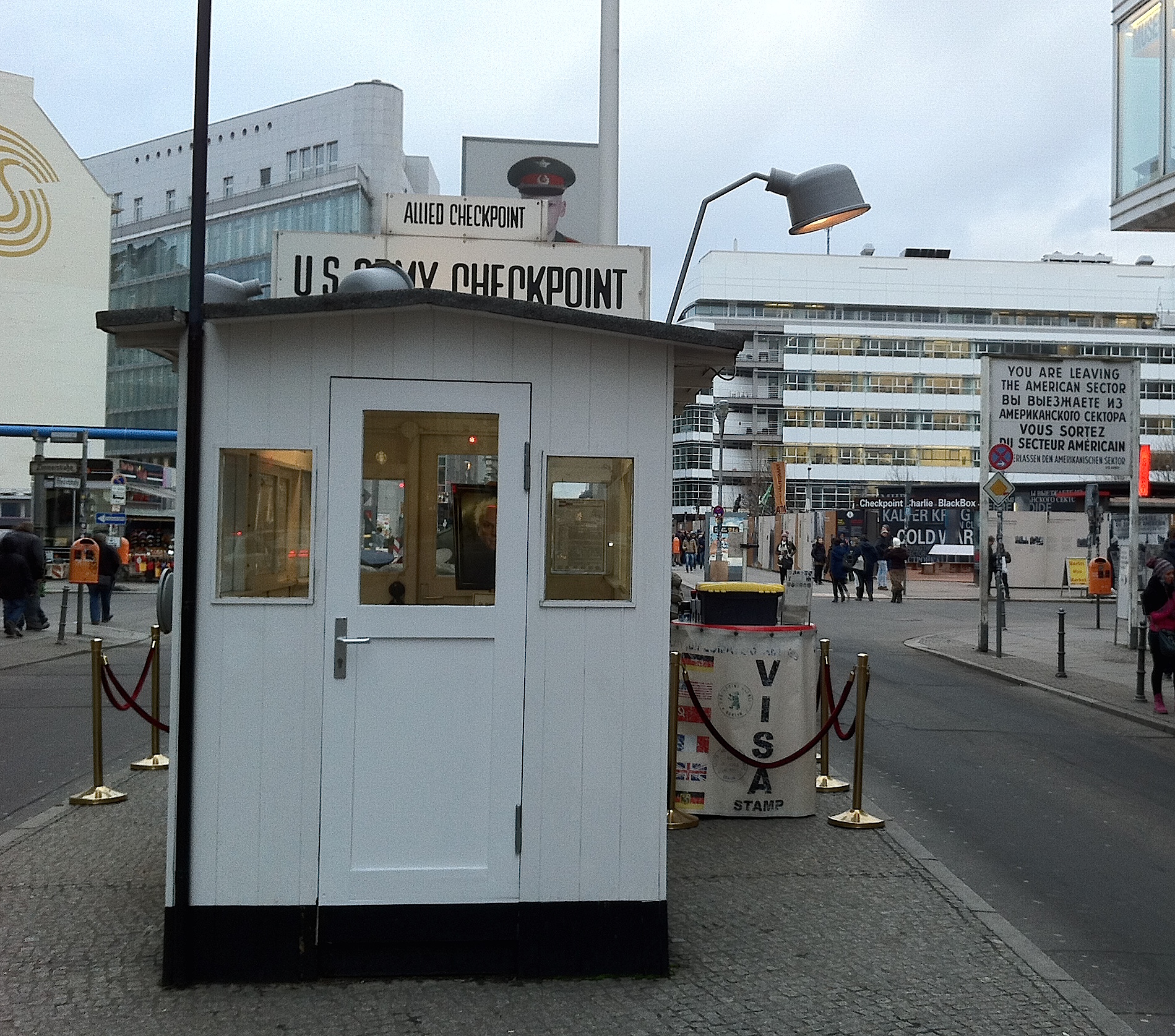
Checkpoint Charlie nowadays is simply a tourist attraction with fake soldiers spoiling the photographic opportunities

This is the third time I visited Berlin, and although Checkpoint Charlie is nowadays just a tourist photograph spot, with the most irritating wannabe dressed-up soldiers occupying the best photo spot and demanding money even to evacuate the spot so that you can take a photo sans them, I cannot not go there, have a coffee near the spot and sit and wonder. Café Adler is no more, unfortunately and has become part of a Berlin Café chain, but I did have the privilege to drink a coffee there in 2007 when I visited Berlin for the first time. I did find this excellent post regarding Café Adler though, and exactly as Francine Mathews so eloquently puts it, this is the reason I too keep returning to Checkpoint Charlie. Read it at http://www.francinemathews.com/cutout-spies.php

A stretch of the wall in Niederkirchanstraße

Berlyn5

Sort of just around the corner in Niederkirchenerstraße is a preserved part of The Wall, with nowadays a brilliant museum consisting mainly of photographs of the Nazi party’s rise and atrocities during the war itself. I don’t think one can visit Berlin without putting a silent morbid hour or two asides to stroll through the Topograhie des Terrors.

The famous Berlin Ampelmann

My personal highlight, though was my visit to the Stasi Museum just off the U-Bahn Magdalenenstraße. This is the actual office and headquarters of the Ministry of Sate Security until the fall of the wall. This is the offices, boardroom and even bedroom where Erich Mielke ruled this State Department with his iron fist from 1957 to 1989.Erich Mielke This was the spy headquarters where the East Germans conducted their propaganda, where they architected their subduing techniques and where the entire system of collaboration and civilian neighbour spying on civilian neighbour was run from.

Fascinating Stasi museum

Although the German history is scattered with atrocities of the grandest scale and incidents that truly make the stomach turn, there still is a weird and unexplainable nostalgia about the period of the cold war. In the seventies I was a child but remember the fascination I had when I heard the news mentioning the ‘lugbrug’ (air-bridge) of the western world servicing West Berlin or when my Dad told me about the spy novels he read where many scenes took place in Café Adler and those dark grey movie scenes portraying those days.

I love going to Berlin, I need more time.

East Side Gallery
East Side Gallery

The Italian Job 2 : ‘Veni, vidi, procedo’ (sic)

From the previous post;

And once we’ve accomplished that satisfactory happiness, slowly and hesitantly we turned our back on the beautiful ‘five towns’ (Cinque Terra) and the natural beauty linking them and headed for the famous leaning tower, the captivating Florence and the awe inspiring, history rich and fine cuisine of Tuscany and Amalfi.

The leaning Tower of Pisa


One of the great joys of traveling through Italy is discovering firsthand that it is, indeed, a dream destination. – Debra Lavinson


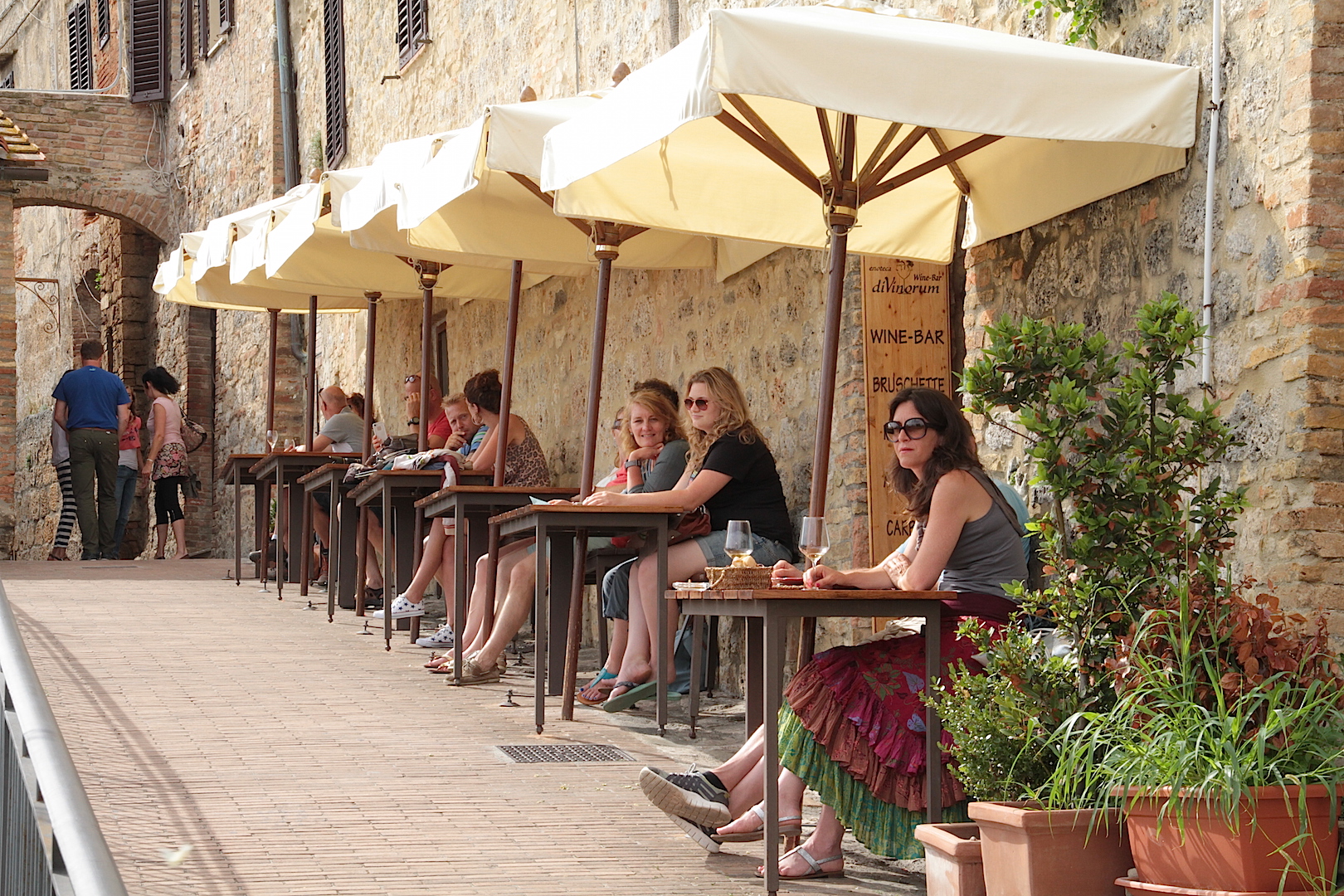
To have the privilege to sleep in a country guest house, rather than in a hotel room, (or two-man tent for that matter), to eat and be pampered through a five course dinner specially prepared for your little group, and all this in the stunning, idyllic, sought after, much talked about, written about, and filmed about Tuscan countryside, remains in my mind one of the highlights of my now already three year long European sojourn.

And this pampering I furthermore had the privilege to share with my family on my son’s 16th birthday and very very good friends from South Africa. That was good.

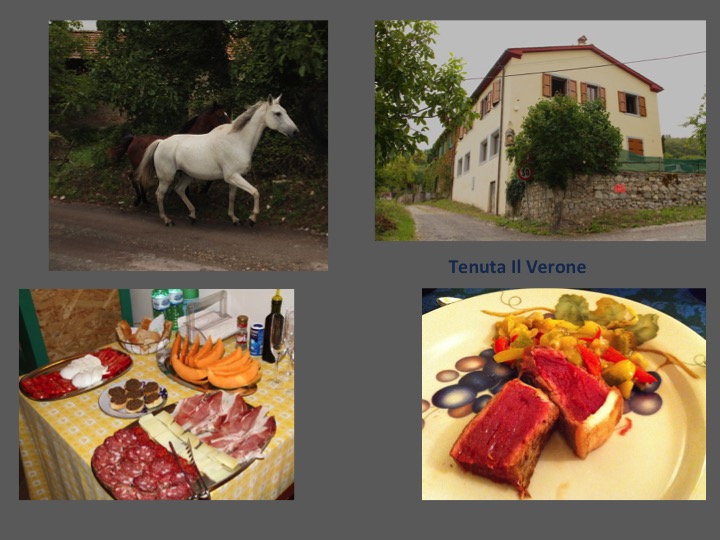
Andrea, the owner and restaurateur par excellance of Tenuta Il Verone near Florence, Tuscany with the competent help of Nilce, his Argentinian girl friend is busy establishing a commendable guest house 30 kilometers outside of Florence with a beautiful view over the surrounding countryside. They do, however specifically excel when they cater and serve. Starting with the traditional ‘Prosciutto crudo’ and melon platter, I soon realized I must keep my glass full of chianti’s finest red, go slow on each course of the meal as to enable myself to really get the best of the best of what this evening is promising to become. Not just the quantity promised to intimidate us, but the quality, the tastes, flavours and textures too was going to educate us tonight; ‘keep calm De Wet and go slow!’

After the platter of exquisite prosciutto we were presented with Andrea’s striking…… PENNE pasta dish followed by a exquisite chicken and vegetable dish. The wine was good and flowing, the food excellent and in abundance and I was getting really relaxed when Andrea entered with the most intimidating T-bone steak I have seen for quite a while. Note that I am South African; we are not easily intimidated by good steak, and I have had the best of the best Argentina and Uruguay could offer in terms of their famous ‘bifo de chouriso’, but this one was right up there with those world renowned ones. By the time that plate of steak was empty, I can vaguely recall that there was dessert and good Italian strong small coffee, but I could not remember the detail as the meat, yes the meat! Dimmed all further taste-bud senses. I do however remember that we still had the most interesting and friendly after dinner chat with Andre and Nilce. Thanx again you two, the stay at Tenuta Il Verone was one of the highlights. But, as is often the case with traveling, the real highlight is that we made some great new friends, in the heart of Tuscany, even through we communicate in a haphazard way, mostly through my daughter’s Spanish to Andrea’s Italian and Nilce’s Portuguese. That is one of the things that make traveling so fantastic!

Tenuta Il Verone is a gem in the Tuscan countryside worth discovering. Book dinner!
Classic Tuscany
Classic Tuscany

Deep thinkers
Deep thinkers

And then came Praiano, in the heart of the Amalfi coast.

A week of bliss, scenic splendor and relaxation heaven, complete with dinners on cliff edges, swimming of the side of boats in the Mediterranean, canoeing into caves and early morning coffee and stuff with good conversation spanning from Koos du Plessis through to ‘what’s for dinner tonight!’

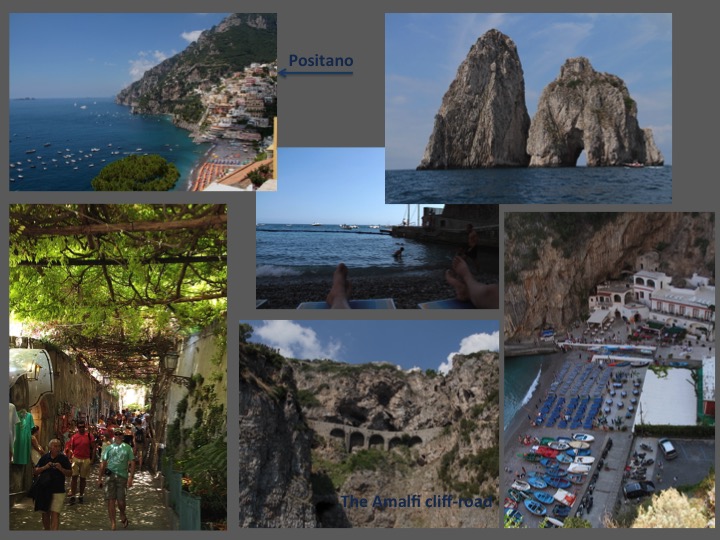
The Amalfi coast truly is one of the ‘must some day visit’ destinations of the world. The more famous Positano lies 18km further up the road from Praiano and yes, obviously we did visit Positano, walked the little streets and enjoyed the beach and sun. I will never ever say you can skip Positano, as it’s a must see in the same vane as is the Eiffel Tower, the leaning Tower of Pisa or even the Spanish Steps. But I do love finding the lesser-traveled roads and that slightly off the beaten track destinations which is not the mainstream, obvious tourist traps where you hear more English than Italian, for example. And though Praiano is still a very touristy and busy little town (just try to find casual parking!), it is slightly less crowded and more authentic than Positano. Think Fouriesburg over Clarence, think Bacharach over Rudesheim and think Hautvillers over Epernay and you’ll get my drift. That is exactly what Heleen found when she found and booked our stunning accommodation in Praiano, complete with ‘stoep’ (veranda) high on the mountain cliffs with its magnificent view over the Mediterranean, morning, noon and night, nogal! I mean, its here, in Praiano where I visited my first real Italian barber, complete with cutthroat old-fashioned razor and shaving cream (watch my short video). I can admit now that I was probably carefully scared, since I have seen many movies where these visits to the cutthroat barber turn out bloody, but I was okay, maybe because in the small-talk kick-off it came out that I was South African, and Senor Tomasso was a huge Gerrie ‘seer handjies’ Coetzee fan. Gerrie Coetzee was a successful South African heavy weight boxer in the early eighties.

The most beautiful Italian drive

One the must do’s on the Amalfi coast is to rent a boat for a day and visit the Isle of Capri! Yes, the island of the infamous student song ‘it was the Isle of Capri where I met here, ….’ and the non-repeatable rest. What this day on the boat offers is just simply a blissful and relaxing day in the sun, with friendly chatter, every now and then a dive and swim in the blue blue water and a visit to the Grotta Azzura or Blue Caves. A casual lunch in Marina Grande and then more casual sailing back with stops and swimming to wake up your appetite for the evening’s social ‘kuiers’ around the dinner table. I think these type of relaxing holidays are made better by the company you have and mine was just perfect.

Scenic splendour
Scenic splendour

And then there’s the drive! I can proudly say that I have driven the Amalfi coast in high season’.

National Geographic’s travel site introduces this drive as ‘The Costiera Amalfitana, or Amalfi Coast, is widely considered Italy’s most scenic stretch of coastline, a landscape of towering bluffs, pastel-hued villages terraced into hillsides, precipitous corniche roads, luxuriant gardens, and expansive vistas over turquoise waters and green-swathed mountains. Deemed by UNESCO “an outstanding example of a Mediterranean landscape, with exceptional cultural and natural scenic values,” the coast was awarded a coveted spot on the World Heritage list in 1997.’ They then go further to summarise with the description ‘The roads along the Amalfi Coast are famously winding, narrow, and challenging to drive. Add in drop-dead views and daring Italian drivers, known for their behind-the-wheel bravado, and this road trip offers one of the more exciting driving experiences in Europe.’ I think ‘daring’ is a soft word for the Italian drivers, especially the ones on their world-renowned scooters. Suicidal is probably a more accurate word, but it does add to the sheer enjoyment of driving while trying to catch a glimpse of the glorious scenery and in the same time keeping an eye out for the scooters and large busses that will simply push you off the road. On busy weekend days, they actually have road assistants who will try to guide the traffic (though the adherence of the motorists are very very low) and even help to adjust your vehicle’s side mirrors so that the vehicles can pass each other.

I say again, I have driven the Amalfi coast, in high season!

As wonderful as was the superb Cinque Terra, Tuscany and Amalfi, so disappointing was Rome. Make no mistake, Rome is a wonderful city, with so many awe inspiring historical sites and stories to get lost into. But it still was extremely disappointing to be exploited by the hospitality industry where its deemed standard practice to charge a 17% service fee, or when you order a beer and just want a beer, you are presented with a liter of beer at 18 € each. At 17% service fee, you pay more for that than what the average person’s meal and drink costs. And this service fee is not even the tip to the waiter, which creates that little ethical dilemma of true service versus fixed restaurant added cost before paying the service fee. They are very friendly in luring you into their osterias but once you’ve had your meal, you’re in for the surprise. The service fee is a fixed percentage added to the bill and which is payable to the restaurant (not the waiter), because you ate there. We had good waiters every time, and who added to the whole dinner or lunch experience with their jokes, mockeries and good service and who deserved their tip, which just means that dining out end on an exorbitantly expensive sour note every time. Watch out in Rome, someone who looks friendly, will eventually stab you in the back!

But for the rest of Italy, it is ‘magnifico, superbo, maestoso e grandioso!’ Go and travel the coasts and Tuscan rural areas at leisure and stop often, to grab a macchiato!

Stop often, find a spot with a view, sit down and chat and think

‘In Bruges’

Of ‘Bloemen, Dijken en Brugge’

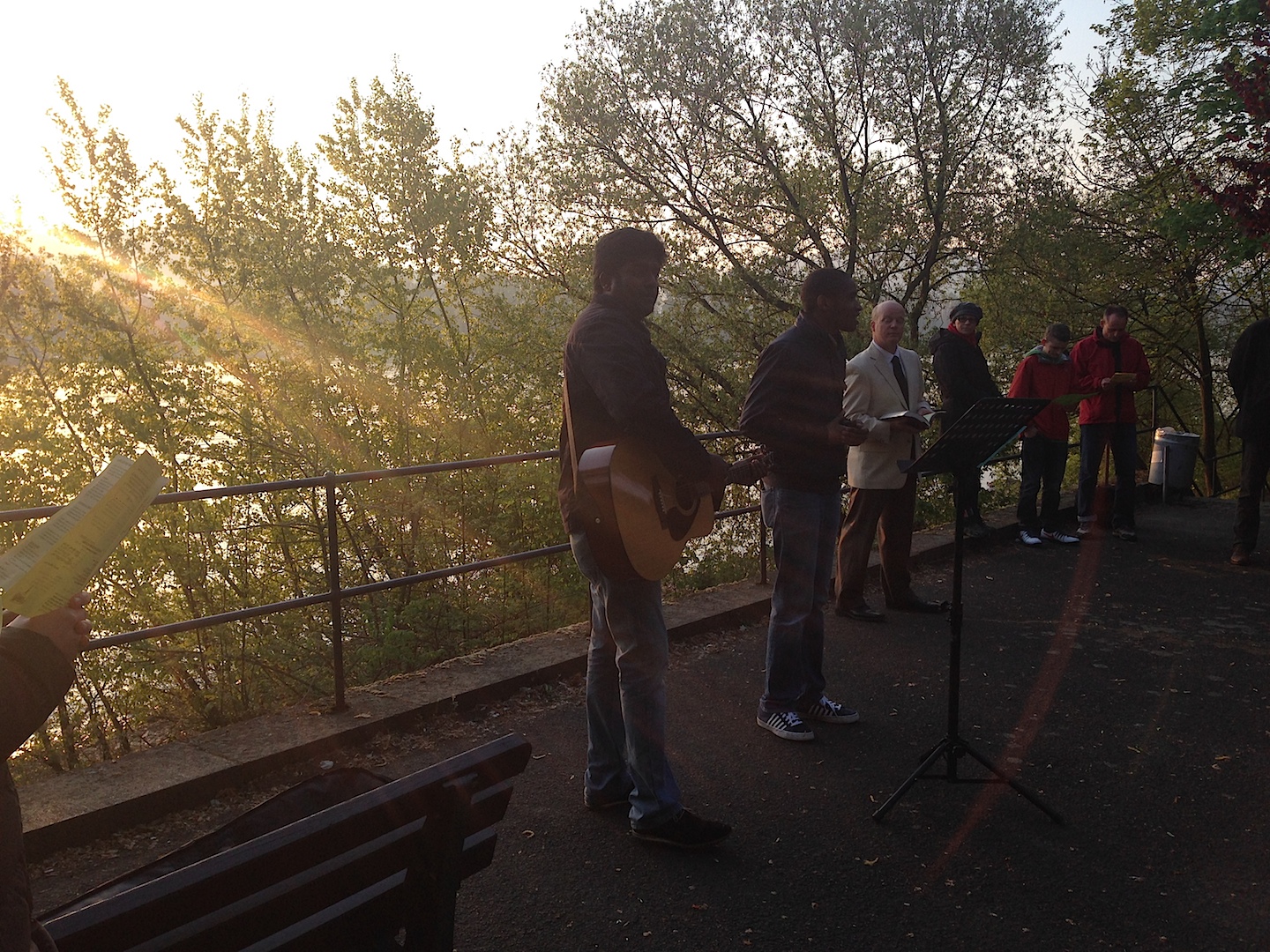
The next morning was Sunday; Easter Sunday, the day of The Resurrection. We started the day with a magnificent sunrise sermon on the banks of the river Rhine, feeling the Good News and seeing His great works in nature. Pastor John and Amos were their brilliant self and fed us spiritually before the men fed us with pancakes, bacon and syrup, the way the Americans have breakfast.


Click on the photos to enlarge them


Ryn

Then we hit the road.


It was mid-April and the ‘Tulips from Amsterdam’ were standing tall, flowering in their full splendour and we were in the mood for some iPod ‘Ek-en-jy-en-die-highway’-family time on the road again. Thus, westward bound we took off with an initial stop logged as Lisse, the hometown of Keukenhof and the Tulip. We’ve been there before and were not interested in doing the entire garden walk again. We just needed a reason to drive a few 100 kilometers, see some Dutch ‘platteland’ (pun intended) and then see where the road will take us after that.

Keukenhof is beautiful (see my post ‘Tulips from Amsterdam’ dated 19 April 2012) but it is so crowded that one visit somewhere in your life is probably enough. However, do that one visit, if you’re in the area.

'Flower child' at Keukenhof
‘Flower child’ at Keukenhof

Blomme1
Keukenhof

This trip was one of those ‘drive in a general direction’ type trips. No specific destination in mind, just see what you’ll find to see. And for this, you need to get off the highways and tread on ‘de smalle weg’. The thing is, we’re in Europe. Its been decadently civilised for many years. Even ‘de smalle weg’ here is a tarred road, with plenty of civil engineering ingenuity to ease up the going! And that’s exactly what we found at Deltapark Neeltje Jans.

However, before reaching Neeltje Jans, I felt quite at home with the day’s drive. We missed Amersfoort but passed Utrecht, Dordrecht, Breda, Roosendal and Middelburg. Dundee was unfortunately over the channel in Scotland.

Neeltje Jans is an artificial island halfway between Noord Beveland and Schouwen Duivenland in Oosterschelde. It was constructed as part of the Oosterscheldedam, which is actually built as a storm water surge protection. After the mega floods in 1953, this well-known civil works construction was necessitated. ‘Most of Zeeland is at or under sea level. In 1953 the dikes were in poor condition and too low. In those days the chance of flooding was once in eighty years. Thanks to the storm surge barrier, this risk has now been reduced to less than once in 4000 years. Take the opportunity to visit this construction inside and outside. You will be surrounded by concrete with a 200-year guarantee, 45 meter wide steel doors are raised to let the tides rush through below them. A must to visit – a must to have seen!’ (www.neeltjejans.nl).


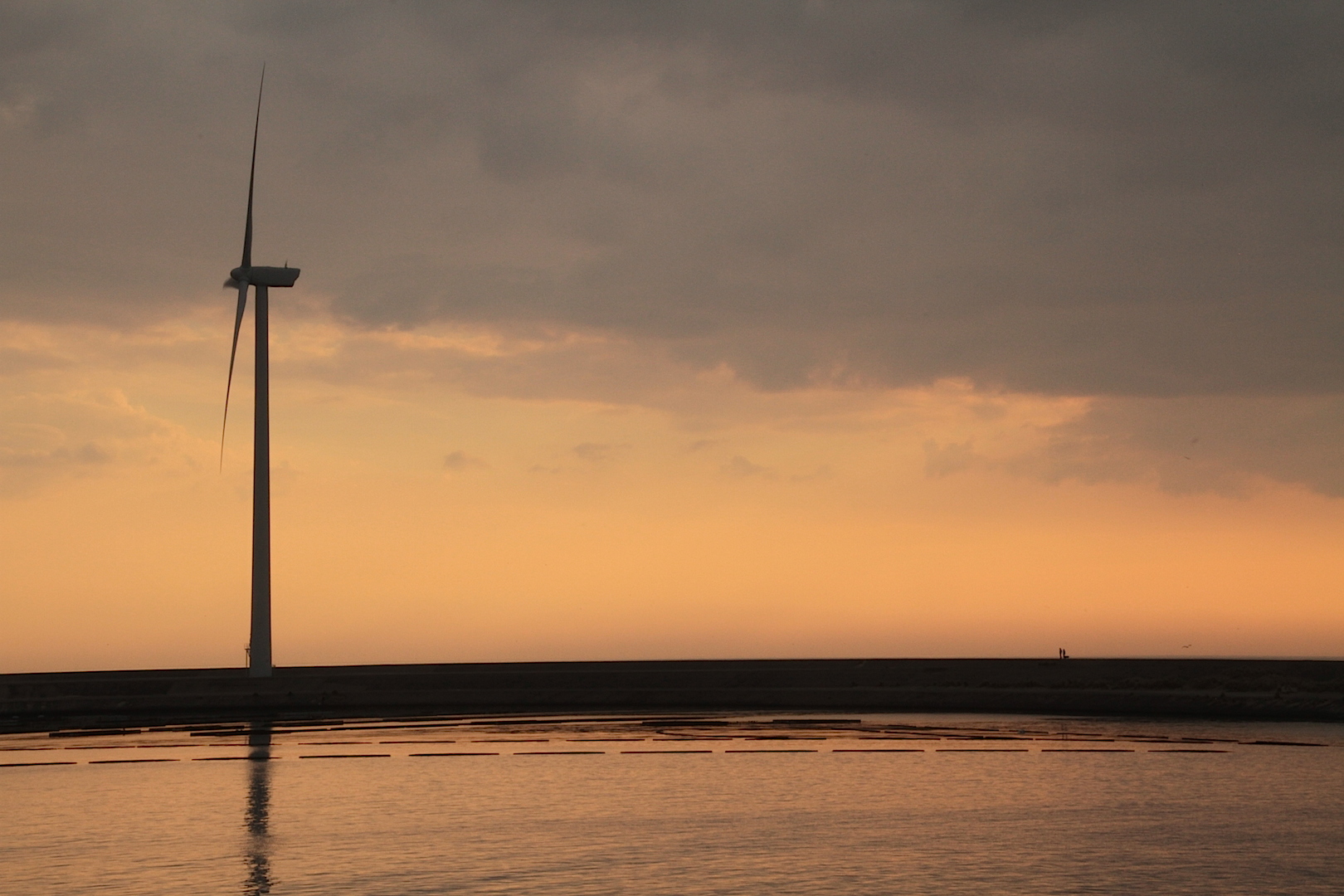
Wind turbine at Neeltje Jans.

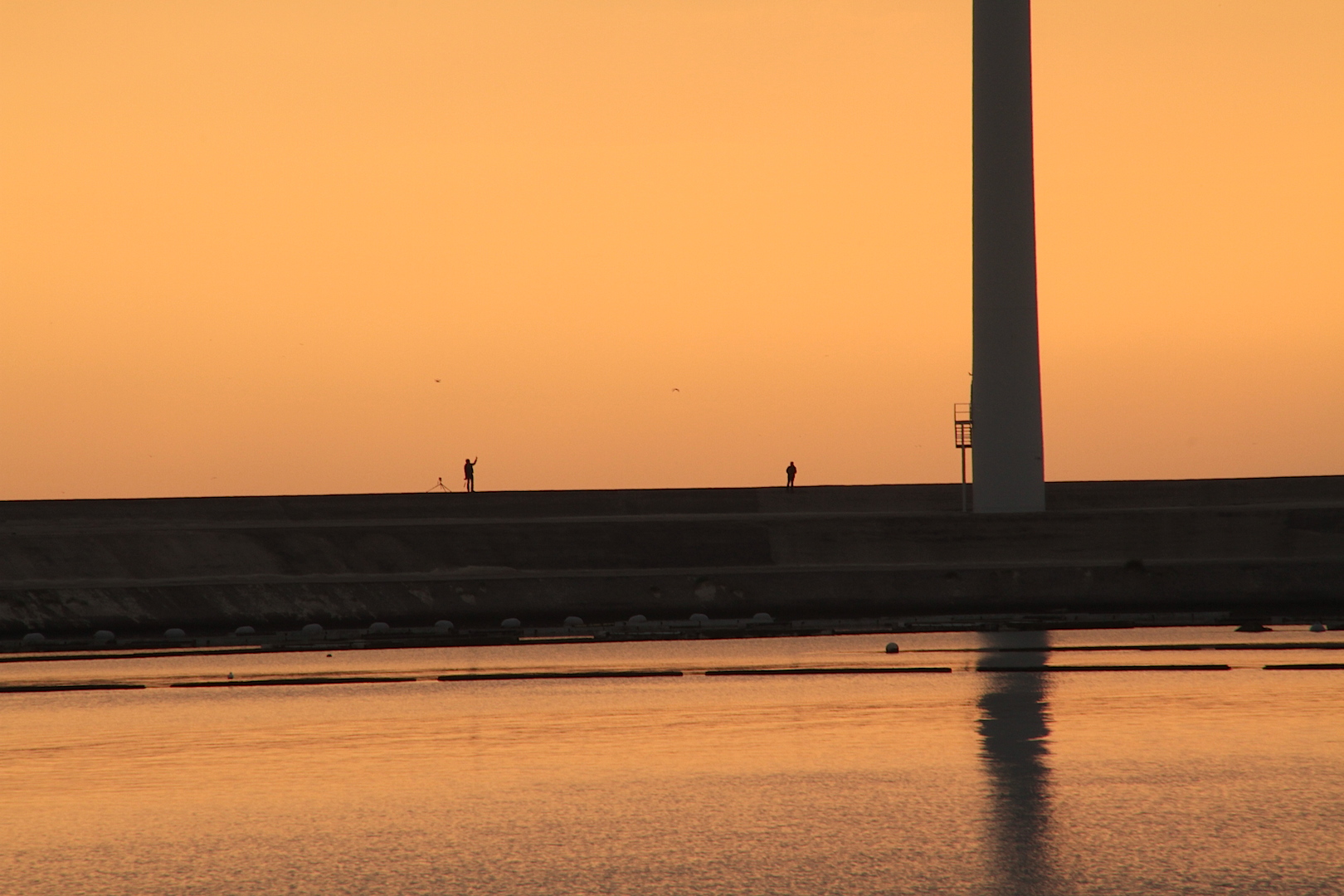
We were just in time for a stunning sundowner photo-shoot, amongst those monstrous wind turbines that nowadays spoil the entire European skyline. Sometimes I believe the scenic pollution of these monsters is worse than burning a few tons of good quality Waterberg steam coal. Unfortunately, we were too late to visit the museum and construction sites, which gives the added incentive that I’ll have to go there again, with better time management this time. Though we wandered (and not all who wander are lost!) through the beautiful little town at Vrouewenpolder (I’m not sure if the town’s name is actually Vrouewenpolder), we couldn’t find accommodation that late on the Sunday evening of Easter Weekend, and had no other option than to push on.Wind2


IMG_7565

Most of the times traveling without a plan and just driving is fun. However, we were now dead tired, it was late and dark and we still had no accommodation for the night. Only option, and I dread to admit that, was to head for the Formule 1 70km southeast on the outskirts of Ghent. Formule 1 hotels are not to be recommended as accommodation. However, if you arrive there after 23:00, need a shower and a bed and plan to hit the road by 08:00; it enables you to see places. In that case, its fine, if you can bare the smell of smoke in the carpets and duvets.

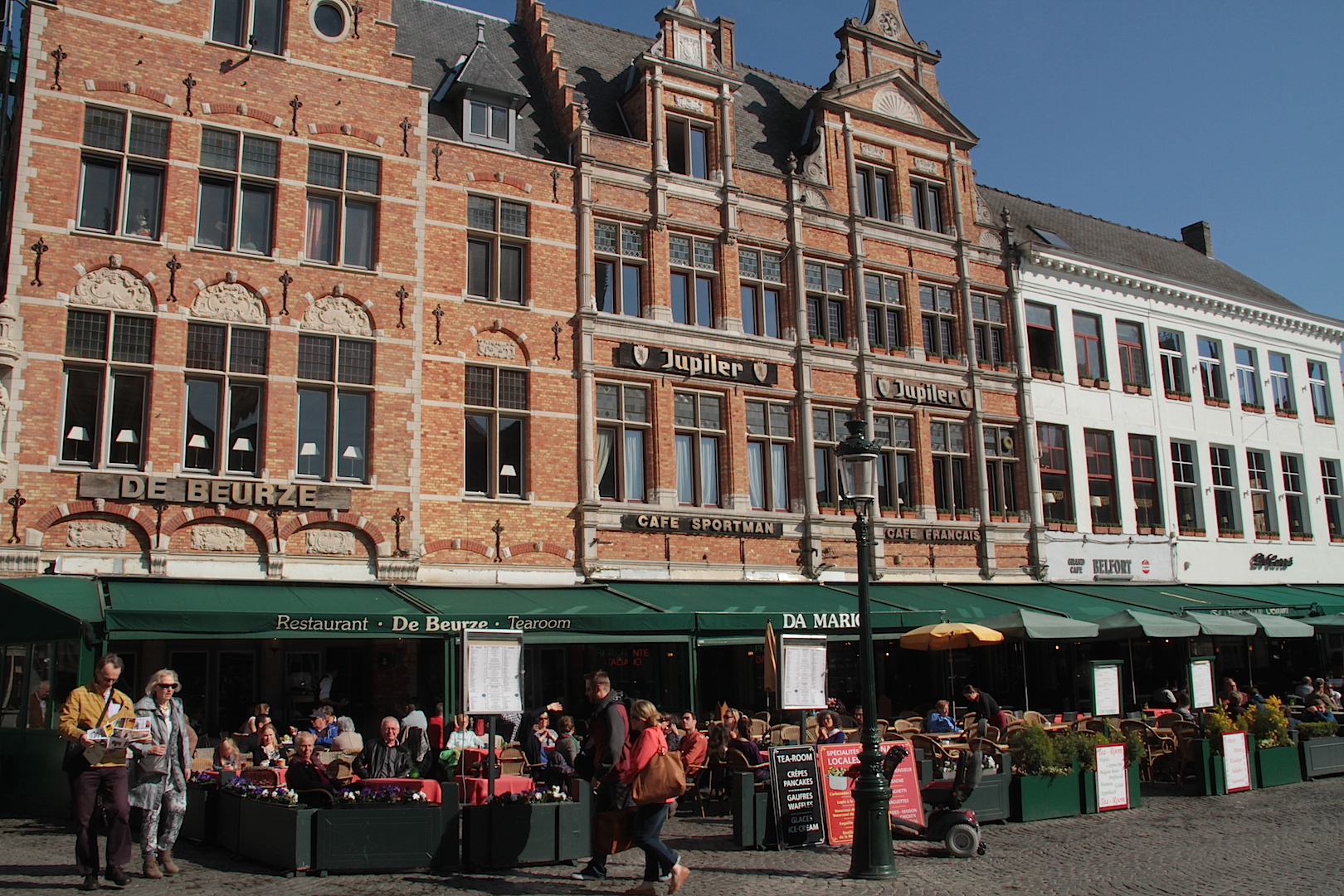
Bruges is beautiful, its clean, its fascinating and has great architecture with the prominent Belfry of Bruges being the most famous. It was famous long before Collin Farrel were even born, as this fascinating bell tower was originally constructed in 1240.

The Belfry of Brugge

The ‘little red brickwork’ architecture in this part of Europe must be extremely inspiring for an architect to visit, photograph, copy or simply just admire. I loved our morning ‘in Bruges’. I just hate those plastic silly traveling merry-go-round fun park junk Europe allows on all its magnificent old town squares. No proper angle to take photos, the magnificence of the square spoiled completely by plastic clowns and little bumper cars with irritating continual music sounding worse than those ice-cream Combis from the 70s. I cannot believe in this day and age that there are still people who spend money on those.

Bistros, coffeeshops, restaurants galore


And fancy that, being served at the restaurant, by a Belgian waiter who grew up in Rwanda and spent his first 35 years there. We were so intrigued with each other’s stories and political commentary that the poor man was in trouble with a few of his other customers. Here was a man who saw serious genocide and had to escape it himself, but who also saw and experienced that magical natural beauty and splendour of the African bush to such a level that he does speak fondly about the place. But, it’s the politics he hates.

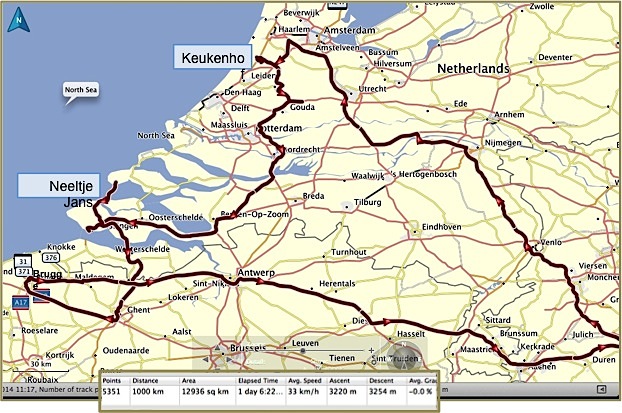
1000km in 1 day 6:22 hours and a successful sightseeing family bonding weekend behind us!

Life is good.


Roundtrip route from Köln. 1000km in 1 day 6:22 hours. There's just so much to see
Roundtrip route from Köln.
1000km in 1 day 6:22 hours.
There’s just so much to see